
What began as the premiere of the Future Farmer Award at the AGRITECHNICA ASIA trade fair did not stay a formal award ceremony for long — it quickly turned into a dynamic forum of ideas and exchange, proving that the new initiative had struck a powerful chord, with an audience that was not just physically present but actively contributed with ideas.
The atmosphere in the room clearly reflected exactly that. What could have been easily just another formal, staged moment of recognition instead felt closer to an entrepreneurial gathering: a space charged with curiosity, questions and a shared determination to find solutions. The room became charged with the kind of energy more commonly associated with a start-up buzz: Spectators asking astute questions, exchanging creative ideas, challenging assumptions. Only here, the ideas were grounded in real-life farming conditions, shaped by climate pressures, soil realities and economic constraints.
At its core, the Future Farmer Award, which attracted more than 40 entries from nine countries, was designed to recognise professional farmers who embody innovation, sustainability, leadership and measurable impact within their communities. Yet what became apparent during the event was that these qualities are not abstract benchmarks. They are deeply practical, often born out of necessity and refined through experience.
Does this work in practice?
The international jury played a crucial role in uncovering the award-winning qualities. Composed of agricultural practitioners and experts with first-hand understanding of farming systems, the jury members assessed candidates not only on outcomes, but on the processes behind them: how solutions were developed, how challenges were approached, and above all whether innovations could be transferred and scaled. The jury evaluation was grounded in one key question: does this work in practice?
This practical perspective was established to ensure that the selected farmers were not simply early adopters of technology, but individuals capable of integrating and identifying available tools, methods and systems into coherent, working solutions under real-world conditions.
And those conditions are becoming increasingly complex. Across Asia, farmers are confronted with volatile weather patterns, declining soil fertility, rising input costs, and persistent threats such as pests and diseases. At the same time, pressure is growing to reduce environmental impact while maintaining productivity.
What distinguished the award winners was that they confronted challenges heads on directly, often turning constraints into opportunities.
The new award scheme had three categories “Outstanding Young Farmer Award” “ Outstanding Woman Farmer” and “Outstanding Farmer Leader”
Outstanding Young Farmer Award
Kittisak Maka from Thailand, recipient of the “Outstanding Young Farmer Award”, demonstrated how technological integration and cooperation can significantly enhance both productivity and resilience. As a cluster farm manager supporting more than 100 farmers, he implemented a combination of crop rotation, drip irrigation, soil analysis, weather monitoring and drone-based applications.
These technologies were not used in isolation. Instead, they formed part of a coordinated, integrated system designed to address both soil degradation and climate variability. The result was a marked increase in maize yields, reaching up to 13.1 metric tons per hectare while at the same time strengthening collaboration between farmers through shared knowledge, resources and infrastructure.
His approach highlights a key shift in modern agriculture: innovation is no longer an individual effort, but increasingly a collective one.
Outstanding Woman Farmer
Lao Suchan from China, honoured as “Outstanding Woman Farmer”, provided an example of innovation in part caused by a difficult situation. Faced with a severe disease outbreak in dragon fruit production, Lao Suchan developed a green control system tailored to local conditions and, crucially, shared this knowledge with other farmers in the region.
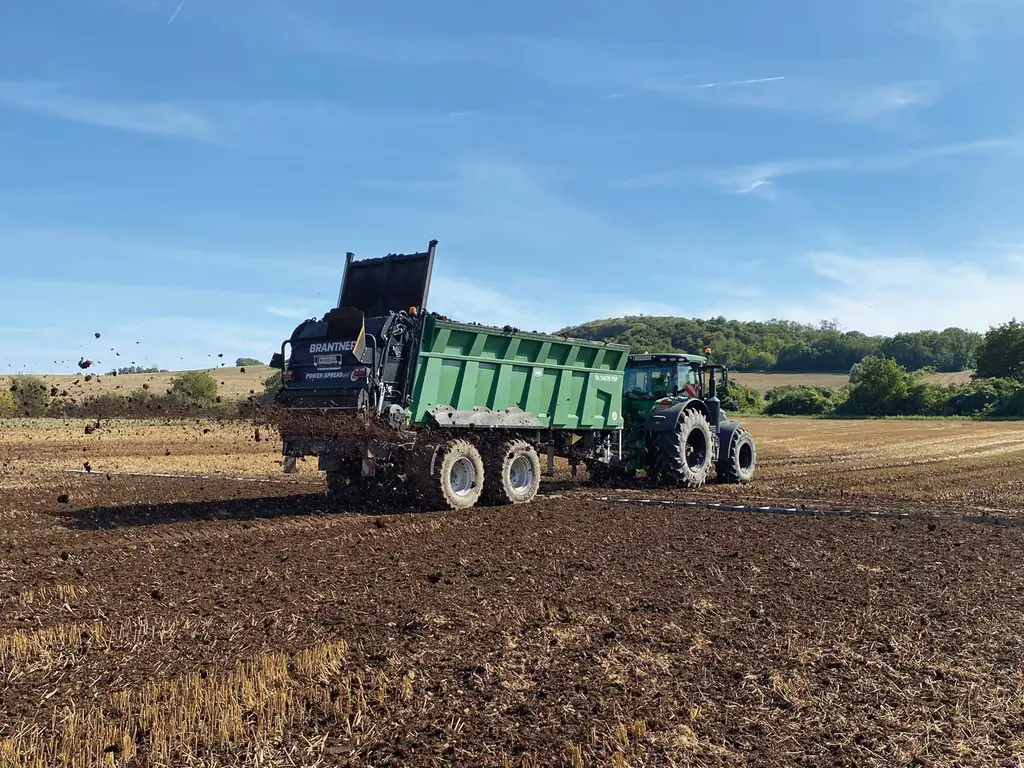
In addition, she implemented a circular farming model that connects livestock and crop production: manure from a 10,000-pig operation is processed into organic fertiliser for citrus orchards. This system reduces waste, lowers input costs and improves soil quality, creating both economic and environmental benefits.
Her work demonstrates how technical solutions, when embedded in a broader system, can create resilience at scale.
Outstanding Farmer Leader
Leah Salvaleon from the Philippines, awarded as “Outstanding Farmer Leader”, represents the long-term transformation potential of integrated farming systems. Starting from a 300-square-metre vegetable plot, she developed a diversified farm that now combines crops, forage systems and livestock production, including poultry, goats and swine.
Central to her approach is the integration of nutrient cycles: crop residues and animal waste are reused as organic inputs, reducing dependency on external resources while improving soil health. At the same time, her farm serves as a training and demonstration site, extending the impact of her work beyond her own production system.
Her development illustrates that scaling in agriculture is not only measured in size, but in the ability to transfer knowledge and build capacity within communities.
Yet beyond these individual examples, it was the interaction between award winners and audience that defined the event. Farmers, advisors and industry professionals did not observe passively, they actively engaged, asking detailed and often highly technical questions.
Each winner received a certificate of recognition, US$1,000.00 cash prize, international travel support for two days such that they can personally participate in the farmer’s exchange activities during AGRITECHNICA ASIA and HortEx 2026, and a special guided tour in the exhibition halls. This edition’s prizes were sponsored by Mahindra Farm Equipment, Massey Ferguson, and GIZ India.
How adaptable are these systems under different climatic conditions?
What level of investment is required to implement similar technologies?
How can smaller farms integrate these approaches without losing economic viability?
These questions reflected a shared mindset: a focus on applicability rather than abstraction. The discussion moved quickly from recognition to replication, from celebrating success to understanding how it can be implemented elsewhere.
“We were struck by how interactive the format evolved,” said Anna de Guia, Agricultural Specialist and lead of AGRITECHNICA ASIA’s technical program, DLG Markets Asia Pacific. “What had been planned as an award ceremony transformed into an open exchange platform, driven by the involvement of the audience as much as by the programme,” she added.
The number of participants and the intensity of engagement made one thing clear: the initiative addresses a genuine demand within the agricultural community.
This demand is not just for recognition, but for connection, for opportunities to learn from peers who face similar challenges and develop solutions under comparable constraints.
What unfolded in Bangkok was therefore more than the launch of a new award. It was an indication of a broader shift within agriculture.
Farmers are no longer seen solely as producers. They are increasingly recognised as problem-solvers, system integrators and innovators. They are now individuals who combine practical knowledge with new technologies to create solutions that are both efficient and resilient.
And perhaps most importantly, they are not working in isolation.
They are building networks. Sharing knowledge. Challenging each other.
And in doing so, they are redefining what future farming looks like.
These farmers are not waiting for the future. They are already shaping it.
The award premiered at AGRITECHNICA ASIA, a key trade fair for smart crop production solutions for professional farmers. Held annually alternating between Thailand and Vietnam, AGRITECHNICA ASIA is organised by the DLG (German Agricultural Society). As a non-profit organisation for professional farmers founded in 1885, DLG has a long-standing mission of promoting agricultural knowledge and facilitating its practical exchange. The Future Farmer Award, also incepted by the DLG, is therefore fully in line with this remit, recognising and sharing farmer-led innovation as part of a broader commitment to advancing agriculture through knowledge and collaboration.
The Future Farmer Award celebrates grassroot excellence and farmer-led solutions across Asia. From precision agriculture to women-led cooperatives, it spotlights the people transforming food systems from the field up.
Hosted by DLG (the German Agricultural Society) as part of AGRITECHNICA ASIA and HortEx, the award brings international recognition, exchange, and visibility to farmers whose work too often goes unseen.


Partners of the Award
Department of Agricultural Extension (Thailand); Department of Agriculture (Philippines); Grow School Philippines Global; Mekong Institute; East‑West Seed; University of the Philippines Los Baños; Kasetsart University; Nong Lam University; GETHAC (German‑Thai Agricultural Cooperation); Mahindra Farm Equipment; Massey Ferguson; German Cooperation (implemented by GIZ India)