Joëlla Buhendwa is the Founder and CEO of AstiFerme, a green enterprise that transforms household organic waste into high-quality animal feed and organic fertilizer through Black Soldier Fly (BSF) farming. Her work supports cleaner cities, improved food security, and sustainable local jobs by turning waste into valuable resources.
She is currently pursuing a Master’s degree in Plant Production (2023–2025) at the Catholic University of Bukavu, after completing a Bachelor’s degree in the same field. In 2023, her final thesis and internship focused on BSF farming at AALI, and in April 2024 she received specialized training in BSF farming.
Beyond her academic and entrepreneurial work, Joëlla is actively engaged in youth leadership and social action. She serves as Vice-President of the U-Report Girls Club in Bukavu, is a U-Report volunteer, works as a Web Watcher at UNICEF monitoring misinformation to promote responsible digital practices, and is a Peace Ambassador trained by UNICEF and the Ministry of Education through the PROSANI USAID program. She also received human rights training (ODH/UNICEF) and has developed practical skills in poultry farming, biopesticide production, soap-making, and digital data collection tools (STATA, SPSS, ODK, KOBOCollect).
Through AstiFerme, she leads a circular agriculture model where BSF larvae rapidly break down organic waste, helping prevent odors, harmful flies, and sanitation-related health risks. The larvae become a local, sustainable protein source for fish, pigs, and poultry, reducing reliance on imported feeds such as fishmeal and soy - and supporting community economic resilience. The model also creates inclusive green jobs, including opportunities for women and people living with disabilities, and aims for zero waste by exploring additional value streams such as biodiesel from residual biomass.


Why did you choose Black Soldier Fly (BSF) farming as the core solution—what convinced you it could work in your context?
I did not choose Black Soldier Fly farming by chance. I chose it because I was living a painful reality every single day.
In my community, waste was everywhere - in the streets, around homes, and near markets. During the rainy season, drainage systems overflowed, and when the sun came out, the smell became unbearable. What hurt me the most was seeing children grow up and play near piles of waste as if it was normal. Many children became sick because of the unsanitary environment, infections, and pollution surrounding them every day.
At the same time, farmers and livestock keepers were struggling. Animal feed was expensive, imported, and often inaccessible. I realized something deeply unfair: while we were surrounded by organic waste, we were still depending on imported resources to feed our animals.
That is when Black Soldier Fly farming changed my perspective. I understood that what people called “waste” could actually become a solution. Through BSF, organic waste can be transformed into protein for animal feed and organic fertilizer for agriculture.
This project was not born from theory or from a laboratory idea. It was born from pain, compassion, and the refusal to accept that communities should continue suffering in silence while solutions are possible.
Can you walk us through the AstiFerme process—from household waste collection to feed and fertilizer production?
At AstiFerme, everything begins with organic waste collected from households, restaurants, boarding schools, and markets. These wastes, when abandoned in the streets or around homes, become sources of pollution, bad smells, and disease for the surrounding communities.
We collect the waste and also encourage households and restaurants to separate organic waste from other types of waste before collection. Once the waste arrives at our site, we carry out a final sorting process and sterilize the waste to reduce sanitary risks.
After that, the waste is given to Black Soldier Fly larvae. Since we still do not have industrial machines for grinding and processing, much of our work is still done manually and artisanally using the limited means available to us.
Despite these limitations, the larvae perform an incredible transformation. In only 10 days, Black Soldier Fly larvae can decompose up to 75% of organic waste.
Once the larvae become mature, we harvest them and separate them from the remaining residue, still using artisanal methods. The larvae are then dried and transformed into high-protein animal feed for fish, poultry, and pigs. We can also extract oils from the larvae, which may be used in cosmetics.
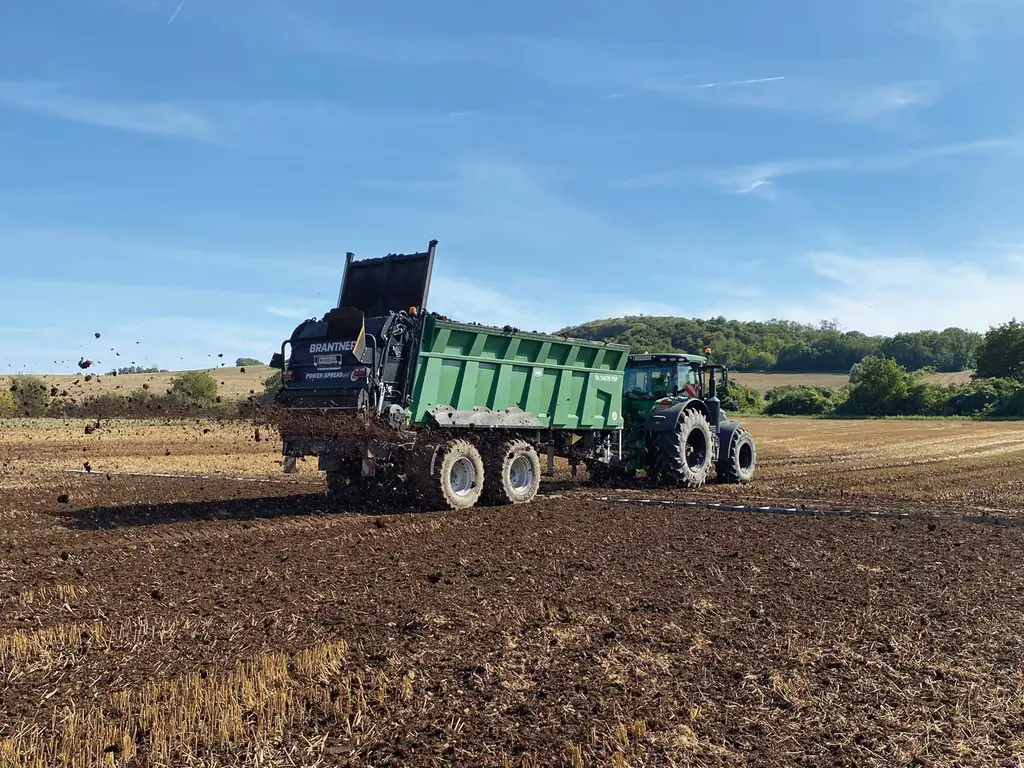
The remaining residue, called frass, becomes an organic fertilizer used to improve soil fertility and agricultural production.
Where many people only see dirt and waste, we see an opportunity to feed, fertilize, and protect our community.


What environmental problems are you seeing in your community that AstiFerme directly addresses?
In my community, environmental problems are not abstract issues. They are daily human suffering. Waste accumulates in neighborhoods, attracts insects, spreads disease, and exposes families — especially children — to dangerous living conditions. Many children grow up surrounded by pollution and unsanitary environments with little protection.
At the same time, soils are becoming poorer and agricultural productivity is decreasing. Farmers work harder but harvest less than before. Livestock keepers are also struggling because they cannot easily afford nutritious animal feed. Most ingredients are imported, especially soybean and fishmeal, whose prices continue to rise.
This dependence creates another serious problem: to satisfy the growing demand for soybean and fishmeal, terrestrial and aquatic ecosystems are increasingly being destroyed. Forests, rivers, and natural resources are exploited to maintain a food system that keeps communities dependent. Meanwhile, humans and animals end up competing for the same food resources. Some farmers, due to lack of financial means, even resort to chemical products to accelerate animal growth, which may also affect human health.
The painful reality is that while communities suffer from pollution, hunger, soil degradation, and expensive imports, huge amounts of organic waste continue to be discarded every day without being valued.

What kinds of jobs does AstiFerme create along the value chain (collection, sorting, farming, processing, sales)?
AstiFerme creates opportunities for people who are often forgotten or excluded by society. We work with young people and train them in waste management, Black Soldier Fly farming, and organic waste valorization. Through this work, they become active contributors to positive change within their communities. We also aim to include marginalized women — women who are rejected, abandoned, or neglected by society. Many of them have lost confidence in themselves and feel like they no longer have a place in society.
Through AstiFerme, we try to offer them a safe and dignified space where they can learn, work, regain independence, and sometimes even rediscover hope and purpose in life.
Because some activities within our work do not require heavy physical effort, these women can genuinely participate and build a better future for themselves.
Beyond employment, AstiFerme seeks to restore dignity, usefulness, and hope to people who are often suffering silently.
As a woman leading a green enterprise in agriculture, what barriers have you faced (cultural, financial, or operational), and what has helped you overcome them?
The journey has never been easy, and even today it is still difficult. There are many stereotypes and judgments surrounding the work we do. Some people still mock our work and believe it has no value. I was often told that, as a woman and as an agricultural engineer with a master’s degree, I “deserved better than waste” and should pursue something considered more honorable. Those words were painful, especially because they came from people who only saw dirt and garbage. But while they saw waste, I saw sustainable gold. I saw the possibility of protecting lives, feeding animals, restoring soils, and bringing solutions to communities that are suffering. That is why I continue despite criticism.
Working with waste is not a shame, but an act of love for my community, because behind waste, there are children getting sick, families suffering from unsanitary conditions, and communities that need people willing to fight for them.