Prof. Dr Anthony Stein on the use of AI to achieve sustainable productivity gains
"AI is driving the digital transformation
of the agri-food system"
Sustainable productivity gains are the DLG's new guiding principle for agriculture, combining competitiveness with the protection of biodiversity. To implement these ideas, the DLG has drafted a position paper with seven theses. These will serve as starting points for critical discourse at the DLG Winter Conference and are intended to promote a new understanding of progress. Prof. Dr Anthony Stein will be a panel participant at the DLG Winter Conference in Hanover in February. In an interview with the DLG, he explains how AI can promote the DLG's concept of progress.
DLG: Where can AI help to reduce the conflict of objectives between yield growth and resource conservation, as stated in thesis 4 of the DLG position paper?
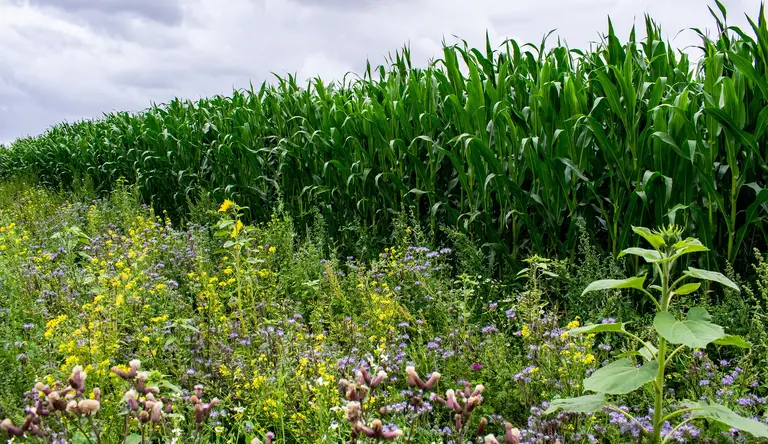
Anthony Stein: The use of AI and other new digital technologies is driving the digital transformation of the agri-food system in terms of novel and organisational innovations. AI can already help with sustainable plant production by distinguishing between desirable and harmful plant species. This can be used to derive appropriate measures for assessment. These could include weed control using robots or smart attachments. We can also look at thesis 5 in the DLG position paper, which states: A valuation system for biodiversity and animal welfare should be introduced, similar to the trade in greenhouse gas emissions. AI could be a tool for achieving this biodiversity valuation. It can be used to identify and delineate useful species in order to measure biodiversity in the fields in the future.
Another example of the use of AI is in indoor farming, i.e. livestock housing systems. Here, AI can be used to continuously derive and monitor process indicators. This can relate to the activity behaviour of the animals, the barn climate or feeding. These findings should not only increase the efficiency of animal husbandry processes, but also lead to ideally automated process optimisation, which in turn has a positive effect on animal health and welfare.
How have the methods improved?
The goals of precision farming and precision livestock farming have been around for a long time, but there has been an evolution in this area, which can also be seen in the further development of terms such as “smart farming” and “digital farming”. However, the terms are not entirely distinct. For example, smart farming focuses on the use of smart real-time sensors to adjust equipment directly in the process. Digital farming further expands the technology portfolio to include new digital technologies such as edge and cloud computing, big data analysis and, of course, AI. AI enables new levels of process automation. One could imagine that farmers would no longer have to look at the farm management information system themselves for evaluation, but that the information would be analysed and processed by AI, made available “on demand” and provided with specific recommendations for action. This would enable a new level of relief and automation to be achieved.
Does the use of AI only work with the appropriate technology, or are there other areas of application that you include?
Here, it really depends on how you define the term “technology”. In my lectures, I use the term “agricultural technology system”, which I have borrowed from computer science. When we think of agricultural engineering systems, tractors, smart attachments and autonomous weeding robots that navigate the field independently immediately spring to mind. But we should also include software technology in this category. In the agricultural sector, these are farm management information systems (FMIS), fleet management systems and herd management systems. Software is the core element here. We are also seeing new AI-based apps for management and decision support finding their way into the digital ecosystem of the software on offer. These could make everyday operations easier.
I am referring to applications that are increasingly driven by the “new AI” that has been rolled out on a large scale since 2022. These are digital assistants with which farmers can communicate in natural language and even submit documents. This gives farmers more support in management and organisation.

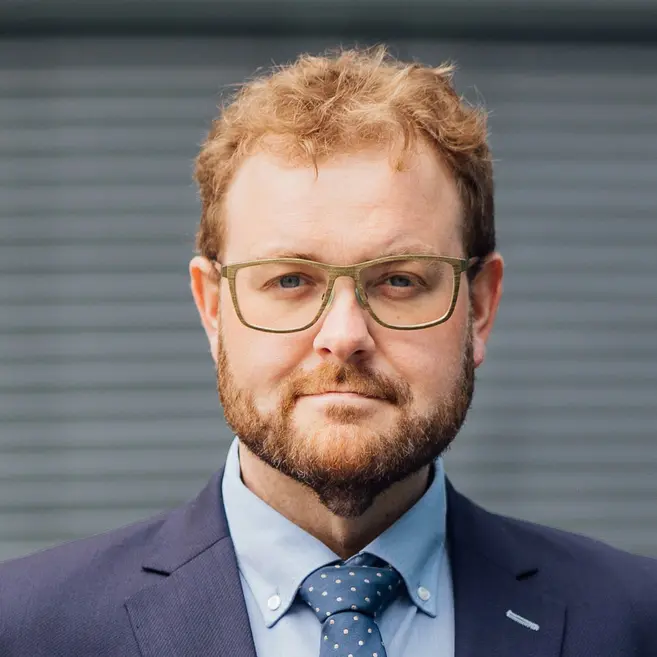
Prof. Dr. Anthony Stein took up the professorship for Artificial Intelligence (AI) in Agricultural Engineering at the Faculty of Agricultural Sciences at the University of Hohenheim in 2020. The 36-year-old studied business informatics and computer science and completed his doctorate in computer science at the University of Augsburg in 2019, working at the Chair of Organic Computing. The relevance of the topic of AI in agricultural engineering was a decisive factor for the scientist in applying for the professorship in Hohenheim. It would enable him to conduct fundamental and application-oriented research into the potential of computer science methods, and AI in particular, in the field of agricultural economics. Stein appreciates the strong and wide-ranging expertise and synergies of the interdisciplinary research work with his colleagues at the Institute of Agricultural Engineering and the entire Faculty of Agricultural Sciences, as well as the cross-faculty collaboration.
What is your mission statement?
When it comes to our approach to applied research projects, it is important to us that we do not lose sight of the requirements of agricultural practice. To this end, we first analyse the underlying agricultural processes in close interdisciplinary collaboration with agricultural engineers and experts from industry and practice. We then apply the above-mentioned computer science methods to ensure the targeted use of AI. In other words, we do not use AI for AI's sake, but rather where it can be beneficial. Our mission statement is to research intelligent agricultural systems for the future, for which we also develop new AI-based methods in a fundamental way in order to achieve goals such as the aforementioned increases in efficiency or easier usability.

From which side does the operations manager need support in order to understand AI and use it sensibly as a productivity booster?
This is a very good question, but not an easy one to answer. In plenary discussions and expert committees, the topic of training repeatedly takes centre stage. Accordingly, consideration should be given to teaching the basics of the opportunities and challenges of digitalisation in agriculture at an early stage in all levels of training. This means not only at universities, but also in subjects at technical and vocational schools or as continuing education courses.
In addition to training, the expansion of dedicated consulting services for digital technologies within existing agricultural services could also be promoted. Consultants could visit the farm and, after assessing the status quo, work with the farmers to develop a farm-specific digitalisation proposal.
So, for this to work, farmers need to be open-minded and invest time?
In my opinion, the aim should be to enable farm managers to decide whether and which solutions from the digital ecosystem they could use profitably or not. Consultants could make farm-specific calculations to determine how quickly certain digital solutions would pay for themselves. This would provide a “compass” for what could be beneficial for this and similar farms.
I could imagine that this approach could be a way forward. Leaving farm managers “out in the cold” in this rapid digital development cannot be the solution.
Politicians want to see more scientific facts being put into practice. How is this happening in AI-supported digital agriculture?
AI is a young scientific field that only really took off in the 1950s. In the field of AI applied to agricultural technology, there is still a lot of application-oriented basic research to be done. This is to be distinguished from applied research, where we tackle a specific practical problem scientifically. In application-oriented basic research, on the other hand, we first explore and demonstrate the fundamental possibilities of the technology in the agricultural sector.
For the latter branch of research, several steps have to be taken in the transfer process, which means that it usually takes longer for new research findings to be put into practice. Whether this ultimately happens also depends on other factors.
Ideally, this should take place even more in transdisciplinary settings in the future. This means directly involving relevant stakeholders and future users of the technology, such as farms, in the research process. This is what transdisciplinary research is all about, and what I believe is reflected in thesis 6 of the DLG position paper, according to which the initiative for sustainable productivity growth must come from the economy, from businesses, and be driven forward in collaboration with science.
What is the procedure in your field at the University of Hohenheim?
I would classify the research work in our field of AI in agricultural technology as predominantly application-oriented basic research. We want to demonstrate what is fundamentally possible with AI technology and where the limits lie. This also concerns the question of under what environmental conditions AI methods function robustly and reliably. To this end, we always have agricultural environments such as fields or stables in mind. We therefore also conduct basic research, but with a clear focus on application.