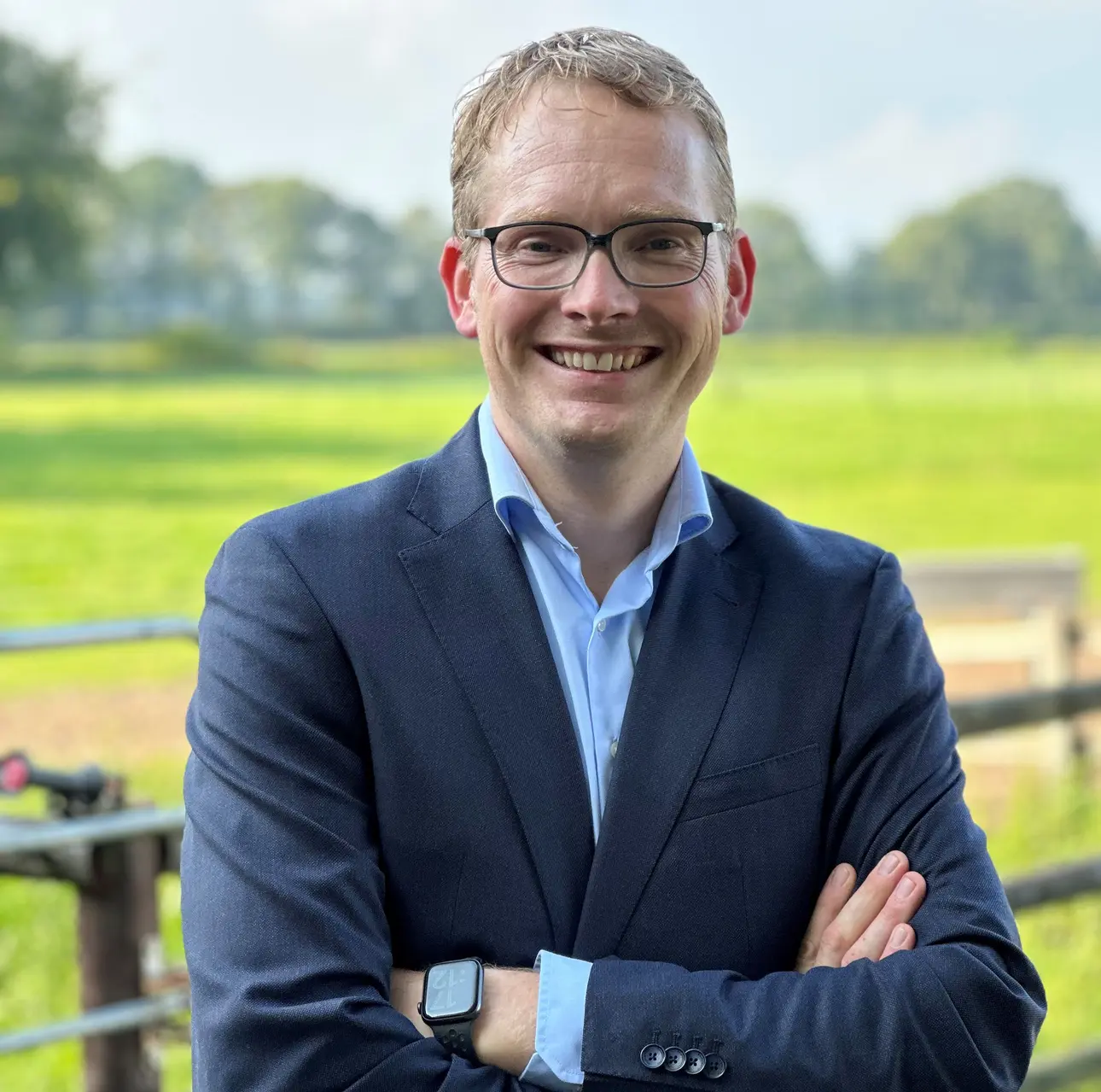
Artificial intelligence (AI) is seen as a source of hope for greater efficiency and sustainability in agriculture. How AI can become a “productivity booster for businesses” is the topic of the DLG Winter Conference 2026 on 24 and 25 February in Hanover. Dr Henning Müller, Chairman of Agrotech Valley Forum e. V. and Project Manager of the AI Real-World Laboratory for Agriculture at the University of Osnabrück, explains in advance in an interview the conditions under which AI can be used profitably.
DLG Newsroom: What is Agrotech Valley Forum e. V. and what role do digital innovations play in your work?
Dr Henning Müller: Agrotech Valley Forum e. V., or AVF for short, is an agricultural technology network in north-west Germany, the hotspot of the German agricultural technology industry. Companies, research institutions and practitioners are working together to drive digital change and technological innovation. We want to further strengthen agricultural technology companies and the region as one of the most important locations for modern agricultural technology in Europe. One example: we are currently working on a project involving the cross-manufacturer and cross-supplier exchange of agricultural master data, such as field boundaries. We want to clarify how digital master data in agricultural engineering and agriculture can be harmonised so that it is compatible with different systems and does not have to be readjusted every time it is transferred. This brings real added value for farmers. Incidentally, the project is funded by the BMLEH.
Data and its standardisation are also important in AI applications: How much is the AVF currently involved with AI?
The topic of artificial intelligence is becoming increasingly important in our projects. We are looking at how AI technologies can be integrated into highly automated agricultural processes, for example in agricultural machinery, and how they can bring real added value for users. One example of this is the “AI Real-World Laboratory for Agriculture”, in which the AVF and seven other partners are researching a wide range of topics focusing on the sustainable transformation of agriculture through the use of AI, robotics and data science. Farmers are also closely involved in this process.
How do you distinguish between smart farming and AI?
For me, smart farming is the umbrella term or overall concept for intelligent, digital solutions in agriculture. The aim is to make farms more efficient and economical to run. Artificial intelligence is a highly topical field of application and research in computer science. It is having an ever-increasing impact on society, politics and the economy. AI enables systems to learn from data, recognise patterns and support decision-making. AI can be part of smart farming, but it doesn't have to be – because not every digital solution is based on AI.

Dr Henning Müller (born in 1979) studied engineering physics at the University of Oldenburg and also completed training as a farmer. After working as an innovation consultant and project manager in research and technology transfer, he obtained his doctorate at the University of Vechta. His career took him to the Oldenburg Chamber of Crafts and Josef Kotte Landtechnik GmbH & Co. KG, where he was most recently Technical Director.
Since 2022, Müller has been a senior researcher at the German Research Centre for Artificial Intelligence (DFKI) in Osnabrück and, since 2026, project manager of the “AI Real-World Laboratory for Agriculture” (RLA) at the University of Osnabrück. He is chairman of the Agrotech Valley Forum e.V. and the working group on digitalisation at the Lower Saxony Ministry of Agriculture. Dr Henning Müller and his wife run a farm near Löningen in the district of Cloppenburg, where they grow crops, rear pigs, board horses and manage energy.
The motto of the 2026 DLG Winter Conference is “AI – Production Turbo for Your Business”. To what extent can AI ignite this turbo?
The potential is huge – there's no question about that. AI offers opportunities in precision farming, especially in crop production. In animal husbandry, the use of AI systems can enable continuous monitoring and contribute to greater animal welfare, for example by evaluating camera images. AI can also make a significant contribution to administrative processes – keyword: reducing bureaucracy. But just because I have a drill doesn't mean I stop hammering nails with a hammer.
What do you mean by that?
I'm talking about the most appropriate tool for the job and its correct use. AI can optimise processes, support decision-making and evaluate amounts of data that are almost impossible for humans to comprehend. But farmers will still need sound training in the future and must be able to assess important aspects themselves. As users, they must actively engage with the topic of AI. They should know what the AI tool they are using is suitable for, what requirements are necessary and where its limitations lie. Every problem needs the right tool. This applies to all digital applications.
Let's first take another look at the specific areas of application for AI in agriculture: Where do you see the greatest potential?
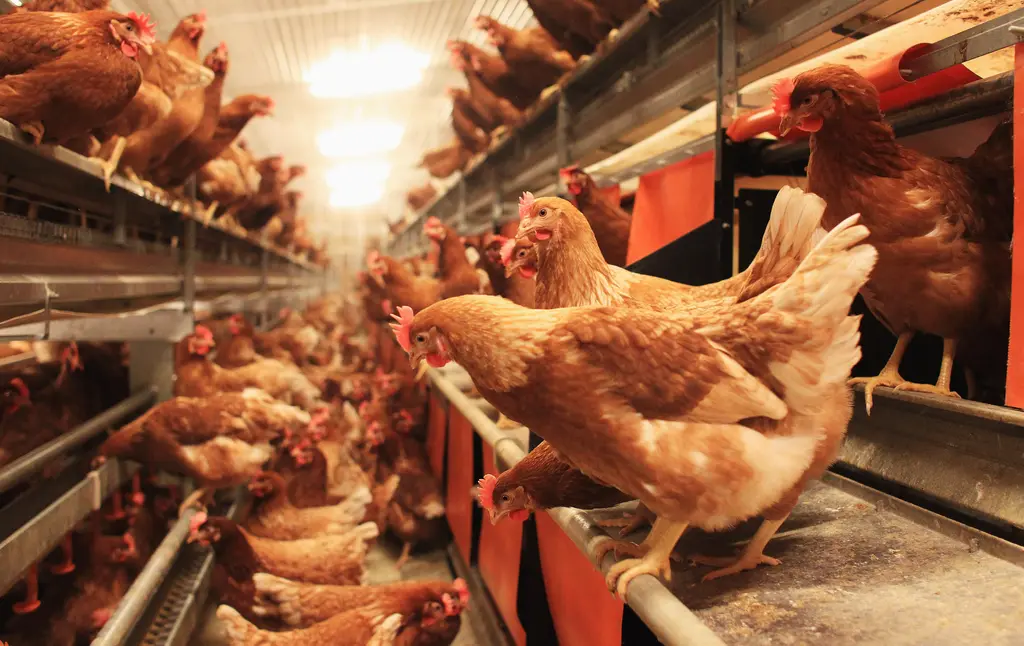
In animal husbandry, in the early detection of diseases using sensor and image data. The farmer is not in the barn around the clock – AI can detect changes in behaviour, even in their absence, and thus promote animal welfare. In crop production, spot spraying systems are one example of how to massively reduce the use of pesticides and also promote biodiversity. If I want to enhance the grassland with clover, spot spraying systems are necessary to be able to use pesticides selectively: If the desired clover variety is just as sensitive to a herbicidal active ingredient as weeds, I cannot apply the same agent across the entire area. AI can also help with the analysis of complex data for sustainability goals or with reducing bureaucracy.
What are the biggest obstacles?
Firstly, a digital infrastructure that is not yet fully utilised. Many agricultural businesses already have individual digital applications, such as machines with ISOBUS, field records or sensor technology. However, these solutions are often not consistently integrated into end-to-end digital processes. Data is recorded digitally and analogously in parallel, or there are media breaks between machines, office software and documentation. At the same time, there are also agricultural entrepreneurs who are very open to technology and already use digital tools in a targeted and successful manner – including AI-based applications. The challenge, therefore, is to connect existing digital building blocks in a meaningful way and then use them systematically.
Since you said “firstly”, what is the second major hurdle?
Secondly, training and skills development. AI is not a plug-and-play solution. For its use to bring real added value, farmers need to understand how the systems work, what data they need, where their limitations and uncertainties lie, and how to interpret and check results correctly. Added to this are issues such as data protection, data sovereignty and IT security, which are becoming increasingly important. Without the relevant knowledge, there is a risk of following the recommendations of systems uncritically or failing to exploit their full potential.
Thirdly, economic and farm-specific issues. Digital and AI-supported solutions usually involve costs for both purchase and ongoing operation. A spot spraying system or AI-supported decision support software may sound technologically attractive, but whether the investment pays off depends heavily on the farm in question: its size, crop rotation, location conditions and work organisation. There is no blanket answer to this question of economic viability; it must be examined on a case-by-case basis.
Once these hurdles have been overcome, can farmers get started with AI right away?
Another important prerequisite is that farmers optimise their analogue operational processes. Only when the processes in the farm's operations are functioning well can they be profitably digitised – and then AI can also be used efficiently. Farm managers should also consider what dependencies on manufacturers they may create by using an AI system – and how they can take precautions in this regard.
You mention the dependencies the use of an AI system can create: Can you explain that in more detail?
The use of AI can create new dependencies in operational processes, especially when central functions are highly digitised and connected online. Farmers must therefore always be prepared for the event that technology fails at short notice – for example, due to power outages, software problems or cyber attacks. Critical systems require clear emergency concepts and a functioning plan B so that operations can continue even without AI.
In all areas of agriculture, AI cannot replace specialist knowledge: farmers must be able to assess whether the recommendations of an AI system regarding feeding or the application of plant protection products are really appropriate. This means that a basic scepticism is needed and that the technology should not be trusted blindly. In practical use, the 24/7 application that I use on my farm should also be accompanied by technical support that is available around the clock. Only then can failures be quickly remedied and the advantages of the technology be reliably exploited.
What does a particularly profitable application of AI in agricultural practice look like in the future?
In my view, a particularly exciting approach lies in AI systems that will be directly integrated into new generations of tractors and machines in the future and actively support people during their work. These systems “look over the driver's shoulder”, learn with every use in the field and continuously improve. On this basis, they can automatically or semi-autonomously take over subtasks related to machine settings, driving strategies or application decisions, adapted to the location and the current situation in the crop.
The big advantage is that the farmer can relinquish control or intervene in a targeted manner depending on the situation. When conditions are stable and the settings are correct, the system can work independently. If conditions change or technical readjustments are necessary, the human operator remains involved at all times. It is precisely this flexible interaction that makes the approach economical and practical.
That's an exciting approach...
In my view, a hybrid human-machine model is crucial here. In the short to medium term, the greatest benefit of AI lies not in fully autonomous systems, but in solutions that specifically complement and relieve one's own professional expertise. In the long term, fully autonomous work is certainly conceivable and technically achievable. For the coming years, however, hybrid systems are the more realistic and profitable option because they create security, build trust and can be better adapted to the diversity of agricultural practices.
So you don't see autonomy as the goal of profitable AI use?
I don't necessarily see autonomy as the goal. AI definitely makes a lot of sense even in hybrid systems, and it's highly likely – and in fact already visible in products – that hybrid systems will enable profitable systems to be brought to market more quickly. Autonomy requires a much more comprehensive understanding of the system itself, the process and its environment than hybridity – where, in case of doubt, humans are still there to correct things. However, the benefits of fully autonomous systems could come into their own when autonomous systems are used in novel or different processes than those commonly used today, which only become possible or economically viable through full autonomy. In other words, autonomy is not the only or primary goal for profitable AI deployment, but in the long term it makes a lot of sense to work towards it.