Technology for planting potatoes
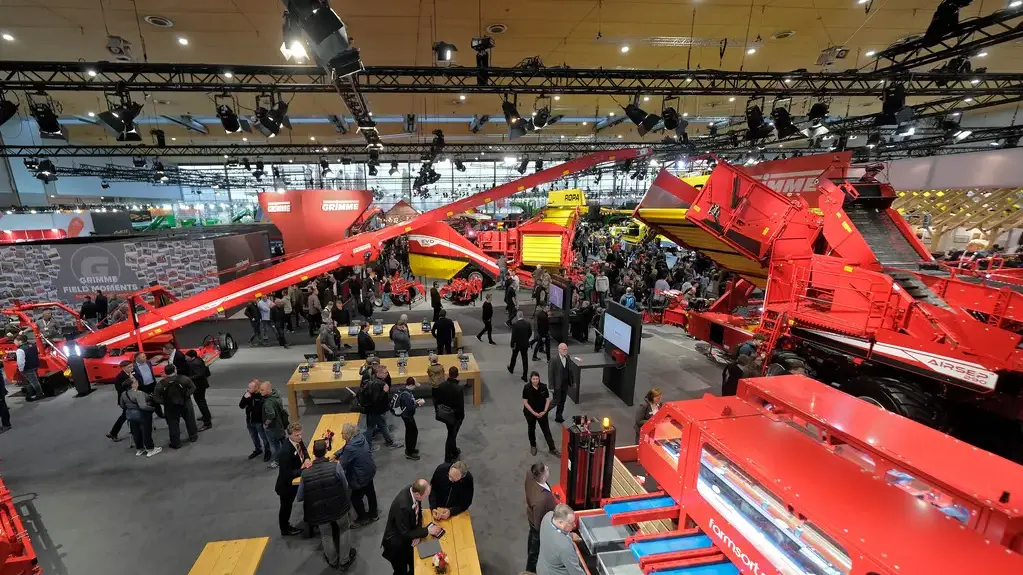
A moderate expansion of the potato cultivation area on individual farms can be most easily compensated for by allowing a slightly longer period of time for cultivation work. However, the changeable weather in recent springs has shown that the economically sensible increase in utilisation reaches its limits in terms of crop production when potatoes still have to be planted at the end of May/beginning of June. Against this background, many farms are switching from mounted to trailed machines when making new purchases, which, in addition to a larger seed potato bunker, also allow for easier combination with other process steps, such as seedbed preparation, underfoot fertilisation and final ridge formation.
With a row width of 0.75 m, four-row planting machines dominate, as they can still be used on public roads without major modifications. The transition to six- or eight-row machines is usually achieved by means of foldable outer planting units, which are supplied from a central storage bunker via controlled feed belts. This design is not yet available for use in separated beds, so two-row solutions predominate here due to the basic row width of 0.90 m.
One focus of discussion and development continues to be the ‘correct’ shape of the final ridge, both in combination with planting and during subsequent ridging or tilling. Manufacturers now offer a wide range of fixed or rotating ridge forming elements to meet the varying requirements of farmers, from firm and smooth to loose and open-pored, and from pyramid-shaped to bulbous or with a very wide ridge crown. These can either be replaced as a complete unit or individually adjusted over a wide range using adjustable forming elements on a tool.
Maintenance of potato crops
Following the EU's refusal to extend the approval of metribuzin, the active ingredient previously used in potato cultivation, chemical weed control, especially post-emergence, has become significantly more challenging. However, the use of mechanical cultivation measures, especially in post-emergence, is associated with an increased risk of damage to the roots and stolons, which can have a negative impact on plant growth. In addition, the challenges associated with ridge cultivation of potatoes become apparent here, as the cultivation tools must be easily adaptable to the above-mentioned variety of ridge shapes in order to achieve the desired shape and structure while protecting the plants as much as possible.
This could be one reason why the development dynamics for mechanical potato cultivation are currently significantly lower than for other row crops, such as sugar beet or vegetables. In addition, the planting distances within the row, which vary more widely depending on the planting technique used, make mechanical inter-plant treatment more difficult. Although the use of RTK (real-time kinematic positioning) signals during potato planting makes it easier to achieve a working width for mechanical cultivation equipment that exceeds the number of rows on the planting machine, individually guided tools remain useful in order to be able to adapt to certain lateral and height fluctuations during ridge formation.
In this context, crop management measures such as ensuring good germination conditions for the planting material, not spacing the rows too far apart and choosing varieties with rapidly developing foliage can also help to suppress weeds. Weeds that develop before the crop is fully established are particularly competitive and have a decisive influence on subsequent weed pressure. Physical weed control methods prior to harvesting can significantly reduce any weeds that may be present, but they are hardly any more effective at preventing regrowth than chemical desiccation. In practice, therefore, combined weed control methods are increasingly being used.
The potato harvest
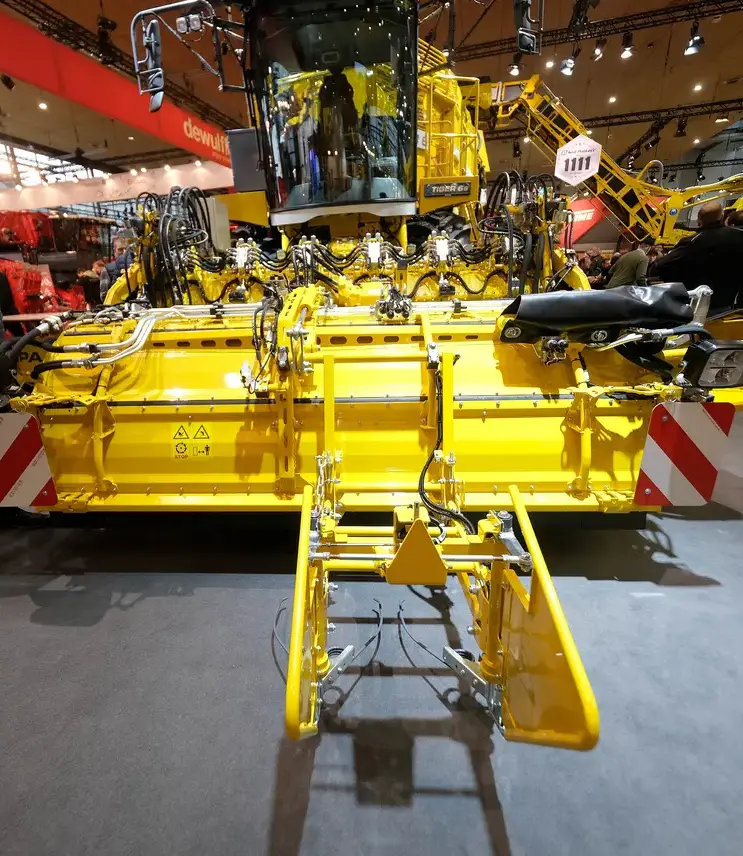
As the area under potato cultivation increases, so does the time pressure during harvesting, as the weather sets clear limits on the end of the harvest window in some years. On the other hand, the longer the tubers remain in the ground after the plants have died or been weeded, the greater the risk of quality problems in the form of disease and pest infestation. As a result of these experiences, the market share of two-row bunker harvesters is growing steadily and has already replaced single-row harvesters as the standard machine in many regions of Germany.
The next growth step has a much more far-reaching impact on the organisation of the harvest. The purchase of an additional two-row bunker harvester also requires a second harvesting team, which often poses a challenge in terms of finding suitable tractor drivers and sorting personnel. In addition, the process costs increase significantly, which initially tends to reverse the area-specific economies of scale effect. At the same time, the subsequent transport and storage chain must be upgraded in order to consistently ensure the higher harvesting performance through an adapted storage capacity. The alternative purchase of a four-row self-propelled harvester has so far been considered by only a few farms, as the soil quality and the amount of stones and clods often vary too greatly. In conjunction with the limited separation and sorting capabilities of four-row self-propelled machines, the proportion of admixtures in the harvest can then increase and negatively affect the quality of the tubers as the harvest progresses. Separate areas would offer more favourable operating conditions here, but the four-row harvesters are too wide for road transport, at least in Germany, due to the prevailing row width of 0.90 m.
Storing and removing potatoes from storage
Farms are attempting to compensate for the limited availability of workers to sort potatoes on the harvesting machines by increasingly using automatic separation devices in the storage line. In addition to opto-electronic and physical detection systems, pneumatic solutions are also used to separate tuber-like impurities. The former can also be modified to sort out externally damaged or rotten tubers. Many devices are available in different working widths, so that the performance is sufficient even for the throughput of large rear receivers.
A growing problem is the higher proportion of potato haulm in the harvest, some of which is not caught by the harvester's wide-mesh haulm chain and is no longer collected by the few or absent workers. The stems in particular get stuck in the machines and can impair the functionality of entire processing plants over time. Inclined rubber finger belts are mainly offered for separation, but depending on the separation intensity and the proportion of admixtures, these can significantly increase the risk of damage to the tubers due to the counterflow principle.
While opto-electronic sorting machines are now standard equipment in most businesses for processing washed potatoes, developments in the area of unwashed potatoes are progressing much more slowly. This is partly due to the fact that machines operating in a horizontal position can only generate a maximum of three different quality or size fractions. For many businesses, this is not sufficient for combining size sorting and quality sorting in a single operation. However, the transition to a solution with horizontally arranged separation technology and a freely selectable number of outlets involves a considerable price increase, which often leads to a rethinking or postponement of the investment. In addition, developments in the field of detecting deviating tuber qualities are continuing to make significant progress with improved camera technology, faster processors and more powerful software, while further adjustments are still required in practical continuous operation with horizontal machines with mechanical and pneumatic ejection technology. Despite intensive brushing of the potatoes, this is mainly due to the remaining soil contamination, which leads to unexpected wear and tear and functional impairments that did not occur in the original development of the machines for washed produce.
Requirements for potato storage
The increasing demand for a year-round supply of domestic raw materials in many areas of use is leading to longer storage times overall, which in turn requires even greater independence from external temperature conditions. This is reflected both in the increasing prevalence of forced ventilation systems and in the increased use of mechanical cooling systems. Direct airflow through the potatoes during forced ventilation enables more effective ventilation management with faster and more targeted ventilation measures and significantly lower energy consumption due to the larger exchange surface between the air and the tubers. This should not be overlooked in the ongoing sustainability efforts within the potato value chain.
These efficiency advantages become even more important when using the significantly more expensive mechanical cooling, while also contributing to greater storage safety and continuous quality maintenance. Natural substances such as propane, which pose only a low environmental risk, are increasingly being used as refrigerants in cooling systems. In addition, the technical assemblies and their joint control systems are being optimised to further improve the efficiency of the entire system.