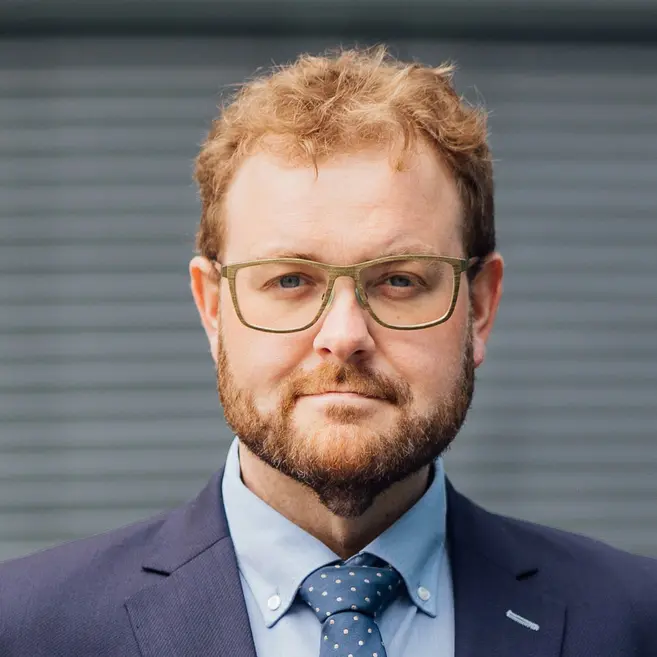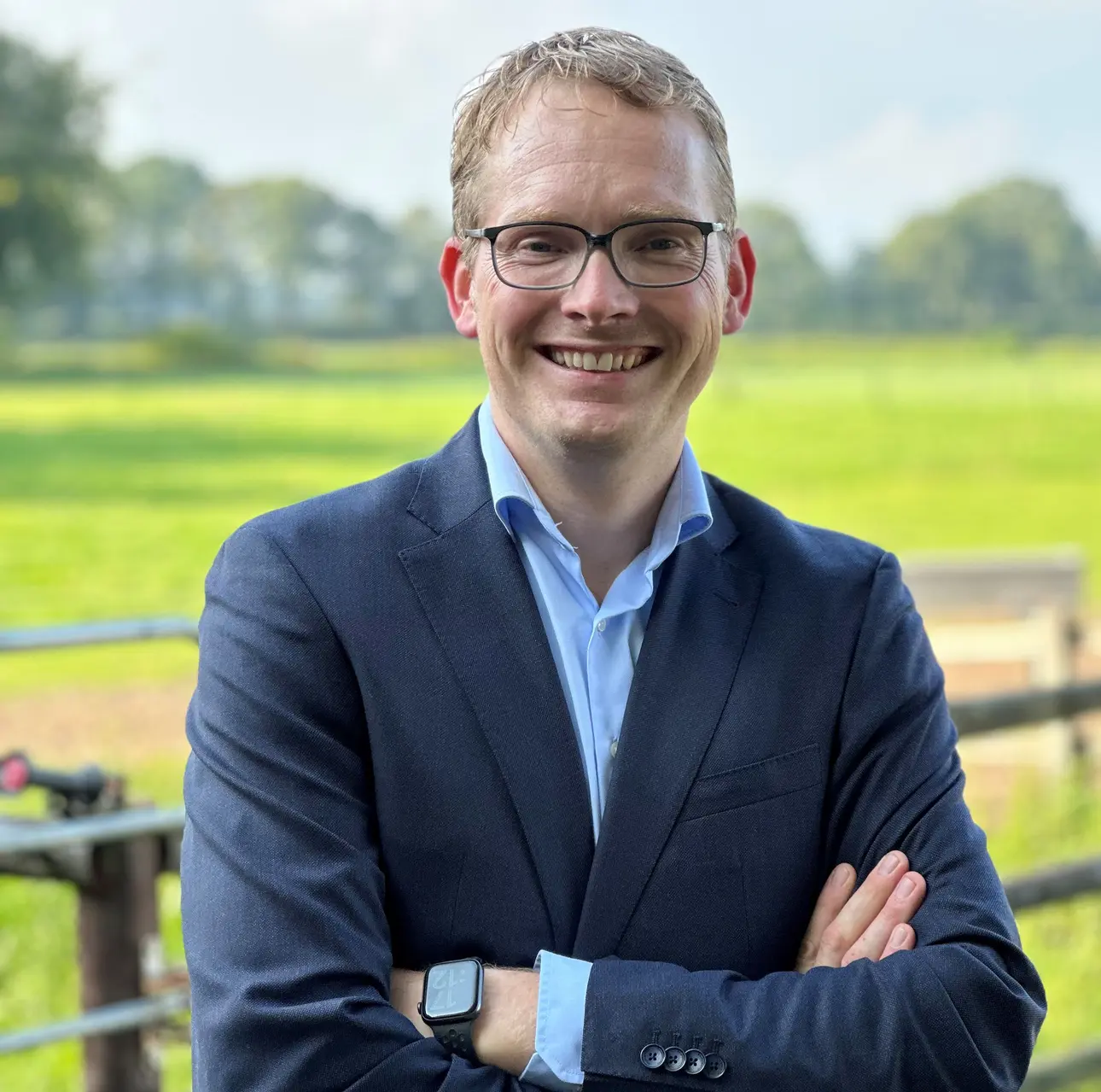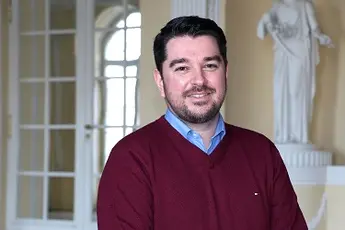
In 2020, Dmytro Yakovenko, head of international development of BTU Biotech Company, formerly BTU-CENTER, was already interviewed by DLG. The interview introduced him as a key voice behind BTU-CENTER’s vision and provided international audiences with insights into the company’s approach to biological solutions for sustainable agriculture. It also marked the beginning of BTU-CENTER’s growing visibility within the European agricultural community and its dialogue with international stakeholders. Here now Dmytro Yakovenko describes the new developments of BTU Biotech Company.
In 2020, you shared BTU-CENTER’s vision with us for the first time. Looking back, how would you describe the company’s development since then?
Since 2020, the agricultural industry has faced a series of major challenges – COVID-19 disruptions, geopolitical instability in Eastern Europe, volatility in fertilizer and energy prices, increasing regulatory pressure on agrochemicals in Europe, and most recently the introduction of CBAM mechanisms. Despite these conditions, BTU has not only maintained its leading position in the biologicals sector, but also significantly expanded both locally and internationally. In 2024, during our 25-year anniversary, we completed a rebranding from BTU-CENTER to BTU Biotech Company – a step that better reflects our international positioning and long-term vision as a biotechnology company.
Over the past five years, the area treated with BTU biological products has increased from 3 million to more than 4 million hectares annually. Our team has expanded from 350 to more than 500 employees, while the international department alone grew from 4 to 23 specialists. A major milestone was the establishment of our office and regional warehouse in Germany, which strengthened our European presence and allowed us to support partners more efficiently. Today, up to 25 BTU products are registered across different European countries, with many of them also certified for organic farming by FiBL (Research Institute of Organic Agriculture).
At the same time, we continued to actively expand internationally. BTU products are now exported to 25 countries across Europe, Asia, North Africa, and Latin America, while we are currently developing partnerships and registrations in many additional markets worldwide.
Research and development remain our core priorities. Our database already includes more than 3,150 field trials, demonstrating over 86% successful results with an average yield increase of around 10%. This accumulated experience helps us better understand how biological products perform under different crops, climates, soils, and application systems.
Looking ahead, we are preparing to launch a new office and R&D complex in Kyiv, which will further strengthen cooperation between our scientific, production, and international teams and support the next stage of BTU’s development.


How has your product portfolio evolved during this period, particularly in the area of microbial and enzyme-based solutions?
This period significantly accelerated our R&D activities. Our focus has been not only on developing new biological products, but also on improving existing formulations to make them more stable, user-friendly, and better adapted to modern agricultural distribution systems.
In practice, most distribution channels do not offer specialized storage conditions, while farmers increasingly expect products that are easy to apply, provide consistent results, and deliver a clear return on investment. As the biologicals industry matures, customers also expect more than yield improvement alone. They want to better understand how products influence soil health, crop quality, environmental sustainability, and ecosystem resilience, as well as the mechanisms behind their performance.
As a result, during recent years we have developed and commercialized improved and stabilized formulations of several key products, including Azotohelp, Groundfix, Ecostern, Trichogel, and Sclerocid.
Another important direction has been the development of new application approaches for biological products. One example is our project on enrichment of granular fertilizers with microorganisms. After more than five years of research and development, this year we entered the commercial phase of the project together with our partner Binfield. The goal is to make biologicals easier to integrate into conventional fertilization systems while improving nutrient use efficiency and supporting soil health.
We have also invested significant efforts into improving compatibility of biologicals with conventional agricultural technologies. To support wider adoption of biologicals within Integrated Pest Management (IPM) systems, BTU conducted compatibility studies with around 500 different agrochemicals, including herbicides, fungicides, insecticides, and fertilizers. This helps farmers integrate biological products into existing spray and fertilization programs more confidently and efficiently.
How do biological solutions contribute today to key challenges such as nutrient efficiency, soil health, and sustainable crop production?
Biological products already play an important role in addressing several major agricultural challenges related to nutrient efficiency, soil degradation, and sustainable crop production. During the last 15 years, BTU has accumulated extensive practical experience through field and laboratory studies under different climatic and agronomic conditions.
One of the key directions is carbon and soil health management. Products such as Ecostern help accelerate decomposition of plant residues, support soil biological activity, improve nutrient cycling, and contribute to carbon retention processes in soil. Long-term studies also indicate their role in reducing humus losses and restoring soil functionality in degraded agricultural systems.

Another important area is phosphorus and potassium mobilization. Based on more than 600 field trials, Groundfix demonstrated stable positive results when integrated into standard farming technologies, with successful outcomes in more than 86% of cases. In many trials, the product also showed the potential to partially reduce mineral fertilizer application rates by 20–30%, while improving nutrient availability and fertilizer efficiency. We also see strong potential in combining microorganisms with different fertilizer systems, including granular fertilizers, liquid fertilizers, and organic fertilizers.
Nitrogen fixation is another highly relevant direction, especially under conditions of volatile nitrogen fertilizer prices and increasing environmental pressure. Azotohelp demonstrated the ability to partially compensate nitrogen demand through biological nitrogen fixation, with field studies showing the equivalent of approximately 20–60 kg/ha of nitrogen, depending on crop and environmental conditions.
Biologicals also contribute to improving application efficiency and stress management. Liposam, a microbial polysaccharide-based adjuvant, helps improve retention of active substances on plant surfaces, reduce losses during application, and support plants under drought or herbicide stress. In crops such as rapeseed and soybean, it is also used to reduce pod cracking before harvest.
Management of abiotic stresses is becoming increasingly important due to climate change. Products such as Organic-Balance, Azotohelp, and Liposam are being studied and applied in programs focused on improving plant tolerance to drought, salinity, flooding, and other environmental stresses.
In parallel, biological solutions are becoming an increasingly important component of integrated pest and disease management systems, supporting more sustainable approaches to crop protection and reducing dependency on conventional chemical inputs.

BTU-CENTER has participated in several DLG events such as International Field Day in Ukraine, Agriplanta in Romania, AGRITECHNICA in Germany. What role have these platforms played in your European market development?
Since the end of the COVID disruptions, participation in DLG events has remained an important part of BTU’s international communication and market development strategy. These platforms provide visibility and direct interaction with professional farmers, distributors, researchers, and industry experts from across Europe and other regions.
DLG Field Days in Germany is especially valuable for demonstrating the practical performance of biological products directly under field conditions. For biologicals, this is extremely important, as farmers want to see not only technical claims, but real crop response, soil condition, and integration into practical farming systems.
The Organic Field Days Research Institute of FiBL (Research Institute of Organic Agriculture) also became an important platform for exchanging experience and discussing modern approaches in sustainable crop nutrition, biological plant protection, and soil health management. Such events help connect scientific developments with practical agricultural implementation.
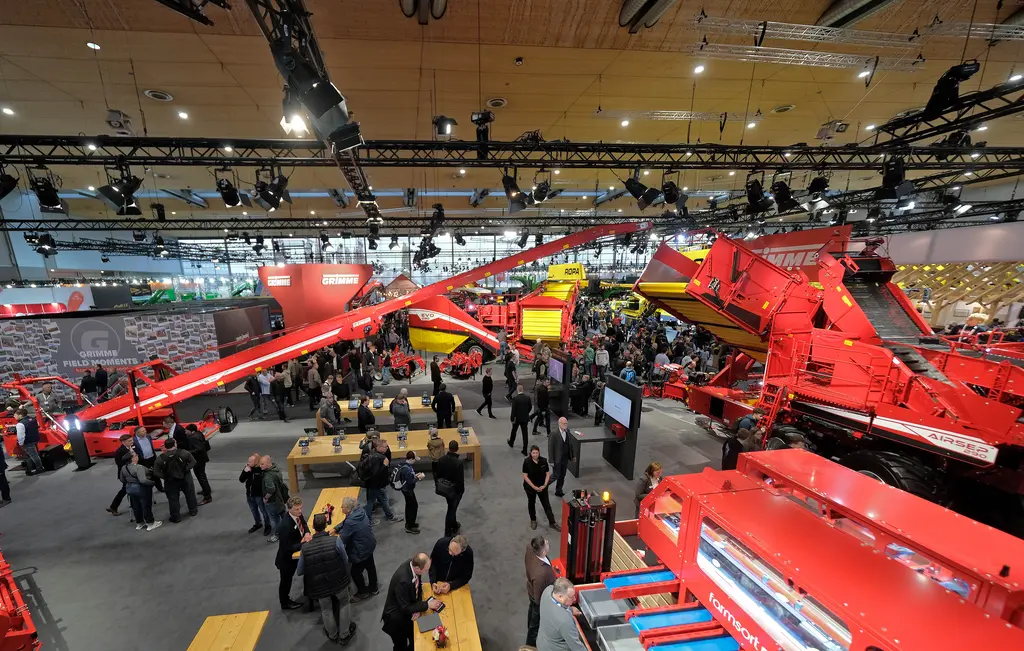
Agritechnica, meanwhile, remains one of the world’s leading agricultural exhibitions and an important meeting point for farmers and agribusiness professionals from many countries. In 2025, BTU participated there as an exhibitor for the first time, which became a very motivating experience for our team. The opportunity to present our experience through the DLG platform and discuss biological technologies with international visitors led to many valuable discussions and new insights for further development.
In general, DLG events consistently attract a highly professional audience focused on innovation, technology, and practical agricultural solutions. We highly appreciate both the quality of organization and the international environment these platforms create, and it is always an honor for BTU to participate in DLG events across different countries and formats.


Finally, what message would you like to share with farmers and industry stakeholders who are considering integrating biological products into their production systems?
My message is simple: do not be afraid to start integrating biological products into your farming systems.
Today, the biologicals market is far more mature than it was only 10 years ago. There are already many science-based and field-proven solutions that help farmers improve nutrient efficiency, crop resilience, and overall performance of agricultural systems.
Of course, biologicals are not a universal replacement for all conventional technologies. Successful implementation requires the right product selection, proper application strategies, and understanding of local agronomic conditions. When implemented correctly, biologicals can significantly improve both the efficiency and consistency of agricultural production.
At the same time, preserving soil health and producing high-quality food is becoming not only an environmental priority, but also an important economic factor for modern agriculture.
We strongly believe that the future of farming will be built on a better balance between productivity and care for nature. We look forward to meeting farmers, partners, and industry experts during upcoming DLG events and continuing this important discussion together!