Hybrid meat products
A bridge between tradition and innovation
More and more people want to eat less meat. Whilst many of the numerous alternatives – from tofu and tempeh to soya cutlets – offer impressive nutritional value, they generally have a different texture and flavour. Furthermore, they tend to be less filling than meat products. One solution is hybrid products – meat products with a higher proportion of vegetables, pulses, mushrooms, fruit or corresponding proteins.
Sceptics might rightly argue that hybrid products are by no means new or innovative. For example, didn’t meatballs with breadcrumbs and carrots already feature on our grandparents’ plates? Haven’t mortadella and Lyoner with mushrooms practically always been on the meat counter? Wasn’t ciuìga, the hearty pork sausage with boiled white turnips, already a staple on the menu of farmers in Trentino some 150 years ago? That’s true.
In reality, however, there are significant differences. For one thing, the practice of adding non-meat ingredients to meat products used to be primarily a means of cutting costs or responding to a shortage of meat. Economic reasons do still play a role today. However, improving nutritional quality through plant-based fibre and phytochemicals, whilst reducing cholesterol and fat, is at least as important. Secondly, the balance in terms of sustainability and environmental protection is better. As the meat content usually still predominates, its nutrients – amino acids, readily available iron and B vitamins – as well as technologically effective connective tissue remain available.
By making a concerted effort to preserve the familiar sensory characteristics of texture, bite and taste in mixed products, manufacturers can facilitate the transition to a more plant-based diet. Two approaches are primarily being pursued: supplementing the addition of plant-based ingredients with special compounds, and using specifically processed plant proteins or mycoprotein.
Suitable for everyday use and modern
The Stern-Wywiol Group, together with its subsidiaries Hydrosol and Planteneers, is one of the companies that has been working on this promising area for some time. Whilst Hydrosol brings extensive expertise in meat and processing to the table, Planteneers specialises in plant-based and fermented proteins, including mycelium-based raw materials. Working closely together, they have developed special stabilisation systems for hybrid products based on proteins and dietary fibre.
When asked about the technological added value of functional compounds compared to the use of individual plant-based raw materials, Dr Pia Meinlschmidt, Head of Product Management at Planteneers, explains: “The use of chopped vegetables, pulses or mushrooms on their own is certainly common practice. However, even these products generally cannot do without some form of stabilisation. In vegetable or quinoa products, binding occurs via intrinsic components of the ingredients themselves, or swollen and gelled starches—such as those from potatoes—could form a viscous network. Heat-denatured plant proteins, in turn, also form a firm structure through cross-linking, with dietary fibre able to mechanically support cohesion.” In many traditional recipes, manufacturers would additionally use egg because its proteins coagulate particularly well when heated and form a stable matrix.
Functional compounds for technological added value
The Stern-Wywiol Group, together with its subsidiaries Hydrosol and Planteneers, is one of the companies that has been working on this promising area for some time. Whilst Hydrosol brings extensive expertise in meat and processing to the table, Planteneers specialises in plant-based and fermented proteins, including mycelium-based raw materials. Working closely together, they have developed special stabilisation systems for hybrid products based on proteins and dietary fibre.
When asked about the technological added value of functional compounds compared to the use of individual plant-based raw materials, Dr Pia Meinlschmidt, Head of Product Management at Planteneers, explains: “The use of chopped vegetables, pulses or mushrooms on their own is certainly common practice. However, even these products generally cannot do without some form of stabilisation. In vegetable or quinoa products, binding occurs via intrinsic components of the ingredients themselves, or swollen and gelled starches—such as those from potatoes—could form a viscous network. Heat-denatured plant proteins, in turn, also form a firm structure through cross-linking, with dietary fibre able to mechanically support cohesion.” In many traditional recipes, manufacturers would additionally use egg because its proteins coagulate particularly well when heated and form a stable matrix. However, this would mean that the end products would not be vegan; egg would have to be declared as an allergen and is also a cost-relevant raw material. Such natural components are not, however, specifically designed to ensure process reliability. For example, fluctuations in raw material quality pose a key problem.
Added to this are the requirements for shelf life and reproducibility in industrial production. “Only with stabilisation tailored to the intended application can we ensure that taste and texture remain consistently high,” summarises Dr Meinlschmidt.
Integration into the production process
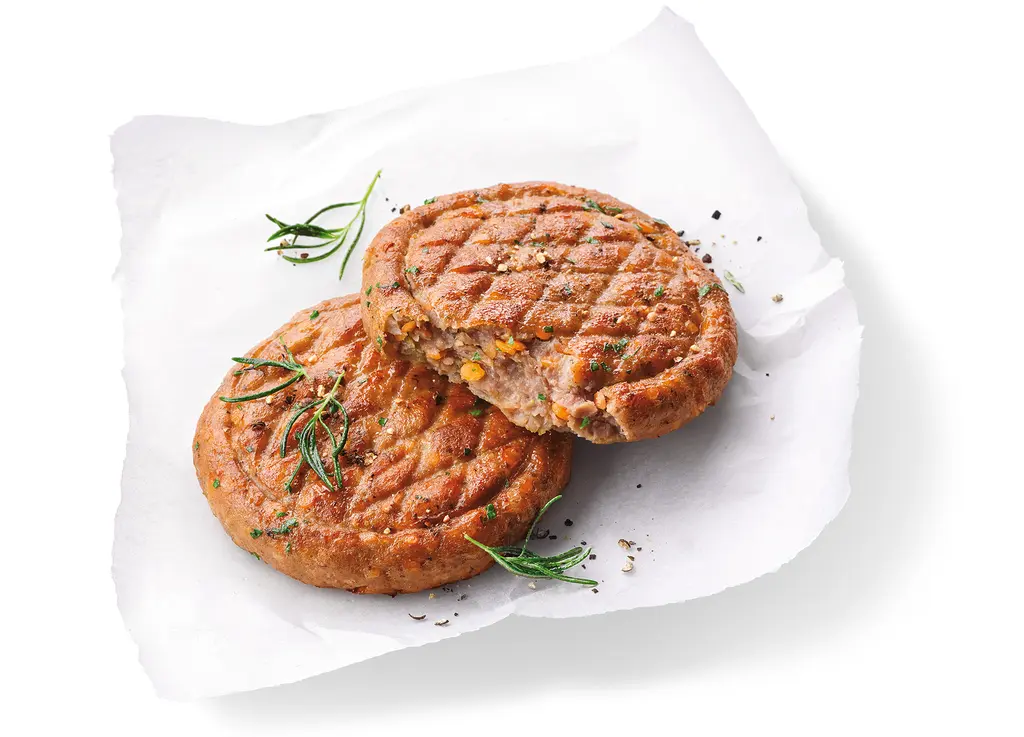
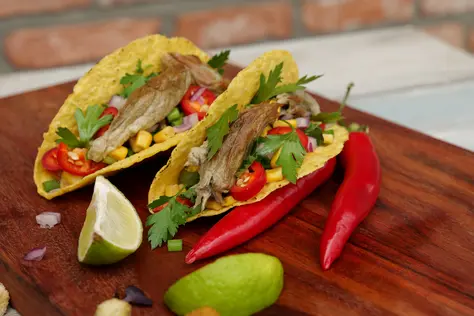
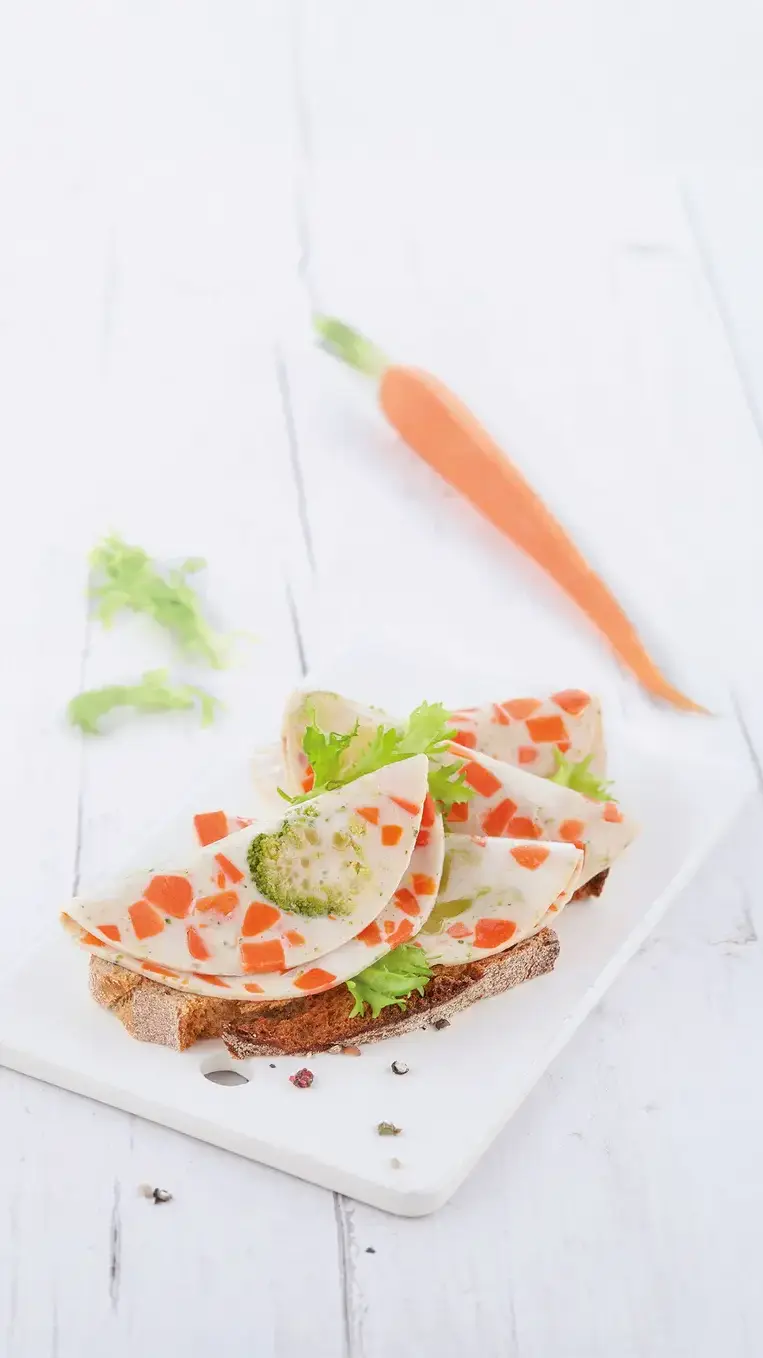
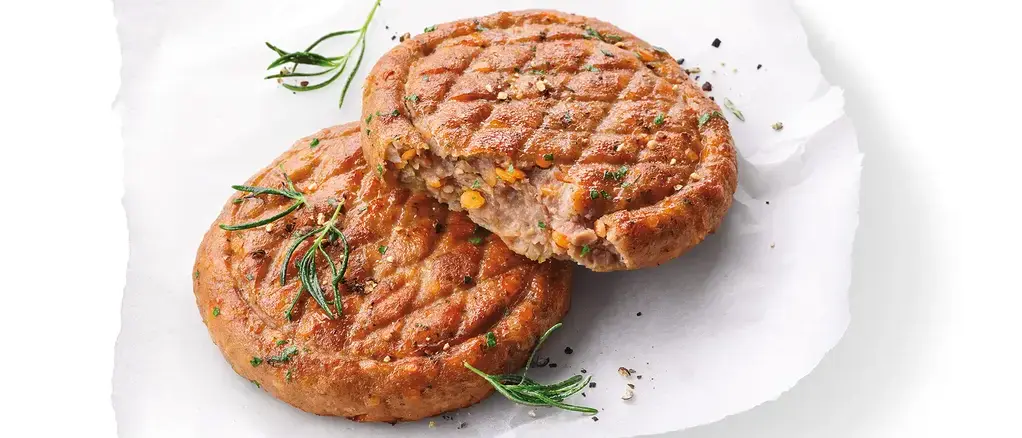
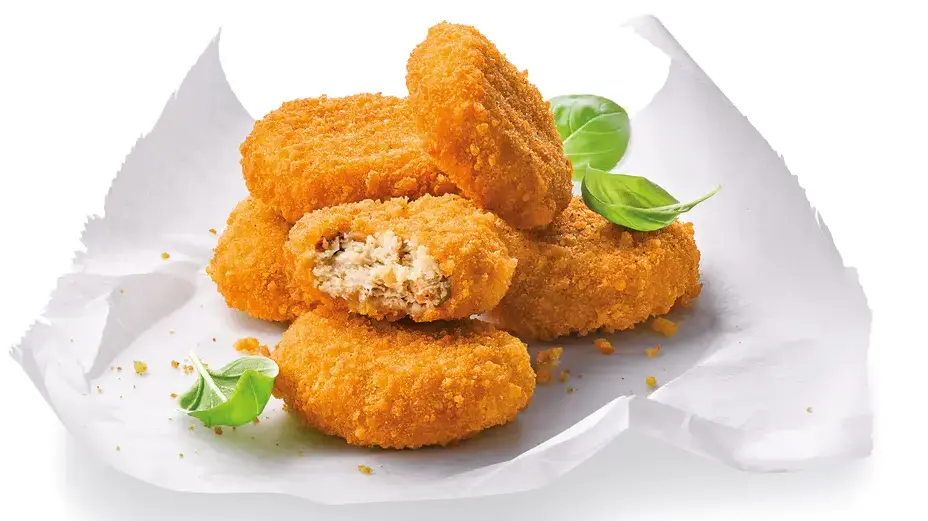
According to the manufacturer, the compounds on offer allow the proportions of meat and non-meat ingredients to be varied flexibly within a wide range, with different types of meat and flavours possible. For instance, visitors to last year’s IFFA were able to discover numerous applications for convenience products such as nuggets, kebabs, cold cuts and ham. The systems are designed to integrate seamlessly into existing production processes. Minced meat and plant-based components such as carrots, broccoli or peppers are mixed with other ingredients, such as spices, and the stabilising system, and then shaped. The quantities to be added are in the low single-digit range. Thanks to its excellent binding properties, the system ensures an optimal texture and bite in the final product, even with a high vegetable content of 25 per cent or more. According to the company, a higher fibre content is also possible, depending on the type of non-meat ingredients used. A further advantage is that vegetable pieces in the product can remain stable and recognisable if desired – even when grilled, deep-fried or pan-fried – or, alternatively, can be finely integrated and processed in a way that is imperceptible to the senses, depending on the target group, for example in products for children.
Pia Meinlschmidt recommends, as plant-based components, vegetables and pulses that bind water well and thus ensure juicy textures. Pure potato protein and innovative mycoprotein are also well suited from a functional perspective. Users should nevertheless bear in mind that the technological function of plant-based ingredients is very much dependent on pre-processing. Processes such as cooking, blanching or mincing alter water-binding capacity, structure and interaction with the meat matrix.
“The choice of raw materials, pre-treatment and manufacturing process must therefore always be viewed as an integrated whole,” says the expert. This applies equally to the use of the end products, i.e. whether they are consumed raw like sliced sausage or heated like burgers. Through a targeted combination of plant-based proteins, dietary fibre and texturising components, Planteneers’ hybrid products can be developed that do not require E-numbers or other additives to be declared.
Hybrid products are designed to fulfil several functions simultaneously – ensuring water binding, emulsification, texture development and stability in both cold and hot applications. In practice, a single plant-based component is usually not sufficient for this.
Dr Pia Meinlschmidt, Head of Product Management at Planteneers
Gaining consumer acceptance
Hybrid products aim to combine the familiar taste and texture of meat products with the benefits of plant-based ingredients. Planteneers believes that if these aspects are clearly communicated, consumers will not perceive hybrid products as a compromise, but as a distinct product category for a conscious, everyday diet that can be flexibly adapted to different target groups.
In general, the total protein content in hybrid products decreases as a result of partially replacing animal meat with plant-based ingredients, which typically have a lower protein content. As the company takes this effect into account when developing its system solutions, a ‘high-protein’ claim remains possible even in 50:50 hybrid applications. If the protein content is to be specifically increased further and brought precisely in line with that of the respective animal counterpart, food manufacturers can use additional protein blends. These are used in addition to the stabilisation system, which is primarily responsible for texture, binding and the structure of the product matrix. In addition, fibre-based functional systems can perform a stabilising function whilst simultaneously helping to significantly increase the fibre content of the final product. The compounds are declared via their respective individual ingredients, for example as plant-based protein or dietary fibre.
Organoleptic properties and functionality
Generally speaking, it would be natural to consider adding isolated plant proteins as an alternative. For sustainability reasons, these are often sourced from by-products of food production. But which plant-based raw materials are particularly suitable for producing high-quality hybrid products? What are the quantitative limits for replacing meat? Addressing these questions systematically was the focus of a research project at the Department of Food Materials Science (Prof. Dr Jochen Weiss) at the University of Hohenheim, which was carried out as a CORNET project in collaboration with, amongst others, the DIL (German Institute of Food Technology) and ILVO (Flanders Research Institute for Agriculture and Fisheries).
Dr Sandra Renz and her colleagues investigated the relationships between raw material composition, physicochemical properties and techno-functionality of plant-based and animal proteins. The protein sources used were peas, potatoes, oilseeds such as sunflower seeds and rapeseed, and cereals (wheat, rice). These were used, in some cases after modification, in forms ranging from powdered (flour, concentrate, isolate) to textured vegetable protein (TVP, HME).
The scientists compared their solubility and miscibility with dissolved meat proteins as key criteria for potential use, with significant differences observed depending on the plant protein source. For example, proteins derived from potatoes generally exhibited good solubility, unlike those from cereals. In further experiments, Renz and her colleagues determined the behaviour of model systems comprising dissolved meat and potato proteins at various pH values and mixing ratios. The isoelectric point (pI) of the meat proteins emerged as a critical threshold: at a pH below the pI (pH ~ 5.5), phase separation occurred. Aggregates formed, the morphology of which differed significantly from the typical meat structure. Another aspect of note was the flavour profile of the plant-based raw materials. For example, oxidation in proteins derived from oilseed meal sometimes led to the formation of off-flavour compounds. This includes a ‘green’ odour in peas. Modifying the proteins through extrusion was able to reduce these to some extent. At the same time, extrudates can enhance the texture of end products. The fact that increasing extrudate concentrations led to a rise in pH could be countered by using glucono-delta-lactone as an acidifier. Small amounts of additives lowered the pH to the level typical for raw sausages (pH ~ 5.0), but only up to a concentration of 15–25%. Higher concentrations, on the other hand, caused noticeable uneven distribution of moisture.
Determination of the mixing compatibility of proteins
In model systems using minced meat and nitrite curing salt, extruded plant proteins again proved to be a good solution. These were more compatible with meat proteins. The research groups’ experiments ultimately showed that the production of ‘attractive’ hybrid products is entirely feasible under the conditions used, at least up to a certain concentration of plant proteins or a certain reduction in meat content. Once again, the plant protein source – such as the plant genus – was a key factor, as was the type of end product. In convenience products, such as burger patties or meatballs, for example, up to 50% plant protein was possible, but only a maximum of half in salami and similar products with a raw sausage character. “Our work on characterising the composition and physicochemical properties of plant proteins can help the food industry to more easily identify suitable raw materials and concentrations for the production of hybrid products, as well as pure meat alternatives,” concluded Sandra Renz.
Separately, ADM has developed a ready-to-use protein solution for high-protein hot dogs or similar hybrid products, which it also presented at the industry’s latest IFFA trade fair. This is a special soya protein concentrate made from non-genetically modified soya beans grown in Serbia. According to the US-based company, the product offers excellent water and fat binding properties, as well as salt tolerance. Furthermore, the emulsions formed are said to withstand even harsher processes such as pasteurisation or sterilisation without damage, whilst the gels remain elastic. At the trade fair, ADM also highlighted the favourable protein quality and the fibre content.
Great potential for hybrid meat products
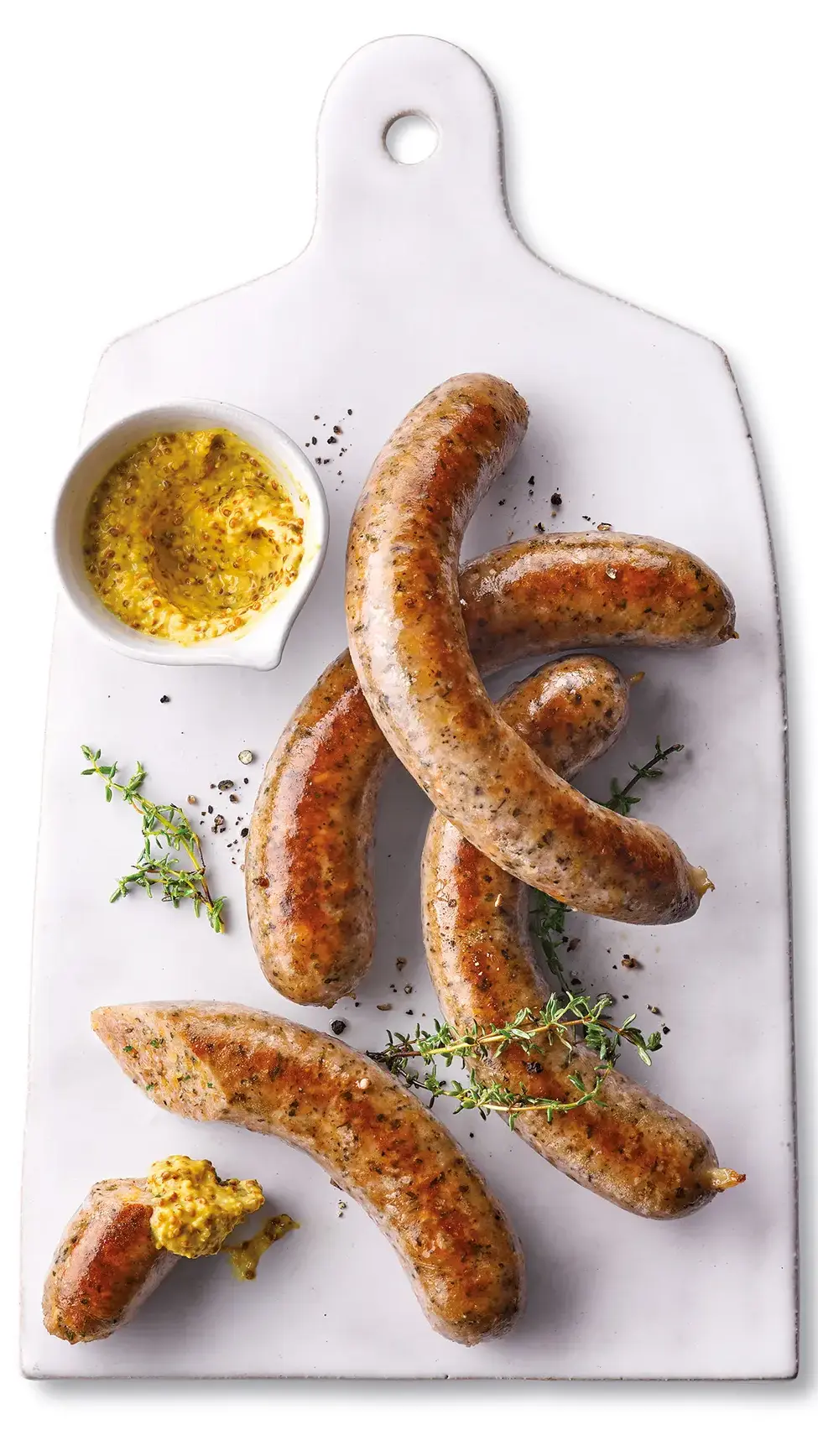
Hybrid meat products are ideally suited not least for commercial kitchens and communal catering, from nurseries to hospitals, as well as small-scale producers, notes FiBL Projekte GmbH (Research Institute of Organic Agriculture). To further raise awareness of this potential, the institute organised a practical workshop last summer for organic butchers and farmers who sell their produce directly. Together with a master butcher, sausage varieties containing carrots, mushrooms or potatoes were produced using different types of meat. The participants were able to gain valuable experience that might enable them to manage without special ingredients after all. The importance of achieving a good binding consistency played a particularly significant role in the workshop. The butcher pointed out, for example, that adding a certain amount of salt breaks down the muscle proteins, which then coagulate during subsequent heating to form a stable network that effectively binds the fat and vegetables together. Furthermore, the participants were able to observe for themselves that the meat should be partially frozen before mincing to ensure good binding of the mixture. The reason: the naturally generated heat is reduced, and the risk of premature protein coagulation is lowered. The practical tip to use a slow speed when mincing or cutting followed the same principle. Finally, another key message was that hybrid meat products allow the use of less sought-after, sinewy meat, thereby partially compensating for the connective tissue lacking in vegetables. A sustainable side effect.