The Earth is getting warmer and warmer, yet fewer and fewer people are concerned about it. Is this because they only see the cost of making changes? Or is climate action not being communicated convincingly enough? And what does all this have to do with agriculture? The outcome of the 30th UN Climate Change Conference in Belém, Brazil, showed once again that progress is painstakingly slow. It seems people have resigned themselves to the fact that the target of limiting global warming to 1.5 degrees – agreed at the Paris Climate Conference ten years ago – is unrealistic.
Why does there seem to be a lack of interest in climate protection?
Both politicians and ‘the public’ experience the consequences of climate change on a daily basis. Only a minority (albeit one with global influence) denies climate change. As for the measures to combat it, we really no longer have a problem with understanding the issue. However, the reasons for the slow progress are well known from a socio-economic perspective: Everyone tries to maximise their individual benefit for as long and as far as possible. Whoever makes the first move has already lost. Why should an individual, a professional group or a state take the lead and harm itself in the short term – when results will only be felt in the long term – whilst ‘the others’ carry on as before? Only if, alongside climate protection, other benefits emerge that make the measure worthwhile.

What can be done to combat climate action fatigue?
A popular refrain in Germany today goes: ‘We must do something about climate change, but we must not jeopardise our prosperity in the process.’ And what can a single country actually achieve on its own? A study by the Humboldt University of Berlin, commissioned by the ‘Heimatwurzeln’ association – which advocates, amongst other things, for ‘middle-class climate action’ – presented representative findings in November that shed more light on this tension between reason and emotion. The study found that the argument that policymakers should further expand climate action found little support.
So perhaps we need to frame climate protection differently? Do we need a new narrative that emphasises conservative approaches rather than progressive ones? In other words, instead of innovation, progress and openness to change, we should focus on tradition, sovereignty, social norms and social order.
The study’s finding is that, amongst people who do not deny climate change but have reservations about the measures, conservative narratives could indeed bring about a change in attitude, for example with regard to renewable energy. However, these narratives would need to come from a ‘conservative source’.
What do such considerations have to do with climate protection in agriculture?
Many farmers are structurally conservative. That does not mean, however, that they are opposed to climate protection. On the contrary: agriculture, more than any other sector of the economy, is affected by climate change. Yet acceptance of measures could also grow amongst farmers if neither they nor those proposing them are explicitly seen as ‘green’. And if climate protection is viewed in the context of the farm as a whole and its future prospects. This does not mean unrestricted voluntary action. The ‘carbon footprint initiatives’ of dairies or food retailers point the way forward, provided they are communicated effectively.
But how successful can such approaches be when viewed in the broader context? The best approach would be to combine the benefits of climate protection with no loss of productivity – or even increased productivity. Let’s start with a brief fact-check.
Can climate and productivity targets be achieved at the same time?
The climate summit in Brazil was supposed to be a ‘moment of truth’. It turned out to be just that, though not in the way the organisers had intended. The truth is that no one is seriously interested in climate protection if it runs counter to their own interests or, indeed, their positions of power. The ‘usual suspects’ stood in the way: Saudi Arabia, Russia and the USA. But so did India, whose economy benefits immensely from cheap Russian oil.
In Europe, GHG reduction targets remain in place (90 % compared with 1990 levels). The aim is to achieve them to a greater extent than before through natural carbon sinks, which are to be incorporated into the emissions trading scheme. If only wishful thinking weren’t obscuring reality! As far as agriculture in Germany is concerned, at least, it can be said that storage capacities are often overestimated, whilst the potential for savings in peatlands and methane is not being tackled consistently enough. This lacks credibility: one cannot demand on a large scale what one does not at least attempt on a small scale. The Danes are currently demonstrating just what is possible. However, rather than ‘pricing emissions’, a system of ‘rewarding avoidance’ would be more acceptable to farmers too. After all, it is not only what one says that matters, but also how.
Thomas Preusse

Where does agriculture rank in terms of climate protection?
Together with Prof. Dr Heinz Flessa from the Thünen Institute for Agricultural Climate Protection, we have systematically reviewed the climate-relevant areas of agriculture. Our findings show that, whilst we cannot expect miracles, progress is being made. Although the sectoral climate protection targets have lost some of their significance following the 2024 amendment to the Climate Protection Act – which focuses on cross-sectoral emissions reductions – they still provide the guidelines for emissions reductions in the individual sectors.
Emissions from agriculture in Germany are to be reduced to 56 million tonnes of CO₂ equivalents per year by 2030. This target currently appears achievable. But is there any further potential at all? And where? Greenhouse gas emissions from the agricultural sector accounted for around 9 per cent of Germany’s total GHG emissions in 2023. If GHG emissions from agriculturally used peatlands are also taken into account, the share rises to around 14 per cent. These emissions consist of nitrous oxide (18%), methane (34%) and carbon dioxide (48%). Fertiliser use, cattle farming and drained peatlands are therefore the main ‘climate offenders’ in the agricultural sector. In addition, there are reduction targets for ammonia emissions, 95% of which originate from agriculture.
What can the agricultural sector do directly to help combat climate change?
Around 75 per cent of nitrous oxide emissions in Germany come from agriculture. It is quite clear how these can be reduced:
- Use nitrogen fertiliser efficiently and avoid nitrogen surpluses in fertilisation and feeding.
- Ensure that nitrogen recycling on the farm is as efficient as possible and avoid nitrogen losses that harm the environment and climate, such as nitrate leaching or ammonia emissions. Every kilogramme of fertiliser nitrogen saved, and the prevention of nitrate leaching and ammonia emissions, makes a direct contribution to climate protection.
- Nitrification inhibitors are another option for reducing fertiliser-induced emissions. However, it remains to be seen whether the new generation of fertilisers containing nitrification inhibitors, which use significantly lower quantities of active ingredients, also have climate protection benefits.
- Good soil structure and avoiding the application of fertiliser along wheel tracks help to reduce the risk of increased nitrous oxide emissions. Overall, ‘only’ 1 to 3 kg N/ha per year is usually lost as nitrous oxide from fertiliser nitrogen. This is barely noticeable in the fertiliser balance. However, nitrous oxide is a particularly harmful greenhouse gas. The climate impact of one metric tonne of nitrous oxide is equivalent to that of 265 t CO₂. Emissions have fallen significantly over the last ten years. The main reason for this is a decline in the use of synthetic nitrogen fertilisers, due to stricter fertilisation regulations and high fertiliser prices.
Avoiding ammonia emissions
Ammonia emissions are harmful to the environment and human health. They also have an indirect impact on the climate, as they cause diffuse fertilisation of the landscape via air pollution and nitrogen deposition, thereby increasing nitrous oxide levels.
On average, around 8% of the fertiliser nitrogen in urea escapes into the air, whereas with KAS the figure is only 1 to 2%. In Germany, the use of urea has been subject to emission-reduction requirements since 2020: it must be applied with a urease inhibitor or incorporated into the soil within four hours. Thus, the form of fertiliser is also a lever for climate protection – were it not for the price.
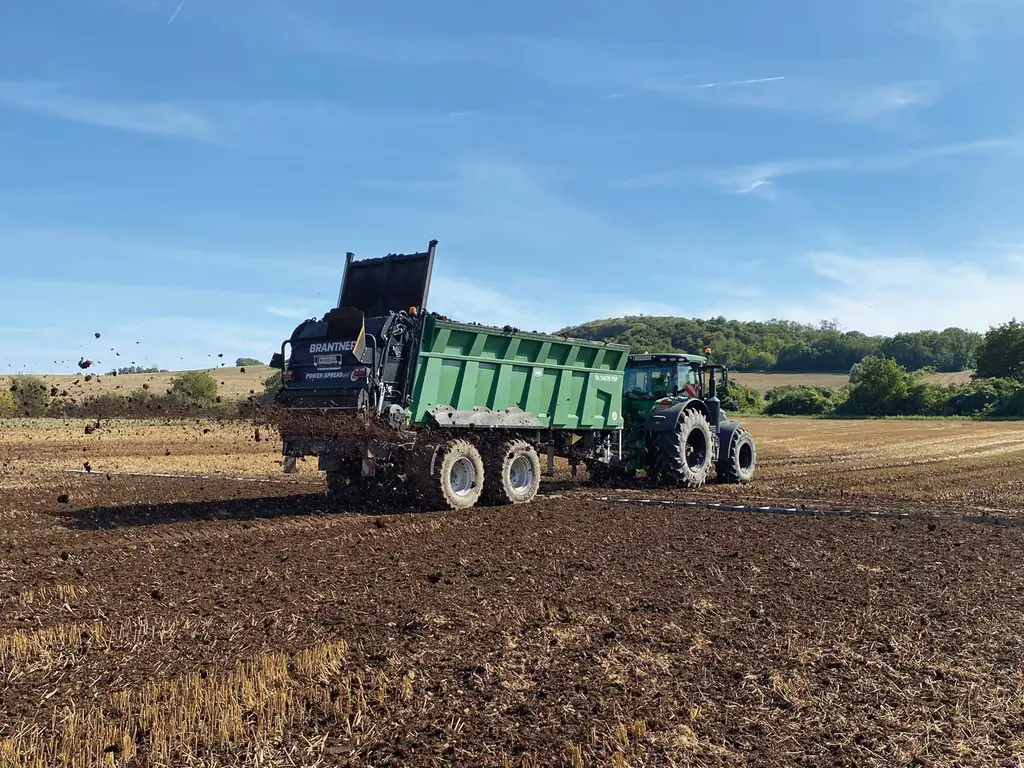
There is particularly great potential in the livestock sector: protein-optimised feeding and a reduction in nitrogen excretion, as well as technical measures to reduce emissions in livestock housing and during the storage and application of slurry, digestate and manure, are the key levers for action.
Reducing methane emissions from agriculture
In Germany, around 74% of methane emissions originate from agriculture. The vast majority of these emissions are released through the digestion of cattle and the storage of animal manure, for example in the form of slurry. Methane emissions from cattle can be influenced to a limited extent by feed rations, animal performance and animal health. Feed additives can also reduce methane production in the rumen. The increase in milk yield per cow has led to a significant reduction in methane emissions per litre of milk. Added to this is the declining number of cattle.
Emissions from slurry storage can be reduced by using the slurry directly for biogas production – the biomethane produced can replace fossil fuels.
Without drastic reductions in emissions from moorland, Germany will not achieve its climate targets
Drained moors are the biggest sources of emissions in agriculture. In Germany, they release more greenhouse gases than the total methane emissions from livestock farming. However, moorland conservation and significant reductions in emissions can only be achieved through near-complete rewetting, which precludes their current use. There is certainly a great deal of talk and research into new forms of land use (ranging from paludiculture to photovoltaics). But for most of the farmers affected, these options are, firstly, a distant prospect and, secondly, very uncertain in terms of economic returns. Given the comparatively small area (around 7% of agricultural land) that has a huge impact on the climate, and the lack of prospects – at least in the short term – a major, generation-spanning initiative is needed here, similar to the phase-out of coal. The ‘value for money’ could also add up on a large scale: after fossil fuels, peatlands are the second most significant source of CO₂ in Germany.

What about sequestering greenhouse gases?
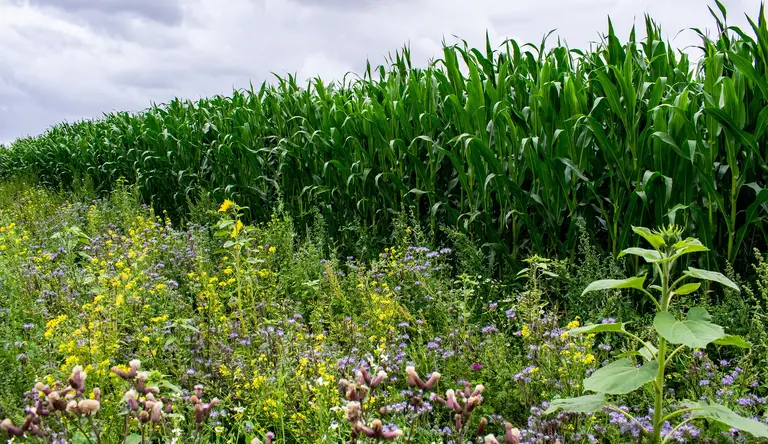
The sequestration of atmospheric CO₂ in soils as a ‘by-product’ of farming has raised many hopes in recent years, hopes that are unlikely to be fulfilled. There are certainly benefits to be gained from maintaining continuous ground cover, using deep-rooted plants, growing catch crops or planting hedgerows. However, many approaches to regenerative agriculture yield relatively uncertain results (at least according to the Thünen Institute). The discussion itself, however, is immensely beneficial. Farmers’ interest in the soil and in promoting soil fertility has increased significantly. Without the detour via potential climate benefits, it is unlikely that the soil alone would have been brought into the conversation to such an extent. Here, too, the right story is key!
Conclusion
The greatest potential for limiting emissions from agriculture lies in livestock farming and the rewetting of peatlands. Unlike with nitrous oxide and, to some extent, ammonia, both of these can only be achieved to a limited extent as by-products of agricultural measures that are sensible in their own right. Nevertheless, it remains important to continue seeking win-win solutions. After all, many people are unmoved by finger-wagging; governing through bans can easily lead to shifts in political majorities. Finding a ‘positive narrative’ for fundamental change is certainly more difficult. But one thing is clear: doing nothing at all is no solution.