How can environmental and climate targets be achieved without threatening productivity? That is the central question at a research farm run by the University of Giessen. The need to build a new dairy barn a few years ago provided the impetus for a major research project.
Sometimes big stories grow out of small things. It’s easy to imagine scientists hatching ideas that, when all is said and done, have only a tenuous connection to ‘real life’. That’s not how it is – or at least it shouldn’t be. The Green Dairy project run by the Universities of Giessen and Kassel at the Gladbacherhof near Limburg an der Lahn provides a fine example of how wide-ranging research can arise from very specific practical needs.
The experimental farm for organic farming manages 100 ha of arable land and 80 ha of grassland and keeps 130 high-yielding cows. For several years now, research has centred on the question: can high-yield Black-and-White cows also be fed a diet containing more grass and less maize, as is often called for in public? And does such a low-input system actually bring benefits for animal welfare and important ecosystem services such as climate protection?

The Green Dairy Project
The initial impetus for the Green Dairy Project came in 2017 from the Fertiliser Regulations. “For water protection reasons, we needed a large slurry tank,” explains Prof. Dr Andreas Gattinger, Head of the Chair of Organic Farming at the University of Giessen. “We could only have built it a long way from the site of the old barn.” And so, in this case, the tail wagged the dog: a new building was needed! And while we were at it, we might as well develop the appropriate research concept at the same time! And so there are now 64 cows on either side of the feeding table, each fed a different diet. Their slurry is collected in two separate tanks. Based on a wealth of animal data, great care was taken to ensure that, on average, the two groups do not differ from one another either phenotypically or genotypically.
A unique experimental setup in the new dairy barn
The idea of studying two herds of the same genetic background and their associated feed production – including their climatic and environmental impacts – side by side under otherwise identical conditions actually arose during the planning of the barn on the farm and has led to an experimental setup that is probably unique worldwide. Underlying this is also the age-old question of whether high-input genetics can tolerate low-input feeding at all. “In organic cattle farming, the debate has focused for too long on the issue of horns,” says Gattinger. “Yet the feed base – and with it, land use – is the be-all and end-all.”
The change in feeding regime
The rations were not changed all at once, but gradually over a period of 14 weeks. In the high-input variant, grass silage was replaced by even more maize; in the low-input variant, maize was removed entirely, meaning that half the ration here comes from grassland, combined with a third less concentrate. “It was quite a challenge for the cows in the low-input group,” reports Dr Deise Knob, who is overseeing this project. “However, the animals are adapting to the changed diet.” This is demonstrated by a wealth of regularly monitored metabolic parameters. The adaptation effect is even more pronounced in first-lactation cows. This may indicate a process of ‘foetal programming’. This hypothesis suggests that even foetuses growing up in a specific nutritional environment provided by their mothers adapt to this situation. Consequently, the genetic disposition of animals descended from low-input cows could change, albeit possibly at the cost of a lower birth weight and potential difficulties in adapting when they are to be fed a full diet again. The interplay between feeding and genetics – which is being investigated using genetic markers – certainly deserves closer attention. This also applies to methane emissions, which are measured both using the ‘methane sniffer’ in the milking parlour and via a mobile climate monitoring unit directly in the barn. It appears that cows also have a genetic predisposition in this regard. The breeding bulls used also play a role: the new relative breeding value for feed efficiency provides an indirect indication of emissions.
The Gladbacherhof Farm
The Hessian state-owned Gladbacherhof estate, which has been an organic farm since 1983, has been used by the University of Giessen as a teaching and research farm since 1990. The farm cultivates 100 ha of arable land and 80 ha of grassland and keeps 130 dairy cows. These are housed in the new research barn; the young stock are kept in the existing cubicle and deep-litter barns. Some of the grain is processed and sold as seed. The farm shop offers a wide range of products, including those produced on the farm itself, sourced from neighbours and purchased from wholesalers. A defining feature of the farm is the integration of production, teaching and research, as well as ‘community engagement’. The latter encompasses not only exchanges with other farmers, but also, for example, further education and cultural activities organised by the Gladbacherhof Organic Farming Support Association.
In addition to the Green Dairy project, the farm’s research focuses generally on production issues in organic farming and on those relating to climate change. For this reason, three different agroforestry systems have been integrated over the past few years.
Adaptation to feeding
Cows’ genetics can cope with a wide range of feeding regimes. Milk yield, however, tends not to: 22 kg versus 20 kg of dry matter intake per day under intensive and extensive feeding regimes respectively resulted in 9,000 kg and 6,500 kg per year last year. This resulted in financial losses of €30,000 for the farm. On the other hand, one could point to the significantly higher proportion of omega-3 fatty acids or the increased fat and protein content resulting from the higher proportion of grass. Deise Knob emphasises, however, that she is not overseeing a herd trial or a feeding trial, but rather a comparison of systems. Because everything is interconnected, milk yield and feed costs are not the only ‘currency’. However, several more years of measurements are needed to obtain reliable data on methane.
The same applies to the question of whether feed with a lower energy content leads to greater longevity – meaning fewer animals in the overall system and, consequently, lower greenhouse gas emissions from the rearing phase. What is important, first and foremost, is the wealth of data from a wide variety of fields that is now available for the first time. One challenge, however, is to bring together the many individual findings on performance and yields, nutrient cycles, emissions, biodiversity and economic viability to form a clear picture.
Trials on arable land and grassland
A distinctive feature of the Green Dairy project is its consideration of the entire production cycle. Consequently, trial plots for arable farming and grassland were established in parallel with the two intensity levels of dairy farming.
In the ‘Arable’ core experiment, the two intensity levels are based on the eight-crop rotation that the farm has always followed. In the ‘High Input’ system, alfalfa is followed twice by winter wheat (bread wheat), maize or sorghum (fodder), triticale (fodder), field beans (fodder), winter spelt (food) and oats (as food), plus alfalfa as an undersown crop. In the ‘Low Input’ system, the higher proportion of grass in the ration means that the share of food crops may be higher compared with fodder crops: maize/sorghum is replaced by potatoes, and triticale by bread wheat. Instead of the wheat used in the ‘High Input’ variant, the ‘Low Input’ system uses winter rye, also for human consumption. Fertiliser is applied as required in both systems. Accompanying studies address, for example, nitrogen fixation, the microbiome on and around the roots, or the suitability of sorghum.
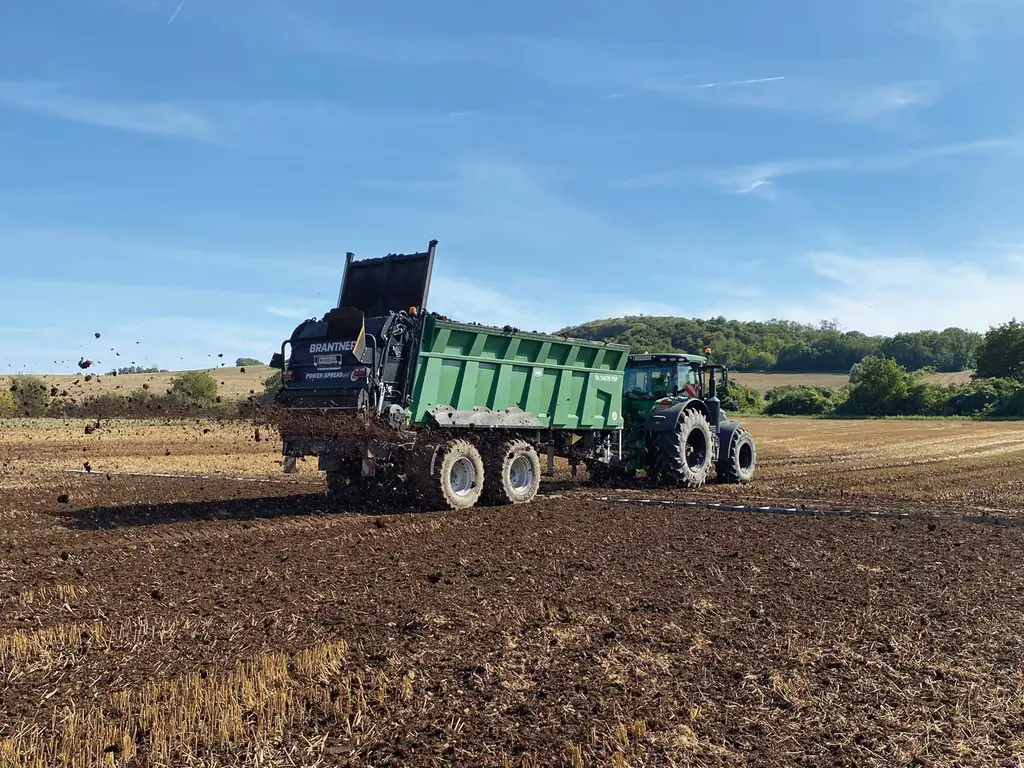
In the ‘Grassland’ core experiment (grass silage only) for both variants, only manure from high-input or low-input cows is applied, respectively. This is further subdivided into raw manure and separated manure. Environmental studies cover, amongst other things, nitrogen fluxes, CO₂ sequestration, emissions of CO₂, methane and nitrous oxide, and the soil microbiome. This results ‘incidentally’ in an invaluable pool of data for further research.
The opportunities offered by alternative husbandry and feeding systems
This had already been demonstrated by a trial at the University of Kiel’s Lindhof experimental farm. Here, high-energy forage in the form of (arable) clover-grass was grazed by Jersey cows in summer and supplemented with grass silage in winter. High-yield cows are unsuitable for full-grazing systems. With a herd average of 7,800 kg, the Lindhof farm was 1,700 kg below the average of farms in the Schleswig-Holstein Cattle Advisory Service; however, costs were also lower, meaning that profitability was comparable. A practical challenge is that such a complex system of rotational and portion grazing demands a great deal of skill and attention from the farmer.
‘Sustainable intensity’ as the result?
At the Gladbacherhof, the pendulum of understanding may well be swinging in a different direction. Even though Prof. Gattinger does not advocate for higher or lower intensity, preferring instead to speak of ‘scopes for action’ that need to be optimised: it is not only milk yields that point towards higher intensity. Preliminary simulations have shown that a switch to a grassland-based system is unlikely to ‘produce’ higher environmental performance, at least per litre of milk. Is the energy concentration in maize unbeatable, at least for HF cattle? The Green Dairy project has set out to confirm or refute such assumptions with data. In conjunction with low-input farming, Fleckvieh cattle are probably better suited, particularly with regard to bull calves.
However, the reasons for the less favourable climate impact of the low-input herd could also be due to the poorer quality of forage from grassland in recent years. Furthermore, the carbon sink capacity of the grassland has yet to be taken into account. This could lead to a further reduction in emissions from the low-input herd.

Circular economy as a prerequisite
Both approaches – one at the Gladbacherhof in Hesse and the other at the Lindhof in Schleswig-Holstein, which is also organically managed – are based on the idea of (re)bringing arable farming and livestock rearing closer together in specific areas. One benefits from energy-rich fodder, the other from nitrogen fixation and soil improvement through clover-grass mixtures or lucerne. However, they are confronted with a reality that, in both farming systems, has so far tended to move away from this ideal.
Andreas Gattinger argues that the interaction between livestock farming and arable farming, in the spirit of a circular economy, is more resilient both economically and ecologically. It acts as a buffer against economic fluctuations as well as the consequences of climate change. And is therefore attractive to both organic and conventional farms alike. Perhaps it does not always allow farmers to capitalise on peak yields in good years, but the troughs in bad years are less severe. It is important to involve practitioners ‘on an equal footing’ from the outset in such considerations. This is achieved through diverse communication channels and a network of demonstration farms.
Conclusion
Combining productivity and sustainability has become a popular buzzword. In practice, however, it often proves to be a challenge: the highly productive division of labour between arable farming and livestock rearing is prone to disrupted nutrient cycles, resulting, for example, in nitrogen surpluses, greenhouse gas emissions or soil degradation. By contrast, systems with lower inputs and a circular economy often lack productivity and economic viability. The Green Dairy project at the Gladbacherhof, part of the University of Giessen, has set out to strike a balance between these two extremes on the basis of a wealth of data.