

Cécile Deterre, Austria – Gold Winner of the Women in Ag Award in the category Technology & Research
Cécile Deterre is a former particle physicist who is now applying her deep knowledge of analytical methods, machine learning, and data science to reshape the aquaculture space. Drawing on this background, she is developing algorithms for land-based recirculating aquaculture systems aimed at sustainable seafood production. These systems are designed to be managed with advanced control.
What is your contribution to sustainable aquaculture?
My contribution to the agriculture industry sits at the intersection of data science, automation, and sustainable food systems. After over a decade in particle physics, I chose to apply my technical expertise to a global challenge: enabling more resilient and sustainable seafood production. At Blue Planet Ecosystems, I lead the Data Science and IT team, where we are developing modular, land-based aquaculture systems designed to be fully automated and environmentally responsible. These systems aim to recirculate nutrients in a closed-loop, inspired by natural aquatic processes, while minimizing reliance on ocean-derived feed. My focus is on building the digital layer of these systems: a data architecture and control logic that can support real-time decision-making. This includes early-stage work on a digital twin model to simulate and optimize biological and environmental parameters, and experimental use of machine learning and computer vision to monitor fish behavior and health. Drawing from methods used to analyze large-scale physics data—such as neural networks, Bayesian inference, and decision trees—I work to adapt these tools to the complex dynamics of aquatic ecosystems. I also oversee the design of the IoT and software infrastructure to ensure seamless data flow across hardware components and installations. I believe our approach can lay the groundwork for a scalable, intelligent aquaculture platform that enhances food security and reduces environmental impact.
What inspired your move from particle physics to aquaculture?
I absolutely loved particle physics and still do. But over time, my daily work became increasingly specialised, and I wanted to apply my skills to concrete problems with a more visible impact.
When I met the co-founders of Blue Planet Ecosystems and learned about the project, I was immediately hooked. It felt like a unique opportunity, combining biology, physics, engineering and IT while addressing the fundamental challenge of food production. Some of my experience transferred directly, particularly my understanding of complex systems and control systems from CERN. But at Blue Planet Ecosystems, there was initially no data to analyse: we first had to build the entire sensing, control and data architecture from scratch. Professionally, it was also a major change—I suddenly had to engage with customers, partners and investors—but that variety was precisely what I was looking for.


How do you monitor fish health and behavior?
Experienced fish farmers can often tell immediately from the way fish behave that something is wrong. But this requires a level of expertise that is difficult to find, as well as the ability to observe the fish very regularly, which is not always possible in day-to-day farm operations.
This is precisely the challenge we are trying to address: translating human expertise into signals that a computer can analyse. Our tanks have cameras installed behind viewing windows, giving farmers access to a 24/7 livestream. Computer-vision models running locally analyse fish behaviour and convert it into actionable metrics and alerts. The aim is not to replace farmers, but to support them in managing their farms and safeguarding animal welfare.
What message would you like to share with young women who are considering a career in science, technology, or sustainable innovation?”
Do not wait until you feel completely qualified—almost nobody working on a genuinely new problem does. Confidence does not mean having all the answers; it means trusting your ability to ask good questions, learn quickly and work through uncertainty. Do not be afraid of an unconventional path: skills developed in one field can become unexpectedly valuable in another, and different perspectives are often what allow new solutions to emerge.


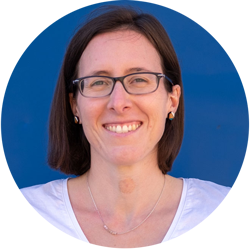
Cécile Deterre
I am a data scientist and former particle physicist with the goal of applying advanced analytical methods to sustainable development. My academic journey began in France, where I earned an engineering degree from École Centrale Paris, graduating in the top 10% of my class. I also completed a BSc in fundamental physics at the University Paris-Sud 11 with merit. I went on to earn a Master of Advanced Studies in theoretical physics at the University of Cambridge, followed by a PhD in experimental particle physics from CEA (Saclay, France) and the University of Paris VI. My doctoral research focused on analyzing top-antitop pairs in the dilepton channel using data from the D0 and ATLAS experiments at two of the world’s largest particle colliders, Tevatron and LHC. From 2012 to 2019, I worked as a postdoctoral researcher at the Deutsches Elektronen-Synchrotron in Hamburg, Germany, where I investigated the properties of the top quark at the ATLAS experiment at CERN. During this time, I led and reviewed collaborative research with international teams and supervised both PhD and master’s students. I presented at international conferences and served on the internal editorial board of the D0 experiment. My work involved managing and analyzing multi-terabyte datasets, applying machine learning, statistical modeling, and advanced computational techniques to uncover insights from high-energy physics data. In 2019, I transitioned from academia to sustainable technology. I joined the founding team of Blue Planet Ecosystems, a Vienna-based startup developing autonomous, land-based aquaculture systems for sustainable seafood production. My work integrates data science, systems engineering, and biology. I am responsible for modeling a closed-loop aquatic ecosystem composed of microalgae, zooplankton, and fish. I develop predictive models that simulate biological, chemical, and physical interactions and form the basis of our digital twin system. These models power features such as biomass estimation, precision feeding, and environmental regulation.
The international "Women in AG Award" honours the commitment of women in agriculture and agribusiness in four categories: Agriculture, Agribusiness, Education and Technology & Research.
The awards ceremony takes place annually at AGRITECHNICA or EuroTier.