

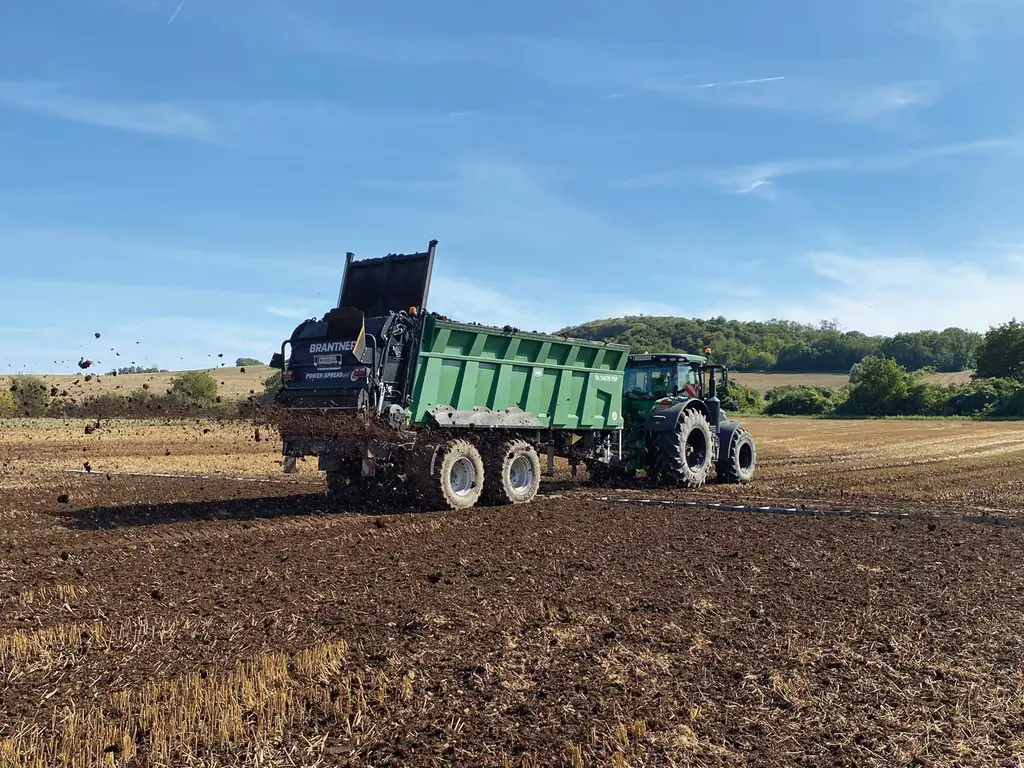
Women in Ag Award 2026
The Women in Ag Award, presented by the DLG and “Women in Ag Magazine” recognises women from around the world who are shaping the future of agriculture through innovation, expertise, and passion. Across four categories, Farming, Agribusiness, Education, and Technology & Research, the award highlights the achievements of women and showcases the inspiring stories behind their success.
In 2026, more than 170 outstanding women from 62 countries applied for the Women in Ag Award.
The winners of the Women in Ag Award 2026 will be honoured at EuroTier:
11 November 2026
4:00-5:00 p.m. | Award Ceremony | DLG-Stand, Halle 13 | EuroTier in Hannover
Following the ceremony:
5:00-6:00 p.m. | Female Agri Fellows Networking Event | Register for the networking event

Winners

1st Place
Marianne van den Hoek-Huijbregts
The Netherlands
Marianne van den Hoek-Huijbregts is a Dutch arable farmer, freshwater innovator, and advocate for resilient agriculture. Together with her husband, she manages a 220-hectare fifth-generation family farm on the island of Schouwen-Duiveland, where salinization and water scarcity threaten food production. There, she pioneered the first fully operational farmer-initiated Aquifer Storage & Recovery system in Dutch arable farming: Freshwater Focus. The system captures, filters, and stores rainwater underground for later irrigation, making the farm self-sufficient in freshwater and improving crop yields and soil health. As a board member of the international agricultural cooperative Royal Cosun, she champions a future-proof value chain and earnings model for its growers. She advocates greater representation of women in agriculture and inspires farmers, water managers, and policymakers toward water-smart farming.

2nd Place
Lavender Odeny
Kenya
Lavender Odeny is a Kenyan agribusiness entrepreneur and founder of MashLav Foods. She is pioneering commercial mushroom farming in Kilifi County, a semi-arid coastal region where mushroom production was once considered unviable. Through climate-smart cultivation methods, she has demonstrated how agricultural waste can be transformed into nutritious oyster mushrooms using minimal land and water. Beyond production, she has built a farmer-centered enterprise that processes value-added mushroom products, supports market access, and trains women and youth in sustainable farming practices. To date, her work has empowered 120 farmers, improved local food security, and created new income opportunities, proving that innovative agriculture can drive both economic growth and community resilience.

3rd Place
Marlen Arkesteijn
The Netherlands
Marlen Arkesteijn is a Dutch city farmer, rural sociologist, and founder of Tuinderij de Stadsboerin, an ecological urban farm in Rotterdam. Since 2018, she has grown pesticide-free vegetables, herbs, flowers, and fruit for more than 150 local households through a Community Supported Agriculture (CSA) model. Combining her background in food systems, nature conservation, and social change with hands-on farming, she promotes healthy soils, local food production, and sustainable consumption. Beyond food production, she uses the farm as a platform for education, community building, and awareness, helping people reconnect with where their food comes from. Through partnerships with local organizations and active involvement in national sustainability networks, she works to make healthy, locally grown food accessible while inspiring a fairer and more resilient food system.
Nominees Category "Farming"

Marina Kamanzi
Zambia
Marina Kamanzi is the founder of Kagezi Seed Company in Zambia and advocates for "justice through agriculture." Her company provides smallholder farmers with climate-resilient seeds such as sorghum, millet, and cowpea while guaranteeing markets for harvested crops. Through a seed-to-table model that includes value-added food production, she helps farmers improve incomes, strengthen climate resilience, and contribute to food security and nutrition in their communities.

Elke Lichtblau-Reitter
Germany
Elke Lichtblau-Reitter is a herb farmer and chairperson of Kräuterland Baden-Württemberg e.V. Through the Die Kräutermanufaktur cooperative, she leads a network of 25 women producing handcrafted organic herbal teas. The group manages the entire value chain, from cultivation to marketing, preserving traditional knowledge while promoting biodiversity and sustainable farming. Their work showcases the value of locally grown herbs and strengthens rural entrepreneurship.

Joséphine Kavira Nzaira Malimukono
Democratic Republic of the Congo
Joséphine Kavira Nzaira Malimukono is a social entrepreneur and director of the League for Congolese Solidarity in the Democratic Republic of Congo. Her work focuses on resilient agriculture, women's empowerment, and sustainable livelihoods. By supporting agricultural self-sufficiency and community resilience, she helps vulnerable families reduce dependency on aid while strengthening food security. She also advocates for women's rights and inclusive economic development.

Vivian Böllersen
Germany
Vivian Böllersen is a pioneer of walnut cultivation in Germany. Through her organic walnut farm and extensive educational activities, she has helped increase awareness and adoption of walnut production nationwide. She advises growers, supports new orchard developments, and promotes agroforestry, biodiversity, and plant-based nutrition. As a demonstration farm for organic agriculture, she also educates consumers and farmers on sustainable land use and regional food production.

Sohaila Yousofzaie
Afghanistan
Sohaila Yousofzaie is an agriculture specialist dedicated to empowering rural women in Afghanistan. Through hands-on training in poultry farming, livestock management, and sustainable agricultural practices, she helps women improve food production, generate income, and build resilient livelihoods. Her work combines technical expertise with community engagement, enabling women to strengthen their economic independence and actively contribute to their families and local economies.
Winners

1st Place
Ifeoma Okonkwo
Nigeria
Ifeoma Oluchukwu Mary Okonkwo is a Nigerian agripreneur and Co-Founder & Group Managing Director of Ifgreen Industries & Investment Ltd, a company transforming indigenous crops into nutritious food products while creating sustainable livelihoods. Since founding the business in 2016, she has driven innovation in cassava processing, renewable energy, and circular agriculture, converting agricultural waste into biogas, organic fertilizer, and animal feed. Under her leadership, the company has created more than 3,200 jobs, empowered over 800 female farmers, and reached millions of consumers with biofortified food products. With a strong focus on women’s leadership, youth employment, and sustainable value chains, she is helping build a more inclusive, climate-resilient, and economically competitive agricultural sector in Nigeria.

2nd Place
Nakalema Assumpta
Uganda
Nakalema Ann Assumpta is a Ugandan IT engineer, agritech innovator, and founder of HatchRite Co. Ltd, a company dedicated to making poultry farming more accessible, productive, and sustainable. She developed locally manufactured poultry incubators and brooding systems to help smallholder farmers overcome barriers to reliable chick production while strengthening local manufacturing capacity. Recognizing the need for solutions across the entire poultry value chain, she expanded her work to include farmer training, community hatcheries, and nutrition-focused initiatives. Through HatchRite, she has supported more than 700 farmers, particularly women, youth, and refugee communities, with technology, technical support, and entrepreneurship opportunities. Her vision is to build an integrated poultry ecosystem that combines innovation, nutrition, and sustainable livelihoods to strengthen food security across East Africa.

3rd Place
Valentyna Bolokhovska
Ukraine
Valentyna Bolokhovska is a biotechnology pioneer, entrepreneur, and co-founder of BTU, one of Ukraine’s leading producers of biological solutions for agriculture. With more than 50 years of experience, she has dedicated her career to transforming biotechnology from scientific research into practical, scalable solutions for farmers. Her work focuses on developing microbial and enzyme-based products that improve crop productivity, restore soil fertility, and support sustainable agricultural systems. Under her leadership, BTU established a full innovation cycle from research and production to field validation and farmer education, helping integrate biological solutions into modern farming practices. By combining scientific rigor with commercial viability, she has played a key role in advancing responsible biotechnology and promoting productive, environmentally sustainable agriculture.
Nominees Category "Agribusiness"

Dr Carolin Weyers
Germany
Dr Carolin Weyers leads REWE Group's Agricultural Competence Center, creating stronger connections between farmers, retailers, policymakers, and the food industry. She established innovative partnership models involving over 1,500 farmers and suppliers and launched the Agricultural Academy, which has introduced more than 30,000 retail employees to modern farming. Her work promotes dialogue, transparency, and long-term collaboration across the agricultural value chain.

Lena Maria Russ
Germany
Lena Maria Russ is Managing Director of the Maschinenring Foundation and World Federation of Machinery Rings. She promotes farmer-led mechanization and cooperative business models that improve productivity and food security. Under her leadership, more than 320 Machinery Rings have been established across Africa, supporting over 53,000 farming families. Her work focuses on empowering women and young farmers through technology, entrepreneurship, and sustainable agricultural development.

Lorna Mudegu
Kenya
Lorna Mudegu is a fisheries and aquaculture expert and Chief Executive Officer of WAVU, a digital platform supporting smallholder fish farmers in Kenya. WAVU connects farmers to quality inputs, technical advice, logistics services, and market opportunities through accessible digital tools. By removing barriers such as unreliable supply chains and weak market access, Lorna helps increase fish production, improve incomes, and strengthen food security across the aquaculture sector.

Monika Shukla
India
Monika Shukla is the Co-founder and CEO of Humble Bee, a climate-tech agribusiness building pollination infrastructure for agriculture. Through women-led beekeeping enterprises, technology-driven advisory services, and market access programs, she has mobilized more than 2,800 women across India. Her work demonstrates how pollination services can simultaneously improve crop productivity, biodiversity, climate resilience, and rural livelihoods while creating new opportunities for women entrepreneurs.

Dr Uduak Olayemi
Nigeria
Dr Uduak Olayemi is the CEO of Vantage Agro Allied Ltd, a company transforming agricultural waste into affordable livestock feed. Her innovative approach reduces feed costs by more than 50%, helping poultry farmers improve profitability amid rising production expenses. Beyond feed production, she empowers rural women and youth through training programs, providing starter kits and ongoing support that enable beneficiaries to establish sustainable farming businesses.
Winners

1st Place
Valeriya Yudina
Kazakhstan
Valeriya Yudina is an education and talent-development leader with more than 30 years of experience, she is dedicated to building the next generation of agricultural professionals. By transforming Digital Agroleaders from a student competition into a comprehensive educational ecosystem, she brings together students, universities, employers, technology companies, and industry experts to address the agricultural sector’s growing talent shortage. Her approach connects young people with real-world challenges in agronomy, engineering, irrigation, and digital agriculture, helping bridge the gap between education and workforce needs. Through internships, international learning opportunities, and career pathways, she is creating a sustainable pipeline of future agricultural leaders and driving the digital transformation and long-term resilience of the agricultural sector across Kazakhstan and beyond.

2nd Place
Sharon Monethi
South Africa
Sharon Monethi is a sustainability advocate, social entrepreneur, and agricultural development leader dedicated to empowering women, youth, and underserved communities through innovative farming solutions. As founder of the Woman of Age Foundation and Chairperson of the Women and Food Fellowship, she has led initiatives that promote livelihoods, entrepreneurship, and food security across Africa. Her flagship innovation, the Hydro Coop farming model, combines hydroponic crop production with cooperative enterprise development, enabling women to grow food and generate income even where access to land is limited. Through training, incubation programs, and sustainable farming practices, she helps communities improve productivity, create employment, and strengthen local food systems. Her work demonstrates how inclusive, climate-smart agriculture can reduce poverty, enhance food security, and create opportunities for future generations.

3rd Place
María Victoria Blanco
Colombia
María Victoria Blanco is a veterinarian and rural development specialist from Colombia. She has spent more than 30 years demonstrating how agriculture can drive environmental restoration, community development, and cultural preservation. As co-founder and Executive Director of the El Porvenir Ecological Foundation, she has led the restoration of cloud forests, protected vital water sources, and educated more than one million visitors on biodiversity and sustainable land management. Her work integrates agroecological practices, silvopastoral systems, ethical livestock production, home gardening, and composting to strengthen rural livelihoods while restoring ecosystems. By empowering women and young people through environmental education, leadership development, and sustainable agriculture initiatives, she has helped create resilient communities and shown that agriculture can be a powerful tool for conservation, climate resilience, and lasting social change.
Nominees Category "Education"

Prof Dr Becke Strehlow
Germany
Professor Strehlow is dedicated to preparing future agricultural professionals through innovative, practice-oriented education. At Neubrandenburg University of Applied Sciences, she has helped develop internationally recognized degree programs and strengthen collaboration between science, industry, and farming practice. Her work includes curriculum development, international partnerships, and creating modern learning environments that equip students to address the challenges of sustainable agriculture.

Lilian Nakigozi
Uganda
Lilian Nakigozi founded the WomenGro Initiative to address hunger, poverty, and limited access to land for women in Uganda. Inspired by her own childhood experiences with food insecurity, she developed innovative vertical farming systems that allow women to grow food and generate income in small spaces. By combining agricultural training, financial literacy, savings groups, and market access, she empowers women to become agricultural entrepreneurs and community leaders.

Prof Dr Mabel Ifeoma Onwuka
Nigeria
Professor Mabel Ifeoma Onwuka combines scientific expertise with community impact by translating soil science into practical solutions for farmers. Through training programs on climate-smart agriculture, composting, biochar production, and home gardening, she has empowered thousands of women and young people in Nigeria. Her patented biochar-based organic fertilizer and locally adapted educational materials help improve soil health, food security, livelihoods, and environmental sustainability.

Michaela Sandmayr
Austria
Michaela Sandmayr is the founder of Landwort, an Austrian initiative that empowers farmers to communicate their stories with confidence and authenticity. Through storytelling, social media training, public speaking workshops, and video production, she has trained more than 3,500 farmers and created content reaching over 50 million viewers. A particular focus of her work is encouraging women in agriculture to share their expertise and take visible leadership roles within the sector.

Tracey Perkins
New Zealand
Tracey Perkins is a dairy farmer, rural leader, and founder of AgriThrive Ltd. She focuses on strengthening agricultural communities by making knowledge accessible and practical. Her work spans biosecurity, environmental management, leadership development, and farmer mentoring. Through catchment groups, workshops, and international research, she builds capacity, fosters collaboration, and equips farmers and rural organizations with tools to create resilient and sustainable agricultural systems.
Winners

1st Place
Katharina Unger
Austria
Katharina Unger is an industrial designer, entrepreneur, and founder & CEO of LIVIN farms, she has dedicated more than a decade to advancing circular agriculture through insect-based technologies. By harnessing insects’ natural ability to transform organic by-products into valuable protein, oil, and organic fertilizer, she has helped pioneer a new approach to sustainable food production. Her current focus is scaling LIVIN farms’ Hive PRO, a fully automated modular insect factory. Today, these systems process more than 100,000 tons of organic by-products each year, helping build one of Europe’s largest circular biofactory networks and creating more resilient, resource-efficient agricultural systems worldwide.

2nd Place
Prof Dr Dong Xiaoxia
Republic of China
Professor Dong Xiaoxia is a researcher and innovation leader at the Chinese Academy of Agricultural Sciences, with nearly 20 years of experience advancing sustainable dairy systems, digital agriculture, and livestock economics. She has led more than 60 research projects focused on improving the economic, environmental, and technological performance of dairy production. Her team developed a national agricultural information platform serving over 180,000 farming households and supporting data-driven decision-making across the dairy value chain. Through research, digital innovation, and large-scale knowledge transfer initiatives, she has helped bridge the gap between science and practice, promoting low-carbon, efficient, and resilient dairy systems while empowering the next generation of agricultural researchers.

3rd Place
Mirjam Lechner
Germany
Raised on a pig farm in Bavaria, Mirjam Lechner has dedicated more than 16 years to improving animal health, animal welfare, and sustainability in livestock farming. Working at the intersection of research, technology, and agricultural practice, she helped identify and advance understanding of Swine Inflammation and Necrosis Syndrome (SINS), a significant health challenge in pigs. Her work bridges scientific insights and practical application. She initiates and develops visual scoring systems, digital apps, e-learning platforms, and thermography-based monitoring methods used by farmers, veterinarians, and breeding organizations. Through international research, training, and consultancy, she continues to bridge the gap between science and practice, equipping people in agriculture with the knowledge and tools they need to improve animal health and welfare in their day-to-day work.

3rd Place
Prof Dr Amna Shoaib
Pakistan
Professor Amna Shoaib is a plant pathologist, researcher, and academic leader at the University of the Punjab, Pakistan, dedicated to advancing sustainable agriculture through biological crop protection. With more than two decades of experience, she develops science-based alternatives to chemical pesticides, including biofungicides, beneficial microbial consortia, and innovative delivery technologies that enhance plant health and resilience. Her work focuses on harnessing plant–microbe interactions to improve crop productivity, strengthen disease resistance, and support climate-smart farming. Through research, technology commercialization, industry collaboration, and farmer-centered solutions, she is helping translate scientific discoveries into practical innovations that promote food security, environmental sustainability, and agricultural development worldwide.
Nominees Category "Technology & Research"
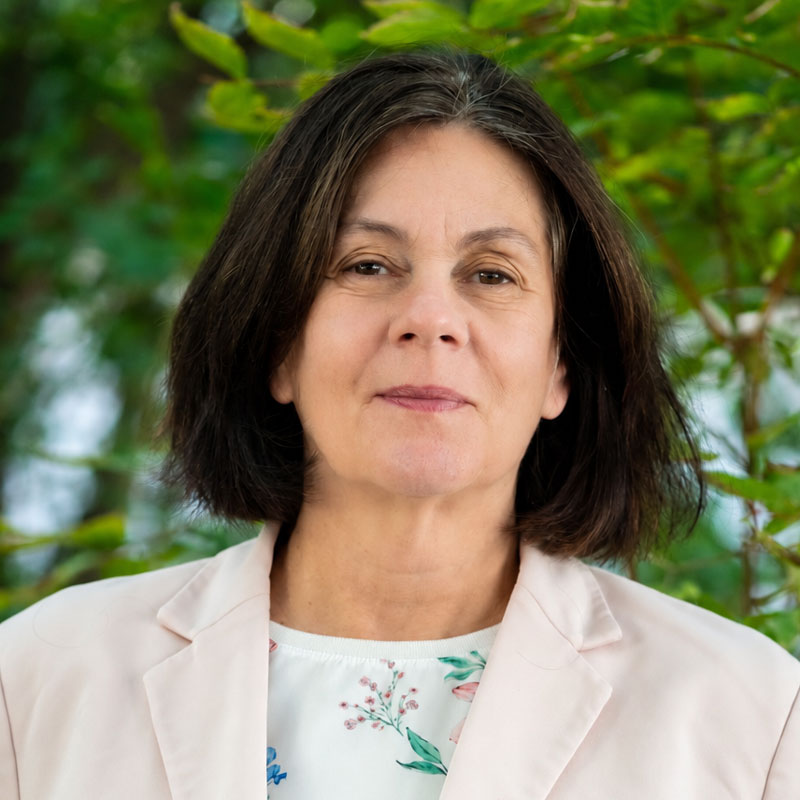
Dr habil Éva Hajnal
Hungary
Dr habil Éva Hajnalleads multidisciplinary agricultural innovation projects at Óbuda University in Hungary. Her work combines biology, artificial intelligence, robotics, and animal welfare. She developed technologies including rumen sensors, machine-vision systems, and Roboovaxx, an automated cattle injection system that improves animal welfare while reducing labor and handling stress. Her research supports precision dairy farming, sustainability, and practical innovation for livestock production.

Johanna Karina Solano Meza
Colombia
Johanna Karina Solano Meza is a researcher and innovator creating circular economy solutions for agriculture. Her patented technologies transform agro-industrial waste into biodegradable materials and valuable products, while her AI research predicts climate risks affecting agricultural production. By integrating waste valorization, renewable energy, and predictive analytics, she has developed a replicable innovation ecosystem that supports sustainable agroindustrial development and climate resilience.
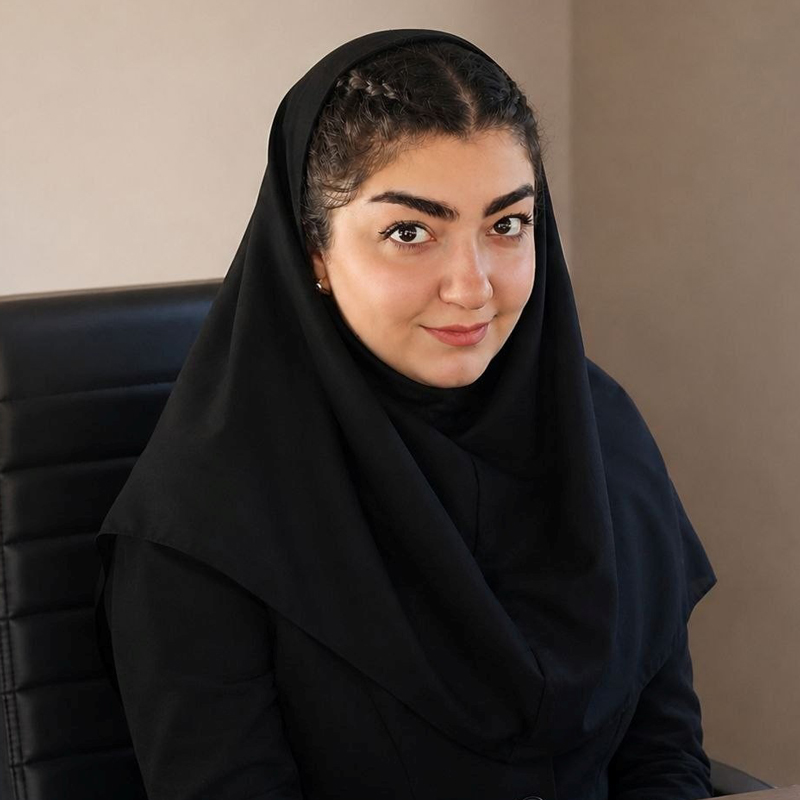
Dr Nadia Saadati
Islamic Republic of Iran
Dr Nadia Saadati is an agricultural mechanization engineer, inventor, and researcher advancing smart farming technologies in Iran. With eight patents, multiple research projects, and expertise in machine vision, deep learning, and sensor technologies, she develops practical solutions for crop production and harvesting. Her innovations, ranging from intelligent detection systems to specialized harvesting equipment, help modernize agriculture while improving efficiency, sustainability, and productivity.

Spasenija Gajinov
Serbia
Spasenija Gajinov is an AgTech leader and Head of Product & Business Development at DunavNET. She has been instrumental in developing agroNET, an AI- and IoT-driven platform that supports precision agriculture. By collaborating with farmers, researchers, and technology partners across Europe, she ensures that digital farming solutions respond to real-world agricultural needs. Her work helps strengthen resilience, efficiency, and data-driven decision-making in farming.