A comfortable cubicle helps dairy cows express their natural resting, lying-down and rising behaviour. Comfort depends not only on the softness of the surface, but on the interaction of cubicle geometry, hygiene, safety and long-term elasticity. DLG tests make selected technical properties of cubicle flooring objectively comparable, thereby providing guidance for on-farm investment decisions.
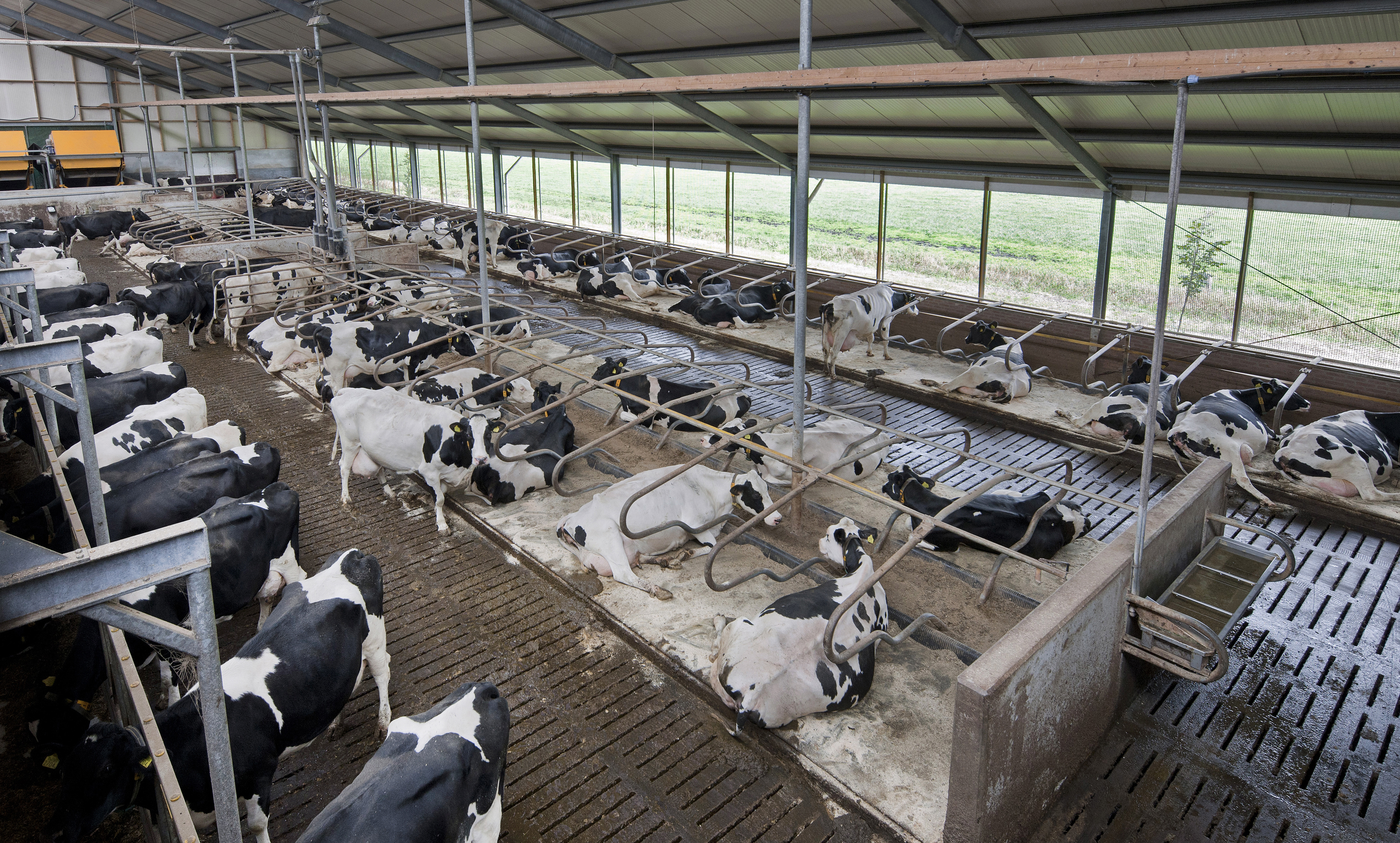
A dairy cow spends a large part of the day lying down. During this time, she rests, ruminates and relieves her limbs. The cubicle is therefore much more than a place in the barn: it is a key functional area for animal health and welfare. If the lying surface is too hard, inelastic, slippery or worn, lying down and getting up may become more difficult. This can result in shorter lying times, avoidance behaviour and increased strain on joints and skin.
However, cubicle comfort is not created by a soft mat alone. What matters is the interaction of suitable cubicle geometry, a dry and clean surface, sufficient freedom of movement, and a flexible, permanently functional cubicle floor covering. The DLG-Anerkannt tests of flooring provide objective reference points in this regard. Under standardised conditions, they make selected technical properties such as deformability, elasticity and durability visible and comparable.
Lying Comfort Influences Key Behavioural Patterns
Cattle have a pronounced need for rest. Lying down and getting up involve characteristic movement patterns: first, the cow kneels down with her front legs, lowers the front part of her body and then places her hind legs and hindquarters on the ground. When getting up, she rises in the reverse order: she first places her hind legs, followed by her front legs. During these movements, high forces act on the front limbs, particularly around the carpal joints. Compared with a hard concrete floor, an elastic surface can reduce the load and support the animal’s movement pattern.
Two properties are therefore particularly important when evaluating a cubicle floor covering: deformability and elasticity. The covering should yield under load without allowing the cow to sink too deeply or stand unstably. At the same time, it should return to its original shape after the load has been removed. Permanent deformation can impair functionality and may also indicate material fatigue.
The DLG does not assess these properties only in the new condition. As part of the repeated hoof-loading test, the stress placed on a floor covering is simulated on a test rig. According to the DLG TestService – Test Center Technology and Farm Inputs, this involves 100,000 alternating load cycles at 10,000 N, equivalent to approximately 1,000 kg. An artificial cow hoof with a contact area of 75 cm² simulates the loading conditions at the claw. The floor covering is then tested again to determine its deformability and elasticity and to establish whether permanent deformation or damage has occurred.
What DLG Tests Make Visible
Depending on the selected test programme, the DLG test for elastic livestock flooring may include the criteria of deformability and elasticity, resistance to repeated hoof loading, abrasion resistance, slip resistance, acid resistance and cleaning interval. The basis for the tests is the DLG Test Framework for Elastic Livestock Flooring and DIN 3763, Elastic Livestock Flooring in Walking and Lying Areas for Cattle and Dairy Cows – Requirements and Testing.
This makes it possible to describe product properties in a comparable way. This is important for investment decisions because the term “comfortable” alone says little about the actual load-bearing capacity of a floor covering or how it will perform after intensive use. Testing according to the test framework for the DLG-Anerkannt seal in individual criteria should therefore be understood as verification of the respective properties tested—not as a general statement about all aspects of a barn system.
Four Tested Systems, One Common Objective
Wilson Agri Duo Supreme Mattress
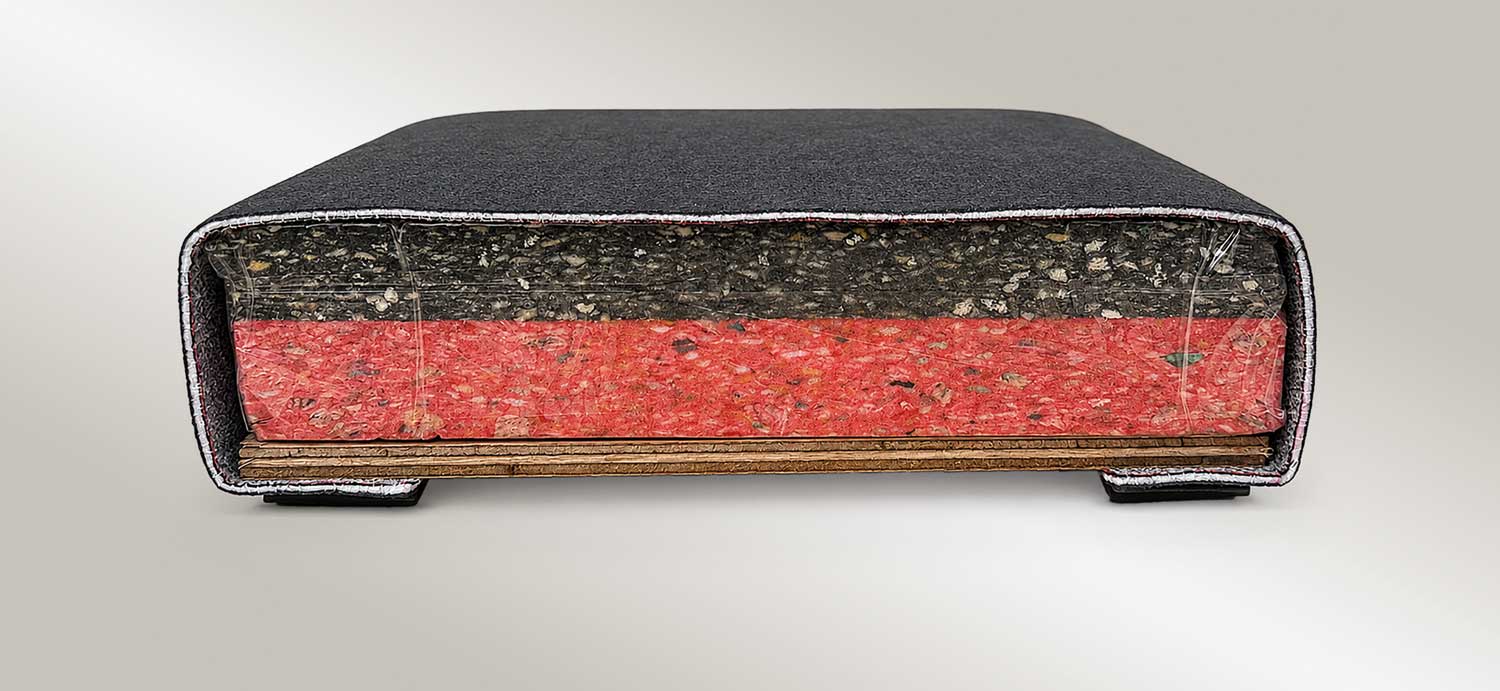
Within the scope tested, the three-layer Duo Supreme mattress from Wilson Agri met the requirements of the DLG Test Framework and DIN 3763. The DLG measured deformability and elasticity of 34.6 mm in the new condition and 42.3 mm after repeated hoof loading. Contact pressure at the carpal joint was 7.7 N/cm² in the new condition and 6.2 N/cm² after repeated hoof loading. Deformability and elasticity were classified as Class 4 according to DIN 3763.
The same qualification applies here: the values are the results of standardised tests performed on the product. They do not directly describe lying times, claw health or the occurrence of injuries within the herd. These animal-welfare indicators must also be observed and assessed on the farm.
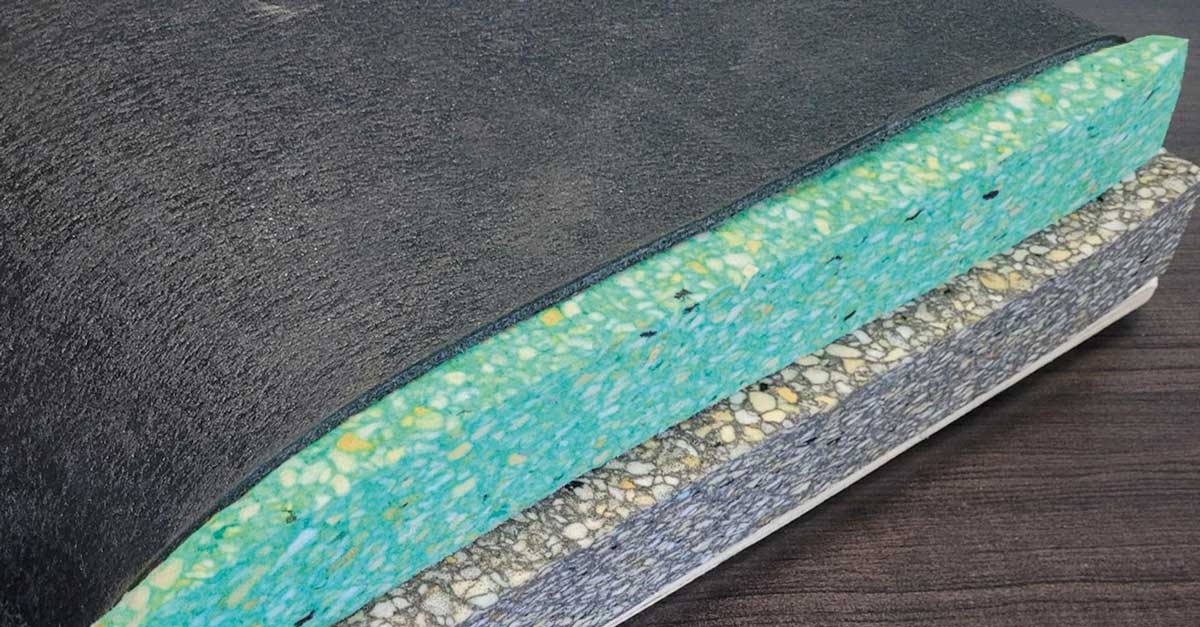
Promat Dual Comfort Mat
The Promat Dual Comfort Mat was tested under the DLG-Anerkannt programme for the individual criteria of deformability and elasticity as well as resistance to repeated hoof loading. The DLG measurements showed deformability and elasticity of 43.0 mm in the new condition. After repeated hoof loading, 47.4 mm was measured. Contact pressure under load at the carpal joint was 6.2 N/cm² in the new condition and 5.6 N/cm² after repeated hoof loading. The requirements of the DLG Test Framework and DIN 3763 were met; deformability and elasticity corresponded to Class 4 according to DIN 3763.
The results illustrate why testing before and after long-term loading is important. The initial properties alone do not determine practical value. It is equally important whether a floor covering retains its elastic properties under repeated loading.
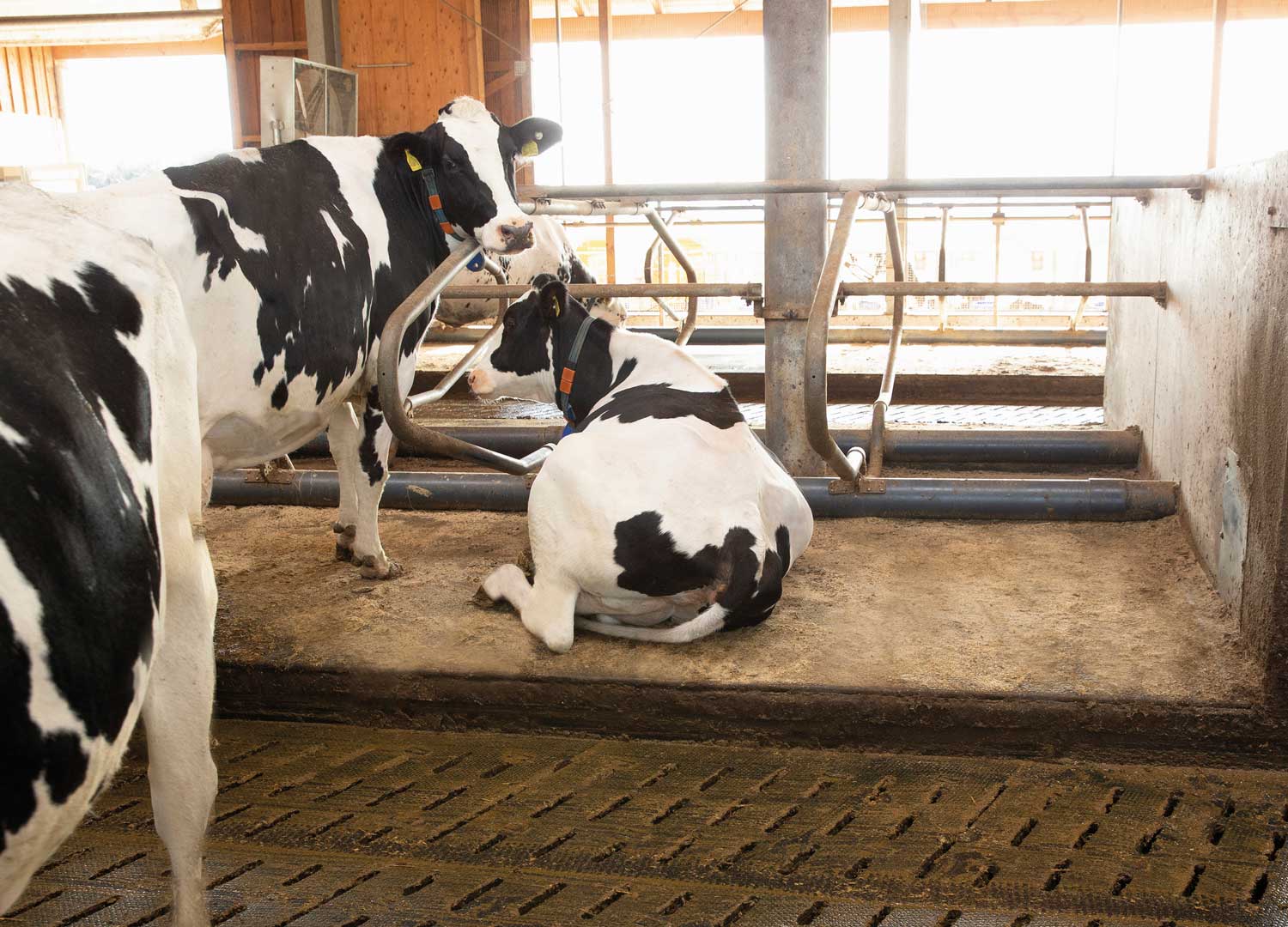
Gummiwerk KRAIBURG: WELA, WELA Puzzle und WELA Longline
For the WELA, WELA Puzzle and WELA Longline cubicle floor coverings, the focus was on the criteria of durability, handling and installation, slip resistance, as well as deformability and elasticity. For the tested variants, the DLG test report confirms recognition for these individual criteria.
In practice, the combination of criteria is relevant. A floor covering should not only feel soft at first impression; it must also be safe to walk on, installed correctly and able to withstand long-term loads. Particularly in freestall housing, the interface between the lying and walking areas is crucial: the cow must be able to enter and leave the cubicle safely. Comfort and slip resistance must therefore not be considered separately.
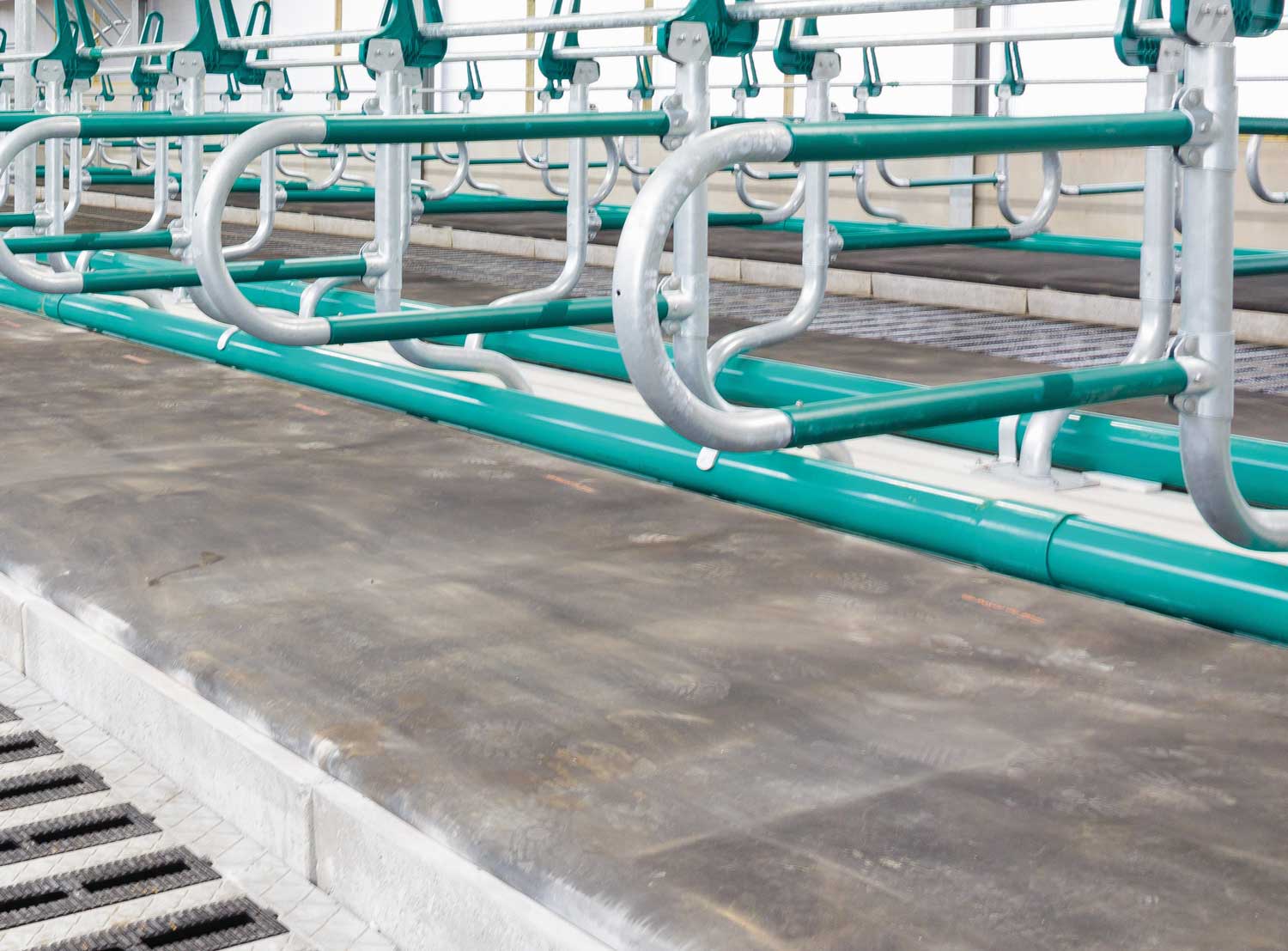
Royal De Boer Akwatopsoft Waterbed
The Akwatopsoft waterbed from Royal De Boer is an elastic floor covering for the lying area of high cubicles. Under the DLG-Anerkannt test programme, deformability and elasticity, resistance to repeated hoof loading, permanent deformation and wear were examined. The requirements of the DLG Test Framework and DIN 3763 were met; deformability and elasticity corresponded to Class 4 according to DIN 3763.
In detail, the penetration depth was 36.0 mm in the new condition. After 100,000 alternating load cycles, it decreased to 32.4 mm; contact pressure increased from 7.4 to 7.6 N/cm². The test report also documented no significant wear and no detectable permanent deformation after the long-term test. These results demonstrate the comfort and durability properties of the waterbed examined within the test programme.
DLG TestService – Test Center Technology and Farm Inputs
We test tractors, agricultural machinery and farm equipment in accordance with DLG standards and international norms – independently, with a practical focus and certified. Our range of services is complemented by bespoke testing solutions for research, development and quality assurance.
Farm equipment and livestock management technology – independently tested.
DLG TestService tests all types of animal identification tags, floors and floor coverings for livestock housing, measures to reduce emissions from agriculture (exhaust air purification systems and other emission reduction measures), livestock housing components ranging from the building envelope to interior fittings, livestock housing technology and lighting, as well as farm inputs and feed.
→ Visit the DLG Test Centre
→ Visit the Animal Husbandry Technology testing area
→ Visit the Farm Inputs testing area
Comfort Requires More Than a Tested Floor Covering
An elastic cubicle floor covering is an important foundation, but it does not replace regular inspection of the entire lying area. In practice, farm managers should keep at least the following points in mind:
- Cubicle geometry: The cow must be able to lie down, rest, get up and leave the cubicle without obstruction.
- Surface: The floor covering must be clean, dry and free from damage. Dirt and moisture reduce comfort and increase hygiene and slip risks.
- Bedding and maintenance: Mattresses and waterbeds also require an appropriate maintenance and cleaning concept. Suitable bedding can complement lying comfort and protect the skin.
- Transitions and fastening: Folds, raised edges or open joints can become tripping hazards. The floor covering must be level and securely fastened.
- Animal observation: Lying behaviour, the way animals lie down and get up, soiling, skin changes and joint scoring provide indications of whether the cubicle is actually being accepted by the herd.
The DLG testing methodology explicitly distinguishes between technical tests carried out on test rigs and more comprehensive practical tests. In the DLG-Anerkannt “BTS-Rindvieh1” test, for example, joint scoring and behavioural observations on commercial farms are combined with measurements of deformability. By contrast, the product tests considered here for WELA, Promat, Duo Supreme and Akwatopsoft assess selected individual technical criteria.
Conclusion: Comfort Is a Management Task
A comfortable cubicle supports the cow in expressing natural behaviour: she can lie down safely, rest for a sufficient length of time and get up again without unnecessary strain. The elasticity and deformability of the floor covering are key technical prerequisites. Across several different systems, the DLG tests demonstrate how these properties can be recorded in a standardised manner and assessed after long-term loading.
For on-farm decision-making, however, the test results should always be considered as part of the overall concept. A tested floor covering is an important building block for animal welfare, but only the interaction of a suitable cubicle, a functional surface, good hygiene, regular maintenance and attentive animal observation turns technical elasticity into genuinely animal-friendly lying comfort.