


Cattle and pig farmers from four countries, representatives of the European Commission, and the question of how high production standards pay off and affect farms, and where in practice the shoe really pinches.
Who should pay for the requirements that Europe demands of its livestock farmers? This question ran through the discussion at the international Cattle & Pig Event, hosted by the Bundesverband Rind und Schwein (BRS), the European Pig Producers (EPP), the European dairy industry association European Dairy Farmers e.V., and the DLG (German Agricultural Society) on Wednesday evening, November 11, 2026, at the EuroTier Convention Center. A farmer from northern Germany answered the question this way: "We can do what Brussels asks of us, but someone has to pay for it, too."
Animal Husbandry as a Cornerstone of Agriculture
First, a clarification: the EU Livestock Strategy is not a law but a strategy paper. It is a political framework of the European Commission for the future of animal husbandry in the European Union. It is meant to ensure that livestock farming remains a cornerstone of agriculture, food security, and rural areas, while taking into account the diversity of production systems in Europe. The Commission presented it on July 7, 2026, together with a protein action plan.
The strategy sets five priorities: crisis preparedness, competitiveness, sustainable production, territorial diversity, and value creation. However, the strategy is not yet legally binding. It formulates goals that are meant to be turned into legislative proposals later. For 2026, the Commission announced, among other things, a proposal to revise the animal welfare rules for laying hens and broiler chickens; in addition, equivalent animal welfare requirements are to apply to imported products.

Lofty Goals, Little Money
Panelists on stage and questioners from the audience wanted to know one thing above all: how will the players in Brussels' policy machinery ensure that EU livestock farmers can implement the goals of the EU Livestock Strategy at least cost-covering and ideally also profitably? Carlos Martin Ovilo, Deputy Head of Unit for Animal Products at the Directorate-General for Agriculture of the European Commission, gave a sober answer: the strategy has no dedicated budget. Funding opportunities are to be created in the future, subject to the necessary political decisions. Nor are all of its contents intended as legislative proposals. This is part of the usual process in the division of labor in Brussels: the Commission proposes strategies, and Parliament takes them up for legislation. For livestock farmers, this means the direction is set, but the concrete design and financing are still open.
DLG President Hubertus Paetow took up this tension in his welcome address by placing the economic dimension of animal husbandry in the EU into context. Livestock farming is not only a source of emissions and regulations, he said, but a strategically important sector for food security, rural areas, biodiversity, and the circular economy. According to Paetow, around 40 percent of agricultural value added in the EU comes from livestock farming, with annual sales of about 400 billion euros. He considered high common standards, as described in the EU Livestock Strategy, to be fundamentally positive, provided they help create fair competitive conditions in the EU single market. It is also crucial, he stressed, that higher standards are rewarded in the market, including on a global level.

Four European Livestock Professionals Between Strategy and Everyday Farm Life
In a discussion with four participants from European livestock farming, these fundamental questions were examined further from different viewpoints. On one side is the target picture of high standards in livestock farming and sustainability across the land; on the other is the concrete, economically viable implementation in practice. The discussion was moderated by Stephan Schneider, Deputy Managing Director of the BRS. Participants were Shane McAuliffe (pig farmer in Ireland), Jarosław Szurko (pig farmer in Poland), Virpi Paavola (dairy farmer in Finland), and Renke Ackermann (dairy farmer in northern Germany).
The question of how high standards are rewarded in the market ran through the entire discussion. Ackermann warned that very demanding requirements on animal welfare and sustainability could deter future farm managers, because financing the corresponding husbandry concepts would become too expensive. His conclusion: consumers, who according to surveys demand high standards in livestock farming, do not pay at the checkout for the effort behind them. Someone else, he said, has to pay for that.
Scientifically Grounding Animal Welfare Standards
Dairy farmer Paavola called for animal welfare standards to be scientifically based and not rely solely on consumer expectations. She added that they must also be adapted to each species: animal welfare standards that work for pigs cannot always be transferred to cattle and poultry. Regional particularities in the member states also come into play, she said, and these bring their own specific requirements for husbandry and for transport logistics to the processing companies in slaughter and processing. Finland, for example, faces special conditions due to long distances, sparse population, and its border with Russia, which must be taken into account in the infrastructure and processes of the value chain.

From Group Housing to Net Importer
Pig farmer Jaroslaw Szurko from Poland questioned requirements such as the ban on individual crates for sows, under the heading "group housing." He was not sure whether this reflected what the animals actually want, or whether it was more an idealized picture held by consumers. Pig farmer Shane McAuliffe from Ireland took up this example but looked at it from an economic angle. In Great Britain, he said, farrowing crates for sows were banned in 1999. According to his account, piglet birth numbers then fell significantly, and Great Britain is now a net importer of pork.
From the lack of economic viability of high standards, which participants described, the discussion moved to structural change. Szurko sees European pig production at risk, because demand from China, an important sales market, is steadily declining as China's self-sufficiency rate grows, putting pressure on the EU's export position. In Poland, he stressed, the number of pig-keeping farms has fallen by around ten percent over the past 20 years.

Increasingly Demanding Search for Staff
The issue of structural change brings with it another set of challenges that pig farmers have to deal with. Rising production costs coincide with declining sales prospects. At the same time, there is a shortage of young workers locally, and workers from other countries are also becoming harder to find. To attract skilled workers in the region, the Irish farmer McAuliffe urged his colleagues to generate more enthusiasm for animal husbandry: "We have to tell our story ourselves. I use social media channels for this, and it works wonderfully. As an industry, we are as innovative as you can see here at EuroTier, and that story is easy to tell," said McAuliffe.
He would take the same approach if he extended his recruiting activities to areas "outside the traditional farming bubble." McAuliffe described school projects for career orientation in which he is involved: "Only recently I had a group of 16-year-old students on my farm who had had nothing to do with agriculture before. They were totally enthusiastic about the high technological standards and innovative solutions we use," he said. For him, such experiences show "that we can also inspire young talent for animal husbandry from outside the industry."

Renke Ackermann, dairy farmer from northern Germany, pointed to the proverbial two sides of the coin when it came to technology. Growing automation options offer the chance to relieve human workloads. However, the use of modern and complex technologies also requires highly qualified staff, who first have to be trained accordingly.
Automation Eases Workloads and Disease Protection
In Poland, another factor currently makes it harder to hire workers, Szurko reported. African swine fever is well known to be a major problem in the neighboring country, and disease protection has been stepped up accordingly. Biosecurity measures require showering when entering and leaving the barn. Workers in effect cannot leave the farm during an entire working day, not even during breaks. "For some workers, that is a real deterrent," Szurko said. They would rather look for a job in other industries. From this perspective, he said, "automation is really a possible solution."
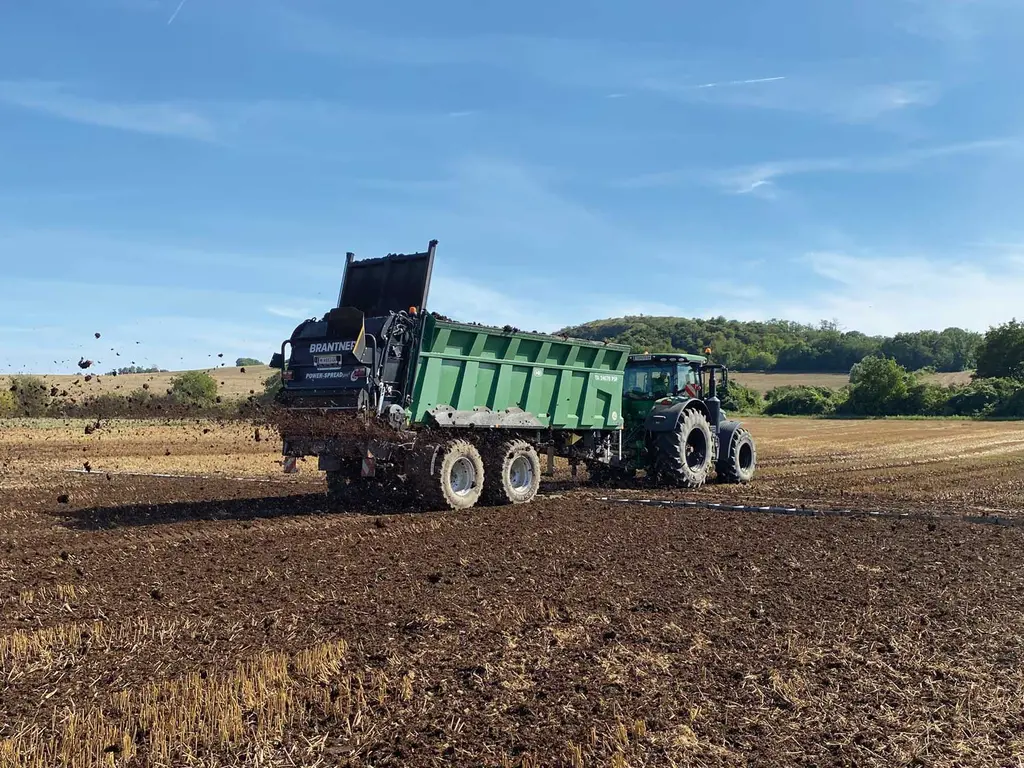
In the further course of the discussion, the European livestock farmers also pointed out that, in their view, the sector's potential for the circular economy is underrepresented in the EU Livestock Strategy. McAuliffe stressed the value of organic fertilizer, including from the perspective of farm resilience and independence from imports. Slurry, he argued, is preferable to globally traded mineral fertilizer. He called for more support for a circular bioeconomy. Ackermann noted that linking the production of organic fertilizer to a farm's agricultural area limits expansion in pig farming, since it effectively caps herd size. A solution will be needed for this in the future.
Three Priorities for the EU Livestock Strategy
In his closing remarks on the discussion, Georg Geucke, Chairman of the BRS, drew conclusions in the form of three demands for the further implementation of the EU Livestock Strategy. First, the competitiveness of the sector must come first: around 18 billion euros are needed for the investments necessary to implement the strategy in animal husbandry. Second, fair competition is needed in Europe and on the global market, so that high EU livestock standards do not end up at a disadvantage. Third, realistic transition periods are necessary. The direction is right, Geucke said, but political will must now be backed up with action.
Text: Stefanie Pionke / DLG-Newsroom
