


Behind the EAF network are farmers from across Europe, each bringing their own experience, challenges and perspectives to modern agriculture. With this interview series, we want to introduce the people behind the network, highlight the realities of their day-to-day work, and share how international exchange can strengthen farming across Europe.
This time, Arnaud Meurisse, farmer from France, gives insight into his farm, the decisions he faces, and the wider developments shaping European agriculture today.
Please give us a brief introduction to your farm.
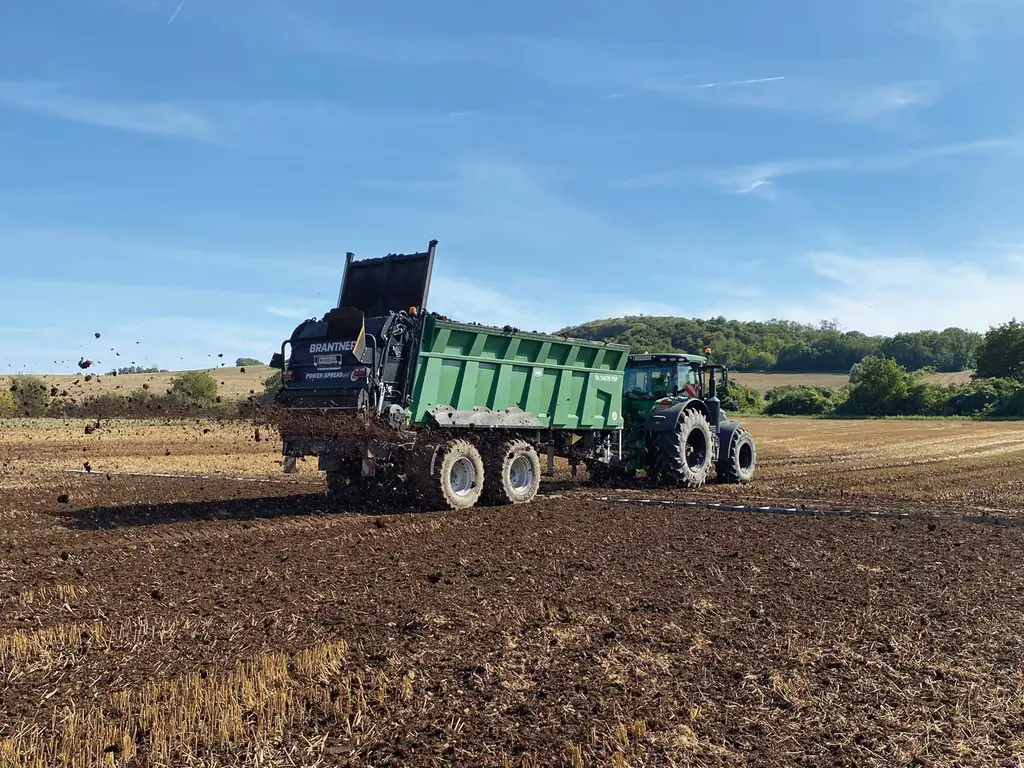
Together with my wife, I manage several farms, both on our own account and on a contract basis, within a 110 km radius of Reims, France. The soil types are very diverse: ranging from very sandy to 60 per cent clay, with transitions through silt soils prone to waterlogging and chalk soils. 55 per cent of the land is used for cereals, with the remainder divided between potatoes, sugar beet, flax and industrial vegetables.
How did you first come across the EAF?
I found out about the EAF through my family – some family members had already been members before me.
What motivated you to become a member?
I have been a member of the EAF for 10 years now. The atmosphere is really warm; many members have since become true friends. They are curious and open my eyes to developments in our profession across Europe.
Which challenge facing your farm do farmers in other countries likely face as well?
In every country, we face the same problem with the availability of labour. In Eastern Europe, the issue of machinery costs is more pronounced than in France – but on the other hand, farmers there manage with equipment that is considerably older than we could ever imagine here.
Where do you see the biggest differences between the countries?
The biggest differences often stem from politics. In Lithuania, for example – which was the destination of our field trip this year – there is a clear commitment to productivity, whereas in France, political considerations mean that large, export-oriented farms are viewed unfavourably. This makes it much more difficult to implement projects. We were able to observe this first-hand on our field trip to the Baltic states: milk production there is subsidised by the state, which makes it possible to establish farms with several thousand dairy cows – a model that would be almost unthinkable in many other European countries.
“For me, the EAF is a breath of fresh air: leaving everyday life behind”
Has an EAF exchange ever influenced a decision on your farm?
Yes, definitely. Through my EAF contacts, I’ve got to know customers in the Netherlands and Belgium. I’ve also found technical advisers with whom I still work today. I often ring EAF members before making decisions – whether technical or strategic – because many members have very in-depth specialist knowledge in certain areas.
What issue should European farmers discuss more openly?
Our competitiveness challenges. I’ve observed that in France, some farms face competitive disadvantages compared with other European countries where fewer restrictions apply. I initially assumed France might be in the toughest position, but it’s clear these pressures are not unique to France. The regulatory environment is also an important factor in several northern countries.
What do you personally gain from your EAF membership?
Every year we meet for five days on what is always an exceptional study tour – featuring high-calibre speakers. This year’s excursion to the Baltic states was once again well worth it. A visit to the German Embassy quickly introduced us to the geopolitical, economic and agricultural context. Afterwards, farm visits and expert presentations alternated with shared meals and evenings together. That leaves many memories. As always, it was noisy on the bus as we always have plenty to talk about.
In a nutshell: what does the EAF mean to you?
For me, the EAF – and especially the trip we took together in June – is a breath of fresh air: leaving everyday life behind, with the guarantee of wonderful moments and lots of new discoveries.
Interview: Clara Albrecht, DLG e.V.


