

Can Smart Technologies Solve Livestock Farming's Productivity Challenge?
EuroTier 2026 showcases how AI, robotics and connected systems help producers improve efficiency, animal welfare and sustainability
Rising production costs, labor shortages and increasing requirements for animal welfare and sustainability are placing growing pressure on livestock producers worldwide. At the same time, advances in artificial intelligence (AI), robotics, sensors and digital farm management are creating new opportunities to improve productivity while supporting animal health and resource efficiency. How these technologies can help livestock producers meet today's challenges will be a key focus at EuroTier 2026, the world's leading trade fair for professional animal farming and livestock management, held in Hanover from 10 to 13 November 2026 under the guiding theme "Intelligence in Animal Farming". The event is expected to attract around 2,100 exhibitors from 55 countries across 13 exhibition halls.
One of the central questions facing the livestock sector is how to increase productivity without compromising animal welfare or environmental performance. Increasingly, the answer lies not in maximizing inputs, but in improving animal health, management and the intelligent use of technology. Healthy, high-performing animals experience fewer health problems, require fewer treatments and maintain more consistent production levels. As a result, resources such as feed, labor and energy can be used more efficiently.
"A dairy farmer cannot be in the barn 24 hours a day. Sensors, cameras and AI-supported monitoring systems help identify changes in animal activity, feed intake and behaviour at an early stage. But technology alone is not the answer. The real value comes when farmers can turn that information into better management decisions that improve animal health, productivity and overall farm performance."Nicola Bock, Project manager for dairy and cattle production, DLG.
This relationship between animal health and productivity is particularly evident in dairy farming. Dairy cows have relatively high maintenance requirements. When milk yield per animal increases through improved health, nutrition and management, these requirements are distributed across a larger volume of milk production. The result is greater resource efficiency and lower greenhouse-gas emissions per kilogram of milk produced. Higher productivity and sustainability can therefore go hand in hand.
Achieving sustainable productivity gains, however, requires much more than increasing concentrate feeding levels. Long-term success depends on consistent feeding management, high-quality forage, high-quality feed ingredients and a homogeneous ration tailored to the needs of ruminants. These factors support animal health, welfare and performance while helping farms use resources more efficiently.
Animal health is equally important in pig production. Early disease detection, continuous monitoring and effective herd management can reduce losses, lower production costs and stabilize biological performance. Intelligent monitoring technologies are increasingly helping producers identify potential problems before they develop into larger health or productivity challenges.
Digital technologies are becoming increasingly important in supporting these objectives. Sensors, cameras and herd management systems provide continuous insights into animal health, behaviour and production performance. Automated monitoring solutions can identify changes that may otherwise remain unnoticed until a health or performance issue becomes more serious.
The greatest potential emerges when technologies are connected. By combining sensor and camera data with herd management systems, producers gain access to real-time decision-support tools. This allows management decisions to be based on current information rather than retrospective analysis and supports a more proactive approach to herd management.
Artificial intelligence is expanding these capabilities even further. By analysing large volumes of sensor and image data, AI systems can identify patterns and detect changes at an early stage. Changes in movement, feeding behaviour or activity levels can be recognised automatically, even when no personnel are present in the barn. AI-supported video analysis can provide additional insights into locomotion, behaviour and overall animal well-being.
Beyond animal monitoring, AI is increasingly being applied in feeding and milking management. Information relating to milk yield, milk quality, body weight, age and health status can support more precise management decisions and help optimize production processes. As data volumes continue to grow, AI-based data management systems are expected to play a larger role in integrating information from multiple sources and turning data into actionable insights for farm managers. In the longer term, increasingly autonomous systems may support farm-wide monitoring and decision-making, from feeding management to animal health monitoring.
Robotics is another major area of innovation. Automated milking, feeding and manure-handling systems are helping producers address labor shortages while improving operational consistency. Automatic milking systems can perform a significant share of routine daily tasks while simultaneously collecting valuable production and animal-health data. Automated cleaning systems can contribute to improved hoof health, udder health and udder cleanliness while reducing labor requirements and allowing staff to devote more time to animal observation and management.
Experience from modern dairy production shows that automation can significantly improve labor efficiency by taking over repetitive tasks such as milking, feeding and cleaning while generating valuable management data. However, successful herd management remains essential. Technology can support management decisions, but it does not replace the farmer.
However, not every automation solution automatically represents the most economical choice. In feeding management, many dairy farms continue to rely on conventional feed mixer wagons. Automated feeding systems often require higher investments, specific barn layouts and can be difficult to retrofit into existing facilities. Technology investments therefore need to match the individual circumstances, infrastructure and objectives of each farm.
Animal welfare and productivity should not be viewed as opposing objectives. Healthy animals perform better, utilize feed more efficiently and generate fewer losses. Improvements in animal health, feeding, housing conditions, barn climate and animal observation can therefore support both welfare and economic performance.
The key challenge is finding the right balance between animal welfare, biological performance and economic viability. Sustainable productivity improvement does not mean maximizing output at any cost. Rather, it means building resilient production systems that can deliver long-term economic and environmental performance.
Growing demands on livestock operations are making it increasingly difficult to consider individual measures in isolation. Future-ready livestock systems require integrated approaches in which housing, feeding, technology and management decisions work together effectively. Sensors and cameras improve animal monitoring, AI supports data interpretation, robots perform routine tasks and management software integrates information from multiple sources. The greatest benefits are achieved not by individual technologies, but by integrated systems in which animal management, feeding, housing and digital tools work together.
Visitors to EuroTier 2026 will be able to explore these developments first-hand. Under the guiding theme "Intelligence in Animal Farming", the exhibition will focus on intelligent and interconnected systems that combine housing, feeding, milking, manure-management and logistics technologies with robotics, sensors, artificial intelligence, big data and digital platforms. A particular highlight will be the Barn Robot Event, where automated milking systems will be presented in moderated live demonstrations, offering practical insights into retrofit solutions, new barn concepts and robotic milking in large dairy herds.
The future of livestock farming does not lie in a single technology. Success will depend on the interaction between healthy animals, efficient feeding, effective herd management, optimized labor organization and appropriate technological solutions. By bringing together innovations from across the livestock value chain, EuroTier 2026 provides livestock professionals with practical insights into how productivity, animal welfare and sustainability can increasingly be advanced together rather than treated as competing objectives.
The full article, "Intelligent Animal Farming: Sustainable Productivity Gains", is available at: www.eurotier.com/en/news/intelligent-animal-farming-sustainable-productivity-gains.
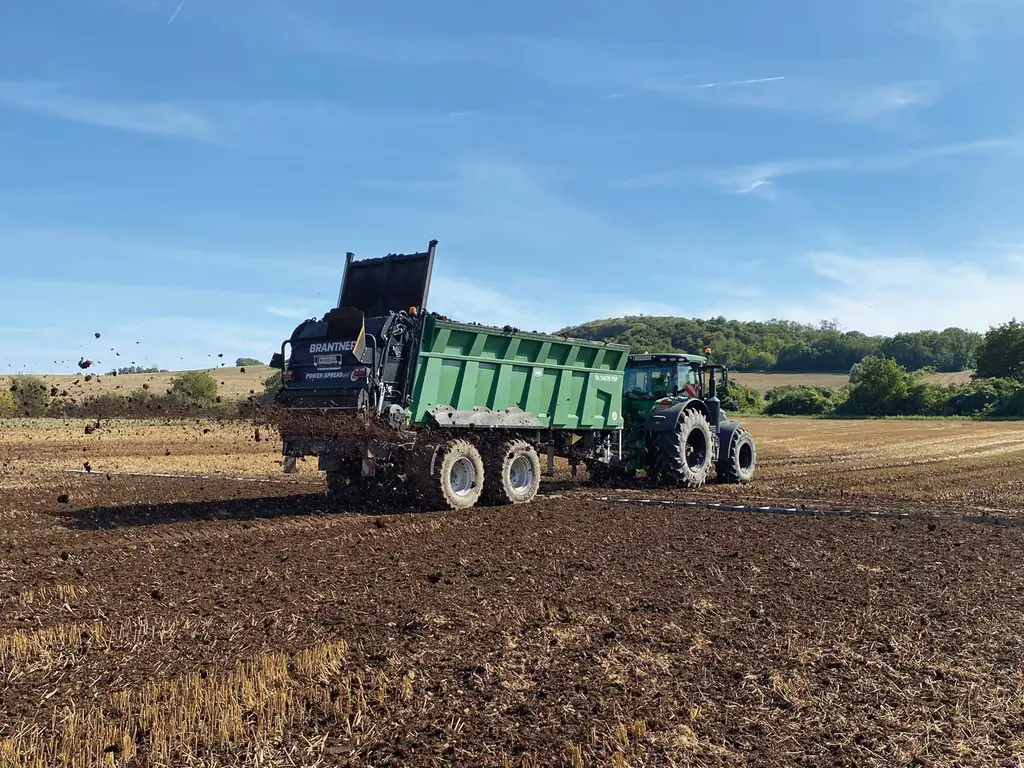
EuroTier will present solutions for efficient livestock production.jpg