


Behind the EAF network are farmers from across Europe, each bringing their own experience, challenges and perspectives to modern agriculture. With this interview series, we want to introduce the people behind the network, highlight the realities of their day-to-day work, and share how international exchange can strengthen farming across Europe.
During the EAF’s annual field trip, Dr. Marcel Wiesehoff, a farmer from Romania, will provide insights into his farm, the decisions he faces, and the broader trends shaping European agriculture today.
Please give us a brief introduction to your farm.
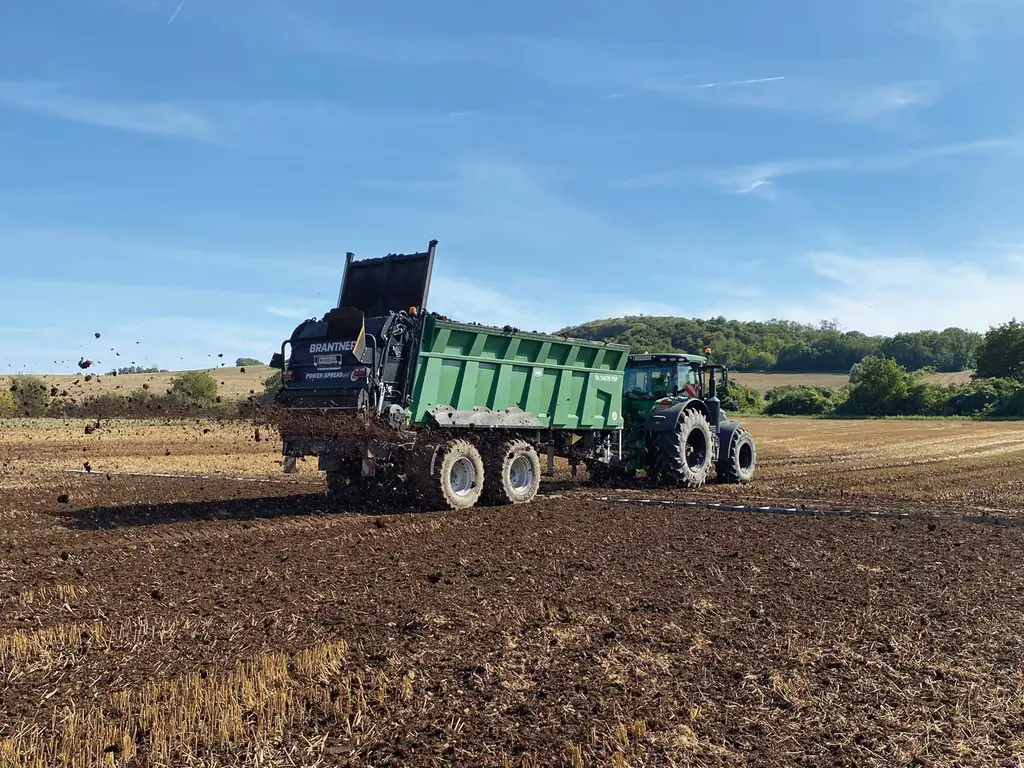
I have been working in southern Banat for 20 years. It is situated about 100 kilometres south of Timișoara, right on the Serbian border. There, we grow crops and rear pigs. We have two sites for arable farming: one covering around 1,100 hectares, where we focus exclusively on arable farming, and our main site covering a further 6,000 hectares – making a total of 7,300 hectares. We mainly grow crops for our feed supply: cereals, barley, triticale, wheat and oilseeds such as rapeseed. Summer crops account for around 25 per cent of our crop rotation – including maize, soya beans and sunflowers.
How did you first come across the EAF?
My first contact was through a visit by the EAF to our farm. I really enjoyed the exchange right from the start – the questions asked in the group, but also the conversations over dinner. I was then asked if I’d like to join the next trip. And that was truly educational. All the trips I’ve been on since then have always been very enriching. That’s why I try to take part every year.
What motivated you to become a member?
What motivated me was this exchange. The opportunity, through the group’s network, to gain an insight into farms and the upstream and downstream sectors of agriculture in other countries. People don’t mince their words. The questions are phrased in a way that genuinely piques your interest. Respondents can sidestep them if they wish – but in reality, the issues facing individual countries and farms always come up.
“What motivated me was this exchange. The opportunity, through the group’s network, to gain an insight into farms and the upstream and downstream sectors of agriculture in other countries."
Which challenge facing your farm do farmers in other countries likely face as well?
The challenges posed by climate change certainly affect all farmers. We’re currently travelling through the Baltic states, where climate change is actually having a rather positive effect – because it’s getting warmer and the grain is growing better in this colder location. That’s something I’m seeing for the first time. Otherwise, of course, the political framework is a major issue. We’re in Europe and mainly visit EU countries. The exchange of views there is very interesting: how do politicians interpret and implement the EU’s agricultural budget guidelines? How are the funds allocated, and what priorities are set in the individual countries? That’s always a fascinating aspect of our visits. Of course, one must also distinguish between Eastern and Western European countries, where society already sets different priorities.
Where do you see the biggest differences between the countries?
The biggest shared challenges are the availability and rising cost of energy. The war in Ukraine has highlighted this, and it affects all countries equally. Mineral fertilisers – which are essentially a form of energy – as well as diesel and other fuels – these are always major issues, particularly for intensive farming. Added to this, of course, are the prices of agricultural produce, which can vary from place to place.
The DLG has always been a platform where North, South, East and West come together – through conferences, trade fairs, exhibitions and field days.”
What can farmers in Romania learn from their colleagues across Europe?
The DLG has always been a platform where North, South, East and West come together – through conferences, trade fairs, exhibitions and field days. Bringing this to a European level is essentially what the EAF and other organisations such as the European Pig Producers do. Thinking outside the box and seeing how things are done in other countries – Romanian farmers can definitely benefit from this. And vice versa: here in Romania, we face a continental climate – intense heat, drought, and no distinct spring or autumn. Over the years, we have gained experience in this area that we are happy to share.
What issue should European farmers discuss more openly?
I think that, when it comes to the EU agricultural budget and agricultural policy, we as European farmers should present a united front and issue clear statements from a European perspective in our respective countries. That’s where we can start. It’s difficult to influence matters across local boundaries – but at the political level, I see potential.
What do you personally gain from your membership of the EAF?
Motivation. I leave here after these few days and always need a couple of days to process the impressions and discussions, because it’s very intense 24/7. But it’s always an enriching experience and a source of motivation. We’re now just before the harvest and I’m approaching it in good spirits, confident that I’m doing the right thing.
In a nutshell: what does the EAF mean to you?
For me, the EAF means broadening my horizons, looking at things from a bird’s-eye view and returning to my own farm feeling motivated to get to work.
Interview: Clara Albrecht, DLG e.V.


