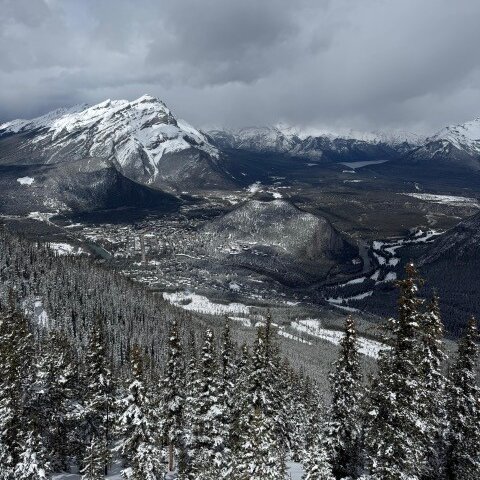
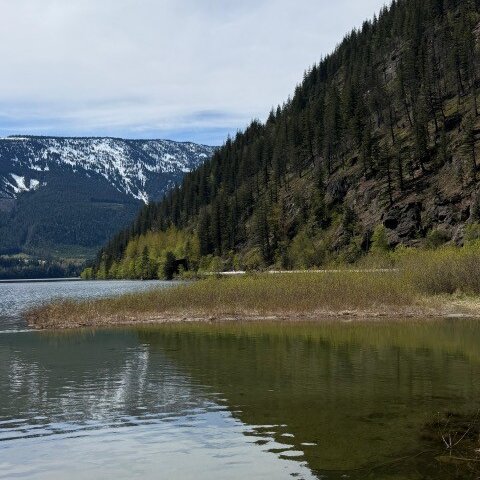
As part of the DLG Young Talents Award, I had the opportunity to take part in a trip to Canada. Over the course of ten days, I was able to gain insights into the Canadian agricultural sector and get to know its people.
Day 1 – 20.04.2026 Travel from Frankfurt to Calgary
The first day of the trip began with the flight from Frankfurt to Calgary. After the long journey, the main focus was simply arriving and settling in. Even on the flight in, we were able to admire Canada’s breathtaking landscape, which increased our anticipation for the coming days even more. We also had the chance to welcome our tour guide Marco to the group.
Day 2 – 21.04. | Calgary – Economy and Living Conditions
Calgary, with around 1.3 million inhabitants, is considered the economic center of the province of Alberta. The region has traditionally been strongly shaped by the oil and gas industry; however, since around 2013 its importance has declined somewhat in favor of the tourism sector. Agriculture accounts for about 2.5% of the gross domestic product.
The city is nicknamed “Cowtown” because it lies at the heart of one of Canada’s largest beef-production regions (Alberta). A cultural highlight is the Calgary Stampede Rodeo, held annually in July—the largest rodeo in the world.
The cost of living has risen significantly: a one-bedroom apartment costs about CAD 1,200 per month, which corresponds to an increase of 30–40% since the COVID-19 pandemic.
Ice hockey is the dominant sport, especially thanks to the Calgary Flames. The arena is also used for major events such as rodeos.
The tax system is also interesting: Alberta does not levy a provincial sales tax, while other provinces charge additional taxes. The federal minimum tax rate is 5%.
With Nutrien, Canada is also home to the world’s largest fertilizer producer.

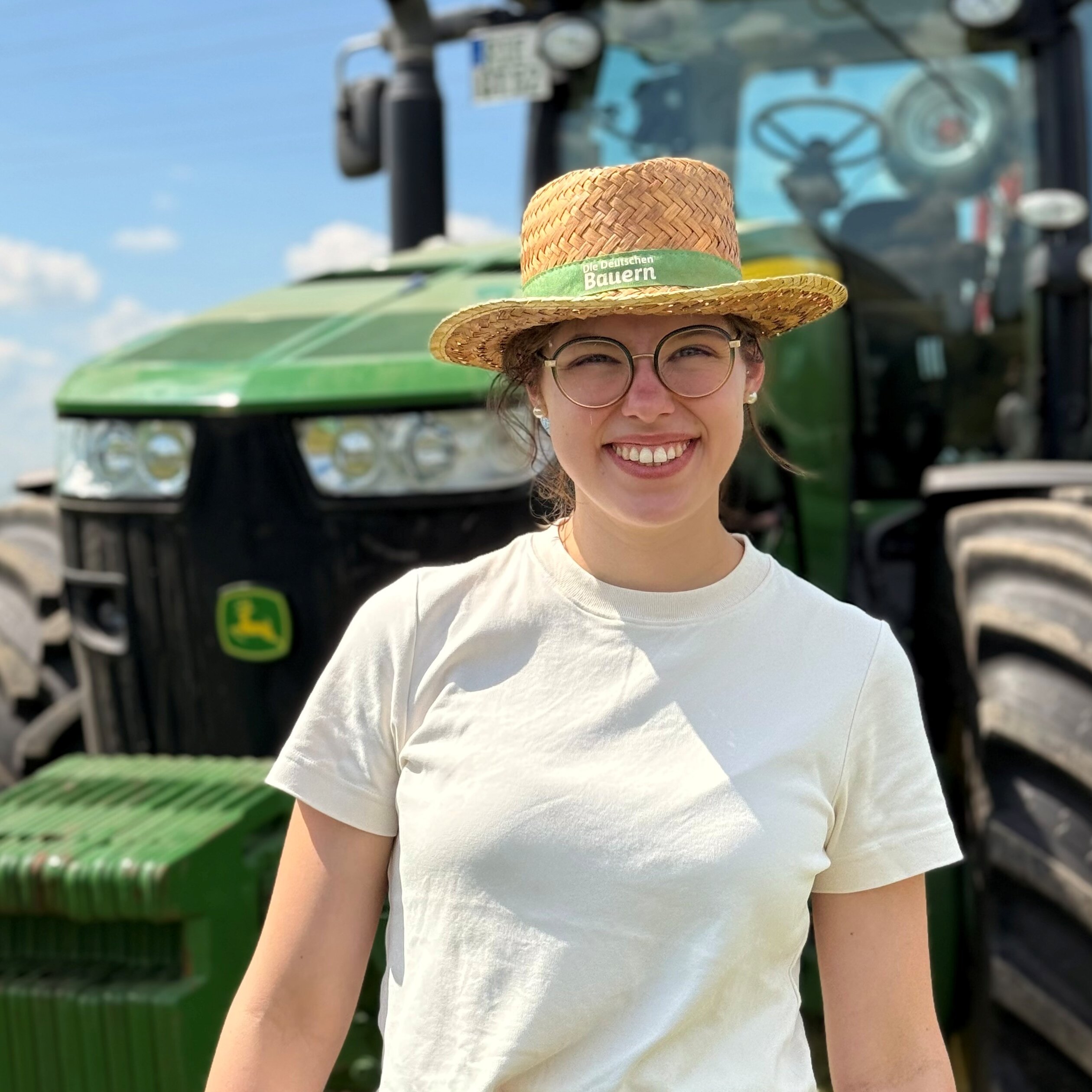
Paula Schultze
Junior Award – DLG Young Talents Award 2025
Paula Schultze began her professional career with vocational training as an agricultural livestock specialist, which she complemented with further training to become a state-certified agricultural business manager. She deepened her practical experience in dairy farming through continued work at the Milchcenter Prausitz. Since October 2024, she has been working as an assistant to the management of the district farmers’ associations in Borna, Geithain and Leipzig. She has also recently joined her family-run arable farming business. Alongside her professional work, she is completing a distance-learning degree in Agriculture / Agricultural Management at Anhalt University of Applied Sciences.
With her energy and drive, which led to the founding of the Agricultural Youth organisation in Saxony, she was able to impress the jury. The jury was also particularly struck by her strong passion for her profession.
Day 3 – 22.04. | Golden & Agriculture in Alberta
This day focused on agricultural education and practical farming.
General framework conditions:
- Compulsory schooling: ages 6–16
- Driver’s license: theory possible from age 15; practical training under certain conditions
- Agricultural land in Alberta: approx. 20 million ha
- Province about twice the size of Germany
- Main crops: corn, canola, wheat, barley, soybeans
Olds College
The college functions as a teaching and research farm. The focus is not on maximum productivity, but on research and education.
- Farm size: typically 6,000–10,000 ha
- Rainfall: 300–500 mm/year
- Large temperature fluctuations (up to 50°C) are possible
- Use of modern technologies such as drones for crop and livestock monitoring
- Precision agriculture enables cost savings of up to 35%
Bison Farm
A farm that has kept bison as naturally as possible since 1986.
- No branding necessary (theft is hardly an issue)
- Calves are born in spring (April/May)
- Animals react strongly to weather—calving rarely occurs in bad weather
- Farm area: approx. 600 ha
Hutterite Colony (Three Hills Colony)
A religious community with collectively organized agriculture.
- Farm size: approx. 4,000 ha
- Families with 6–8 children
- Language: a mix of Low German and English
- Strict social rules (e.g., meals separated by gender)
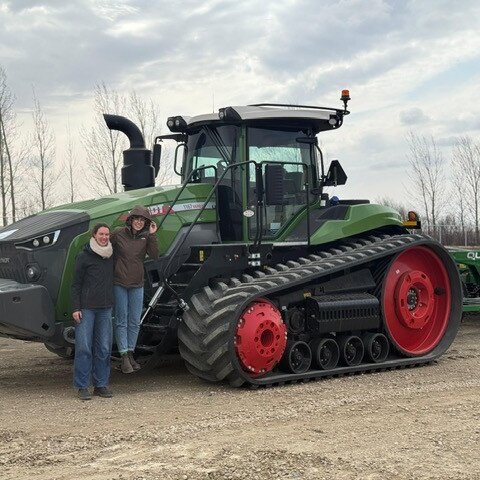
- Machinery is used jointly; a very modern, well-equipped operation
Day 4 – Banff | Standard of Living and Nature
Average gross income in Canada is about CAD 70,000–75,000 per year. Nevertheless, home ownership is often difficult to finance. Depending on income, the tax burden can be up to 40%.
Consumer behavior is striking: over 40% of the population lives beyond their means. Credit limits increase with years of employment, but at high interest rates (up to 26%).
Nature & safety:
- Encounters with bears are possible—safety rules are essential
- About 5,000 bears are culled each year
- When camping: strict separation of food and sleeping area
Day 5 – Railways & British Columbia
The transcontinental railroad was crucial to Canada’s development.
- Construction period: 1867–1885
- Output: up to 6 km of track per day
- Significant involvement of Chinese workers
Today, the “Trans-Canada” connects the country over roughly 7,800 km. A train journey from Vancouver to Toronto takes about four days and costs several thousand dollars.
Glacier National Park is impressive for its temperate rainforest and enormous trees.
Day 6 – Agriculture & Education
Canada depends on immigration, as the birth rate is only 1.6 children per family.
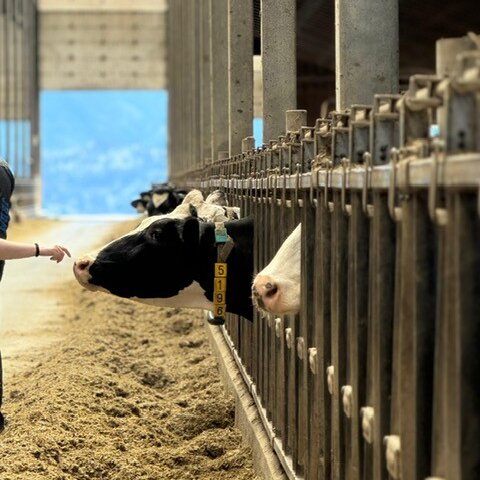
Dairy Farm
- 1,350 milking cows
- Annual production: approx. 38 million kg of milk
- Milk price: about 53 cents/kg
- Specialization in milk production; no in-house breeding/rearing
Forestry (UBC)
- Main tree species: Douglas fir, spruce
- Problems caused by bark beetles (milder winters promote their spread)
- Trend toward wooden high-rise buildings
- Controlled forest fires as a preventive measure
Studies
- University with approx. 70,000 students
- Tuition fees for international students: up to CAD 40,000 in total
- A historical excursus highlighted the treatment of Indigenous people: children were forced into boarding schools until the 1970s—a dark chapter in Canadian history.
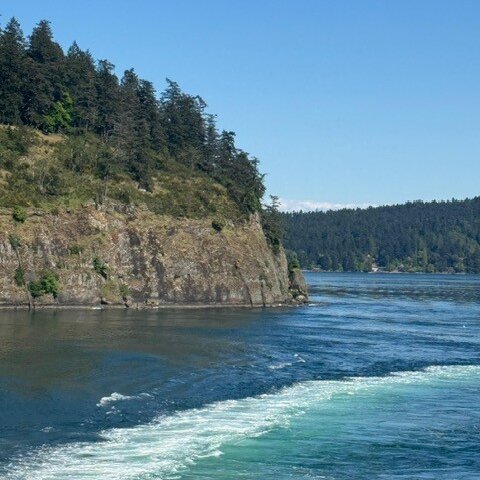
Day 8 – Specialty Crops & Agricultural Structure
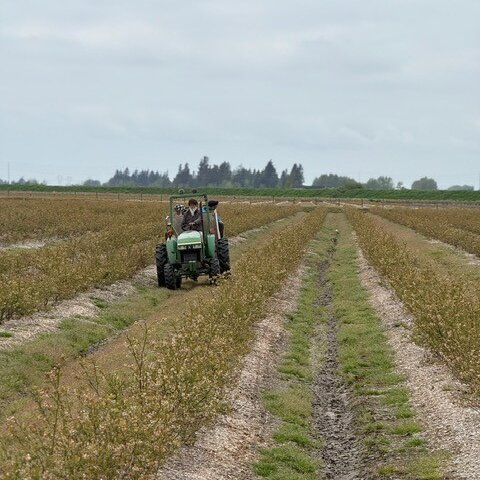
Blueberry Production
- 90% exported to the USA
- Soil pH: approx. 5.5
- Use of honeybees and bumblebees for pollination
- Harvest season: July to September
- Productive lifespan of plants: up to 30 years
The farm demonstrated the economic opportunities in an impressive way:
- Land prices in the past: $300–400 per acre
- Today: $300,000–400,000 per acre
The combination of farming and real-estate investments turned the farmer into a multi-millionaire several times over. However, this visit once again showed us that our familiar standards often stop at Germany’s borders.
General figures:
- Agricultural area in Canada: 67 million ha (7% of the total land area)
- Number of farmers: approx. 230,000
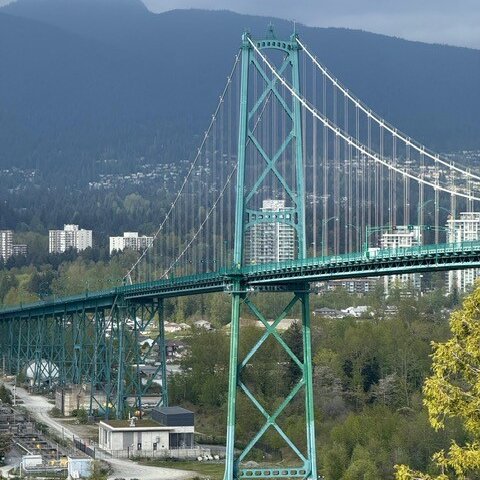
Day 9 – Victoria Island and Vancouver
Day 10 Departure
The trip through Canada highlighted the enormous dimensions and differences compared to German agriculture. Large areas, a high level of mechanization, and specialization characterize the farms. At the same time, farmers face challenges such as climate fluctuations, rising costs, and societal change—but they are far less regulated, which often creates a contradiction.