

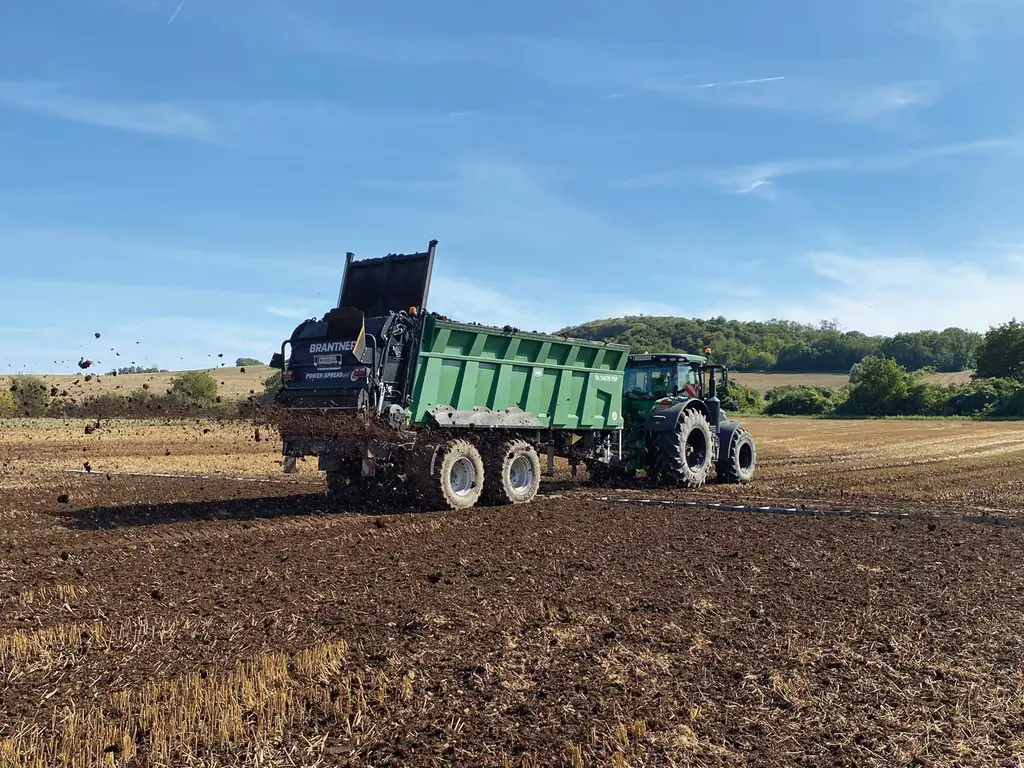

WP1: Building the Knowledge Foundation for Better Biodiversity Monitoring in Europe
Work Package 1 (WP1) forms the baseline of BioMonitor4CAP. Its mission: to gather, organise and assess the knowledge, data, and tools needed to improve how we monitor biodiversity in agricultural landscapes across Europe. Over the past two years, the WP1 team has ensured that all further project steps build on robust science and align with EU policy goals such as the Green Deal, the Biodiversity Strategy and the Farm‑to‑Fork strategy.
Creating a Strong Foundation for Data and Indicators
A major achievement of WP1 was the development of clear procedures on how to collect, assess and manage biodiversity data. Updated protocols now offer a transparent structure for literature reviews, data handling and collaboration across all project partners. They help ensure that work in other BioMonitor4CAP work packages uses consistent standards and can easily integrate new findings.
WP1 also conducted an extensive review of existing biodiversity indicators and monitoring approaches used across Europe. This included advanced bibliometric analysis, an evaluation of indicator quality by independent experts, and the first synthesis of ecological, socio‑economic and policy‑related insights. The result is a comprehensive assessment to date of which indicators work well for farmland biodiversity, and where major knowledge gaps remain. The respective deliverable can be viewed on the BioMonitor4CAP website under the following link:
Connecting to Europe’s Leading Biodiversity Initiatives
To make sure the project aligns with existing European monitoring systems, WP1 mapped a broad range of relevant EU projects and databases, from EuropaBON and NaturaConnect to the European Soil Database and the Pan‑European Bird Monitoring Scheme. This mapping helps identify potential synergies, supports data interoperability and ensures that BioMonitor4CAP contributes to long‑term European biodiversity strategies.
One of the key outcomes is a set of recommended biodiversity indicators linked to Essential Biodiversity Variables (EBVs). These indicators cover soils, insects, birds and land cover and are providing a harmonised framework for the project’s fieldwork and policy analysis.
Building a European Geospatial Database
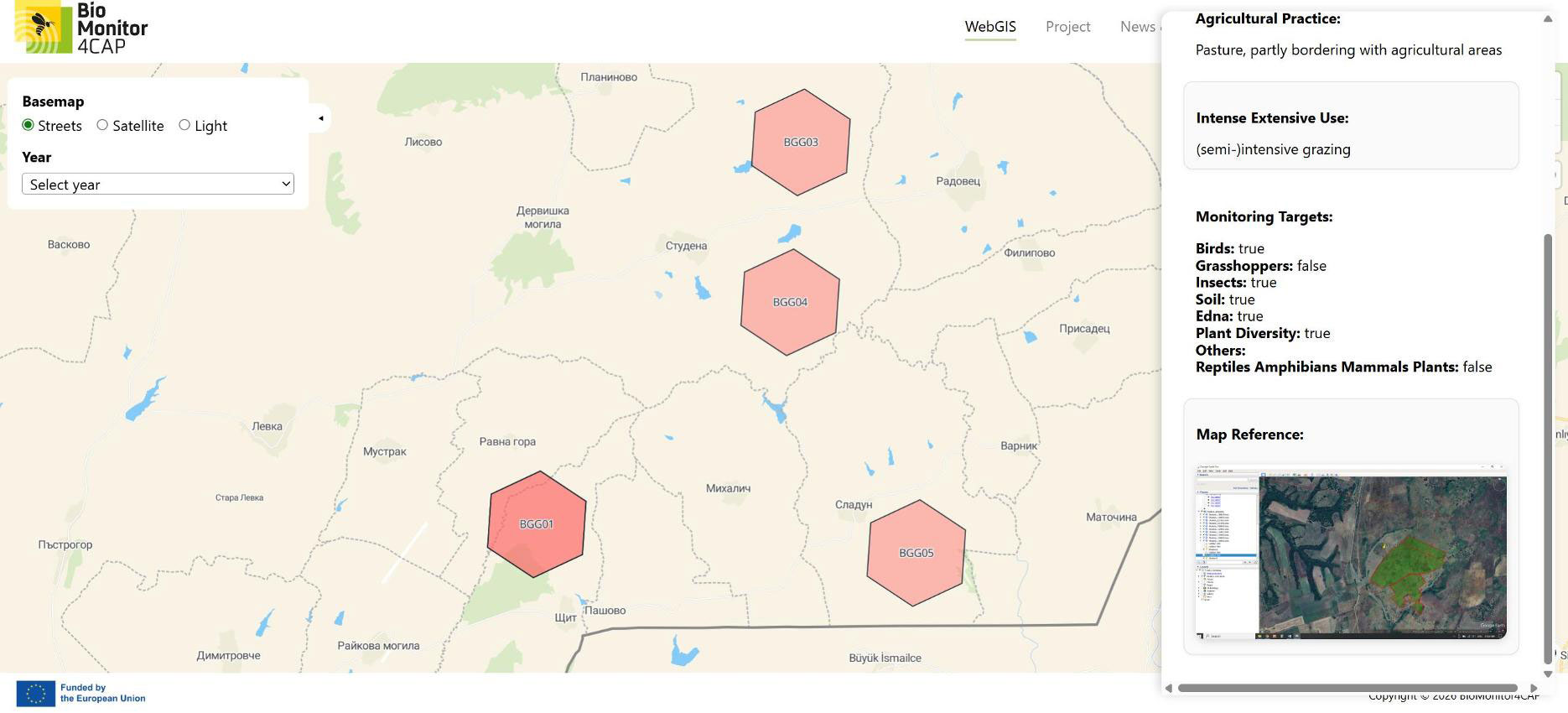
A major technological milestone was reached with the development of the project’s WebGIS platform. This large-scale digital infrastructure already stores around 20 TB of raw data and is continuously expanding.
The platform now:
- hosts harmonised geospatial data relevant for all work packages,
- uses modern Azure-based architecture with cost-effective “hot” and “cool” storage,
- integrates visualisation tools like MapTiler and TiTiler for efficient data display,
- offers a growing public interface that anonymises sensitive biodiversity data through H3 hexagon aggregation.
This system will be further expanded over the coming year.

WP2 Spotlight: Innovating Biodiversity Monitoring Across Europe
Work Package 2 (WP2) is the innovation engine of BioMonitor4CAP. Its goal is to design, test and validate practical and affordable tools that can monitor biodiversity on farms leveraging a wide range of technologies and approaches - from soil DNA to satellite images. Across Europe and even in Peru, the WP2 team in collaboration with field coordinators and WP3 have been working intensively to bring modern biodiversity monitoring tools to real agricultural landscapes.
Bringing Hidden Biodiversity to Light with eDNA
A major achievement of this reporting period was the large‑scale use of environmental DNA (eDNA) to study soil biodiversity. More than 700 soil samples from seven countries are being processed under strict laboratory conditions, and analysed for bacteria, fungi and soil invertebrates. This approach reveals species that often remain invisible in traditional surveys.
Camera Systems and Computer Vision for Insect Monitoring
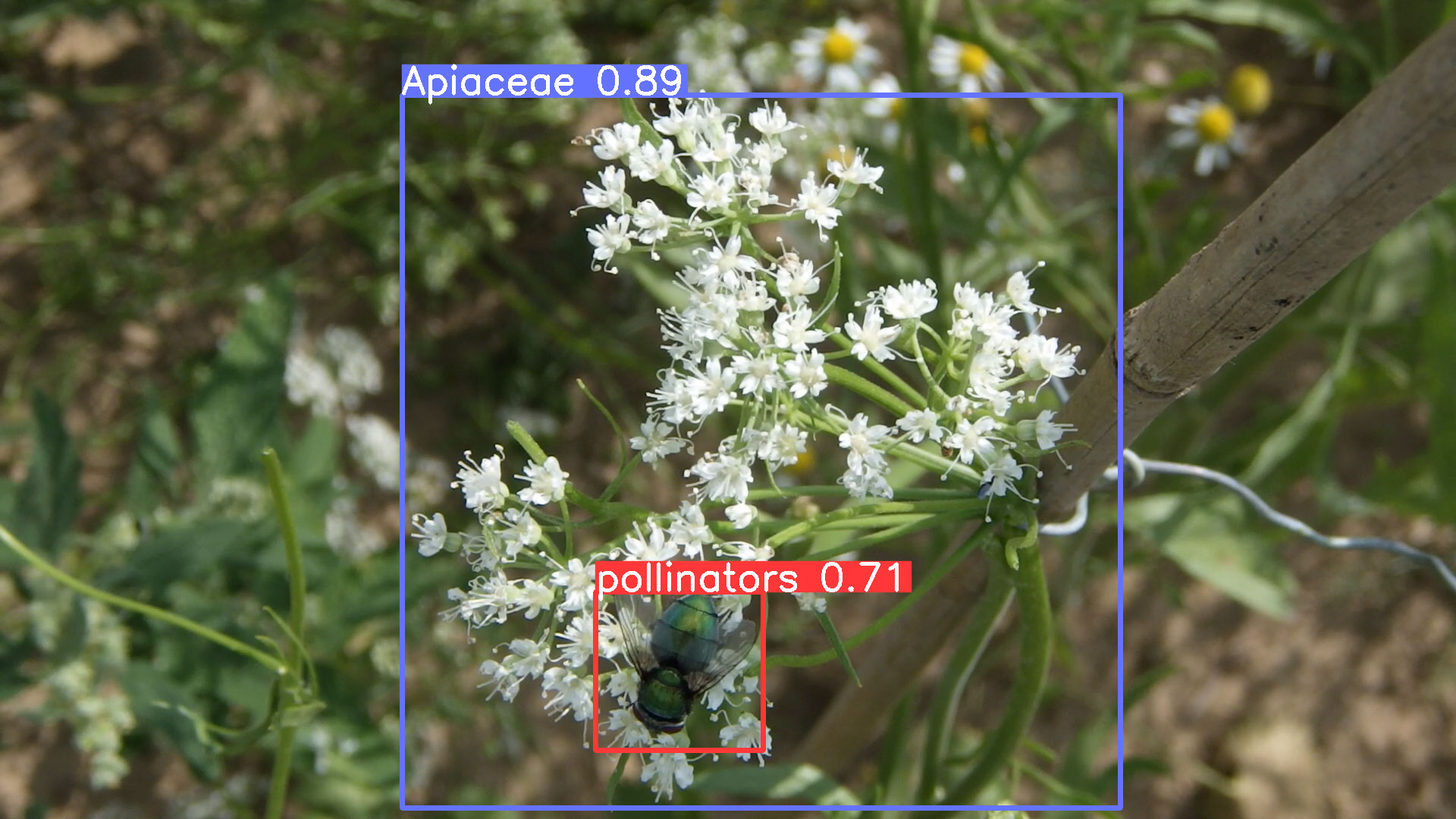
WP2 also deployed a network of 180 time‑lapse cameras, to our knowledge the largest across Europe, collecting more than 8.7 TB of images and videos. Using newly developed computer‑vision workflows, moving insects are highlighted automatically, allowing scientists to detect and classify insects far more efficiently.
Specialised devices such as the Diopsis scanner were tested to explore new ways of monitoring insect activity in flower strips, fields and agroforestry systems. Additionally, in the Upper Rhine Valley eDNA air samples were collected with drones, remote controlled “toy” cars, and local eDNA collector stations in the Upper Rhine Valley. First results show strong site‑specific patterns in insect richness - highlighting the importance of local habitat structure.

Listening to Farmland: Acoustic Monitoring for Birds and Insects
Bird and insect monitoring entered a new era with 19 TB of recorded sound, processed with advanced tools such as BirdNET and validated by experts.
The project is now able to:
- detect bird species over entire days and seasons,
Validate performance of different sensors - compare automated acoustic data with traditional point counts,
- build activity metrics for key farmland indicator species.
Preliminary results show that acoustic monitoring detects far more species than standardized expert surveys, which is an important step toward scalable biodiversity assessment.
Remote Sensing for Landscape‑Level Biodiversity Insights
WP2 also developed a methodological pipeline to analyse decades of satellite data and drone imagery. By calculating landscape metrics such as patch density, edge effects and habitat fragmentation, the team can connect on‑the‑ground biodiversity with the wider landscape context. These layers will later feed into predictive models that show how farmland biodiversity responds to management at different scales.
Towards Smart, Predictive Biodiversity Models
Using WP2’s field data, the project is developing advanced predictive models for soil biodiversity that can:
- identify key indicator taxa and community patterns,
- evaluate how land management affects biodiversity,
- and provide farmers and decision‑makers with reliable, data‑driven insights.

WP3: Bringing Biodiversity Monitoring into Real‑World Farming Landscapes
Work Package 3 (WP3) is where BioMonitor4CAP’s monitoring innovations meet real fields, real farmers and real environmental conditions. Its mission is to test and demonstrate the biodiversity monitoring tools selected in WP2 - across Europe and beyond - ensuring that the methods work reliably outside controlled research settings and under the practical realities of agriculture.
From Concept to Field: Implementing Large‑Scale Biodiversity Trials
In 2024 and 2025, WP3 coordinated one of the most ambitious biodiversity field campaigns in Europe. After a preparatory trial season in 2023, the consortium launched a Europe‑wide data collection effort, complemented by fieldwork at Amazonian and Andean sites in Peru. This unique combination of climates, crops and farming practices enables WP3 to validate monitoring tools in a broad range of conditions.
Across all regions, WP3 implemented:
- Grid‑based biodiversity monitoring with repeated sampling rounds on Major and Selected sites,
- Field based experimental biodiversity monitoring on Demonstration sites,
- Bird surveys via point counts and acoustic devices,
- Insect monitoring using traps, cameras and acoustic methods,
- Soil sampling using both conventional and eDNA‑based methods,
- Drone flights capturing RGB and multispectral imagery.
Partners tested 18 different monitoring methods in 2024: from time‑lapse cameras and Diopsis scanners to UAVs, AudioMoths, vegetation surveys and soil eDNA. In 2025, new methods such as automated nematode analysis and upgraded camera systems were added.
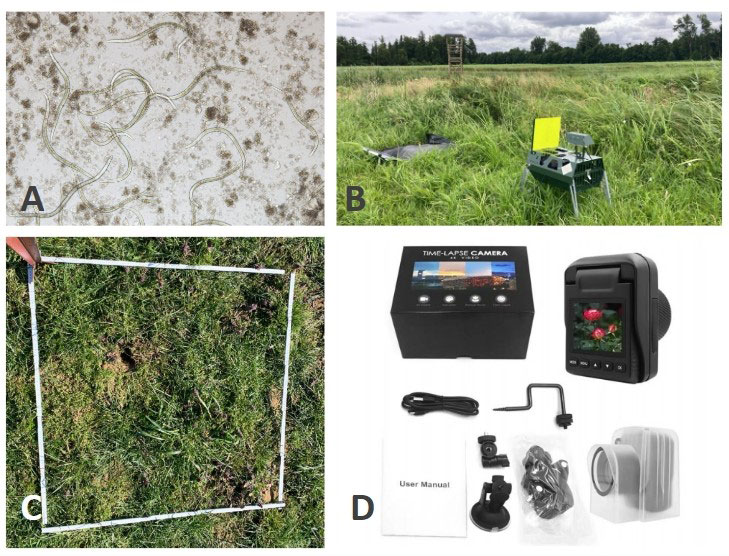
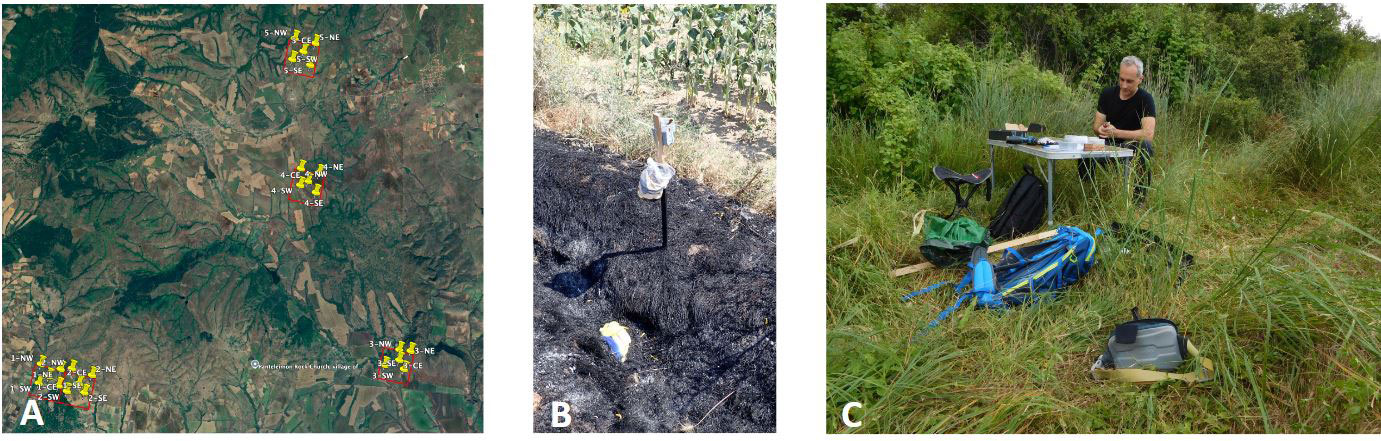
By 2024, 57 fields and grids across nine countries were monitored; in 2025, sampling expanded to 58 fields and grids in ten countries, including three additional demonstration locations. The tools were tested under a wide range of real‑world conditions, including:
- Small mountain fields in Austria,
- Wildfire‑affected grasslands in Bulgaria,
- Subarctic sites in Finland,
- Extensively and intensively managed German farmland,
- Agroforestry systems in Portugal,
- Remote Amazonian and Andean farms in Peru.
WP3 documented not only the field data but also technical challenges, like damaged equipment, weather issues, stolen devices, data upload delays and most challenging the sharing of large amounts of data. This practical knowledge is essential for developing robust, farmer‑friendly monitoring approaches.
Demonstration Sites: Where Science Meets Farming Practice
Demonstration sites across Europe tested how biodiversity monitoring data reflects farming decisions such as tillage systems, cover crops, nitrogen management, soil cultivation methods or organic matter additions. These sites on experimental farms (farms used for testing, e.g., new agricultural machinery, methods, and crops) show how different farming practices influence soil, insect and bird biodiversity, offering insights that will feed into practical recommendations and policy design.
In Peru, sampling across cacao agroforestry, avocado orchards and grazed grasslands added critical environmental diversity. This helped the project to test the performance of the devices under extreme humidity, heat, altitude differences and logistical constraints.
WP4 Spotlight: Bringing People into Biodiversity Innovation
Technological breakthroughs alone cannot transform European agriculture. To make biodiversity-friendly farming successful, we need to cooperate with the people who shape rural landscapes - farmers, advisors, experts and policymakers. Work Package 4 (WP4) takes on this task by exploring how rural stakeholders perceive biodiversity and biodiversity monitoring, how they make decisions, and what support they need to adopt new agrobiodiversity measures.
Listening to Farmers and Advisors Across Europe
WP4 began by gathering perspectives through focus group interviews and co-creation workshops in six partner countries. Two hundred participants shared their views related to agro-biodiversity, on-farm biodiversity monitoring, and improving policy mechanisms for biodiversity objectives.
The results of the focus groups and co-creation workshops are presented in the deliverable D4.1 report, which is under review. Key findings include:
- The participating farmers’ and advisors’ views of good farming largely aligned with the principles of multi-functional agriculture, including the conservation of agrobiodiversity.
- Both farmers and advisors have limited experience with biodiversity monitoring, but find some of the technologies potentially interesting with practical applications for the farm, especially eDNA, cameras, and remote sensing.
- Farmers and advisors expressed concerns related to on-farm monitoring technologies, including data privacy, the usefulness of monitoring information, and who should actually carry out the monitoring.
- Overall, they were cautiously open to on-farm biodiversity monitoring, but issues of cost, labour, privacy and compensation must be satisfactorily addressed to achieve acceptance.
- Further, participants emphasised that participation must be voluntary and results should be interpreted for the farmers’ use.
Building Policy Pathways Together
Beyond farmer perspectives, WP4 also brought together policy experts, advisors and other decision-makers through co-creation workshops. These sessions identified six priority themes that can inform future CAP developments:
- Governance and regulatory clarity
- Financial incentives and viable business models
- Practical environmental targets
- Regional flexibility and landscape-level coordination
- Technology and monitoring systems
- Stakeholder cooperation and knowledge sharing
The results from the farmer-advisor focus groups and co-creation workshops will be used in the development of policy recommendations designed to support biodiversity conservation in Post-2027 CAP.
Understanding What Drives Adoption
Another part of WP4 is the discrete choice experiment (DCE), in which 524 farmers across six countries were presented with thematic areas for biodiversity enhancement - such as Green Spaces, Soil Health, Beneficial Insects and Bird Diversity - and asked to indicate their preferred scenarios within these themes. Their choices revealed important patterns:
- Payments matter, that means compensation strongly influences adoption decisions.
- Soil health measures stand out: farmers show high intrinsic motivation and often need little or no additional compensation.
- Bird diversity measures require the highest compensation, mainly due to labour intensity and limited immediate farm benefits.
- Green spaces and insect-friendly measures fall in the middle, with feasibility depending on land availability and advisory support.
The complementary workshops confirmed these results: Farmers generally have high motivation, but their capability (e.g. skills, time, technical know-how) is often the limiting factor.
WP5: Turning Knowledge into Action: Scaling Biodiversity Innovation across Europe
As BioMonitor4CAP advances scientific tools and field‑tested monitoring methods, Work Package 5 (WP5) takes on the mission to ensure that these innovations can be replicated, scaled and implemented across Europe’s farming landscapes. WP5 bridges science, policy, advisory systems and business to make biodiversity monitoring not just possible, but practical and future‑ready.
Building the Networks for European‑wide Implementation
A major achievement of WP5 is the creation of a comprehensive database of more than 360 institutions involved in biodiversity and environmental monitoring. This database identifies relevant observatories and networks at EU and global levels using a combined top‑down and bottom‑up research approach.
A new interactive online interface now visualizes these institutions, helping policymakers, researchers and practitioners navigate the agrobiodiversity landscape more easily. Have a closer look at it here:
(Agro)Biodiversity Database - BioMonitor4CAP
Because many organizations do not explicitly label themselves as “agrobiodiversity experts,” this broad mapping helps overcome visibility gaps and strengthens coordination between science and policy.
Designing new CAP‑ready Agrobiodiversity Measures
One of WP5’s central outputs is the development of four CAP‑aligned “bio‑schemes” with ready‑to‑use biodiversity measures that Member States can incorporate into their CAP Strategic Plans after 2027. The four schemes focus onGreen Spaces, Soil Health, Beneficial Insects, and Bird Diversity.
Each scheme includes:
- Auditable, scientifically robust biodiversity indicators,
- Harmonized monitoring tools aligned with Essential Biodiversity Variables,
- Eligibility criteria and payment logic,
- Output, result and impact indicators compatible with CAP systems
To make payments both fair and incentive‑driven, WP5 developed a hybrid payment model combining guaranteed payments for efforts and performance‑based bonuses linked to measurable biodiversity outcomes. Extensive policy consultations across the EU helped validate feasibility and administrative fit.
Empowering Advisors and Farmers Through Knowledge
WP5 also strengthens the farm advisory ecosystem by creating practical educational materials. A major milestone is the advisory booklet on agroforestry, available in English, German and Finnish. The booklet explains agroforestry in accessible terms, shares insights from farmer-advisor focus groups, and offers a planning guide for implementation. Download it here:
BioMonitor4CAP Print Materials - BioMonitor4CAP
This resource supports:
- Advisors guiding farmers in biodiversity‑friendly transitions
- Policymakers seeking real‑world examples
- Farmers exploring nature‑positive practices
Preparing for Replication, Upscaling and Future Use
WP5 is also developing a Replication Roadmap to help policymakers, advisors and businesses integrate BioMonitor4CAP methods into long‑term strategies. This includes:
- Scalable models for monitoring
- Business planning for market‑ready technologies
- Pathways for integrating results into the future Farm Sustainability Data Network (FSDN)
By combining scientific credibility with practical usability, WP5 ensures that BioMonitor4CAP’s outcomes can thrive in real agricultural systems and continue to evolve long after the project ends.
WP6 – Dissemination, Communication & Outreach
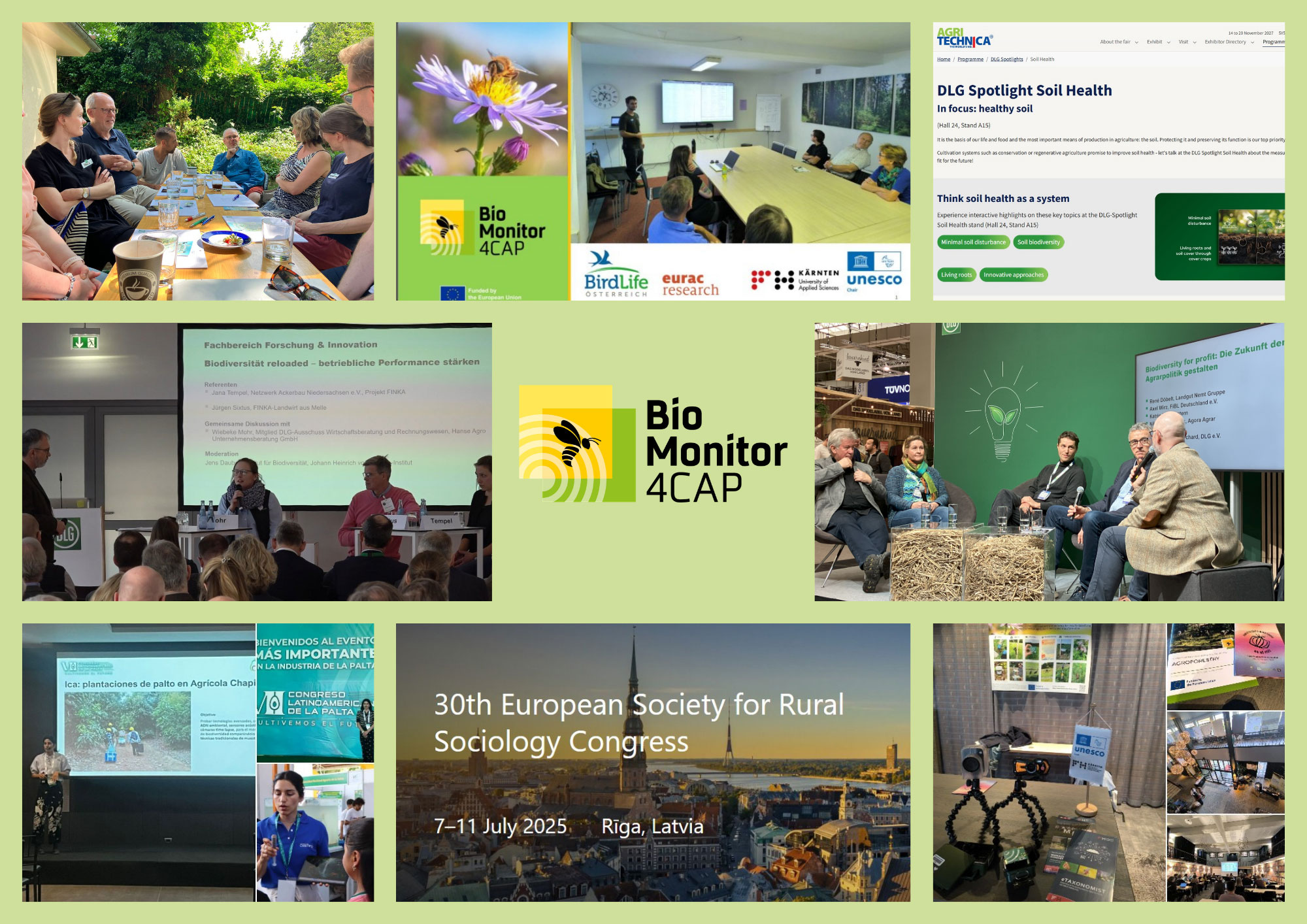
WP6 ensured that project results reached the public, stakeholders, and scientific communities through newsletters, podcasts, videos, events, and social media. The website, stakeholder database, and communication toolkit were expanded, and new WebGIS integration is underway. WP6 also supported partner dissemination across conferences, workshops, and international networks, strengthening BioMonitor4CAP’s visibility and long-term impact.
Check out our new BioMonitor4CAP video clip.
It provides an overview on the innovative monitoring technologies used within the BioMonitor4CAP project in agricultural landscapes. The clip presents optical systems such as time‑lapse cameras, drones and AI‑based scanners. It also introduces acoustic sensors that record bird, insect and bat calls, as well as advanced eDNA methods used to analyse biodiversity in environmental samples. Discover how we collect data in the field and apply cutting‑edge technologies to support sustainable agriculture.
Additional information and regular updates are available on the project website:
www.BioMonitor4CAP.eu, including our podcast series BioMonitor4CAP Podcasts - BioMonitor4CAP

