

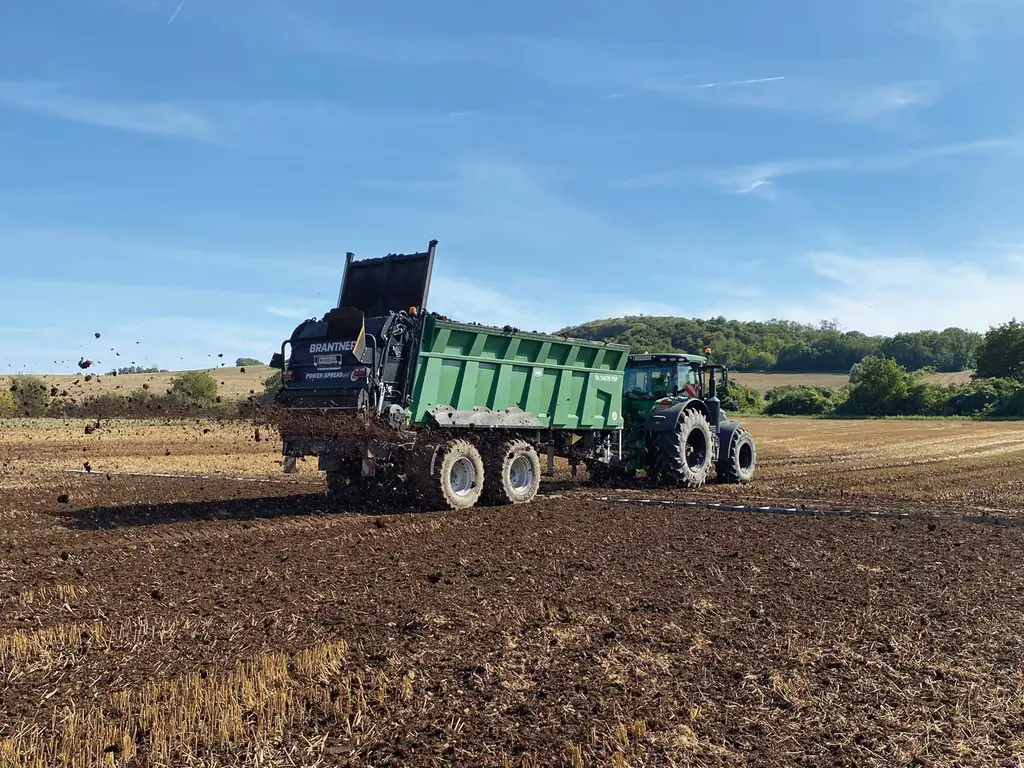
DLG Feldtage 2026 event: Modern Crop Protection Solutions for Future Proof Arable Farming_
16–18 June 2026 at DLG’s international crop production center in Bernburg, Germany – Technical program with a focus on crop protection – serves as decision support for farms through exchange with exhibitors and experts
The increasing resistance in weeds and pests, the withdrawal of key active ingredients, and the emergence of new pest pressures are placing growing strain on arable farming. Farm professionals need crop production based on an integrated, systemic approach combining crop rotation, soil cultivation, variety selection, precision technology, and the targeted use of chemical crop protection tools. How such strategies can be implemented in practice will be demonstrated at the DLG Feldtage event, the key outdoor field event for European crop production, taking place from 16 to 18 June at the DLG’s International Crop Production Centre in Bernburg, Germany. Organized by the DLG (German Agricultural Society), the event features live demonstrations, expert presentations, and innovative solutions for sustainable resistance management.
The development of arable farming since the second half of the 20th century has been closely linked to the use of chemical crop protection products. These active substances have enabled high and stable yields, particularly in increasingly specialized and intensified cropping systems. Narrower crop rotations, a stronger focus on a limited number of market crops, and the resulting increase in specific pests and weeds have led to a structural dependence on highly effective herbicides, fungicides, and insecticides. However, this system is increasingly reaching its limits.
Shrinking chemical toolbox
Resistance development in grass weeds such as blackgrass (Alopecurus myosuroides) continues to progress, while at the same time the number of available active ingredients is steadily declining. Since 2019, more than 80 chemical‑synthetic active substances have been withdrawn, while no new active ingredient from this group has been approved in the EU. In addition, the approval procedures for crop protection products in Germany and Europe are among the strictest worldwide. For agricultural practice, this results in a dual challenge: increasing phytosanitary pressure combined with a shrinking chemical toolbox.
Agronomic measures regain importance
The loss of key active ingredients is leading to a structural shift in the weighting of crop protection measures. Agronomic practices are moving from a supporting role to becoming the foundation of crop management. Post‑harvest and soil management increasingly determine the level of grass‑weed pressure in the following autumn. Flexible, multi‑stage cultivation strategies are replacing rigid tillage systems. Seedbed preparation is also gaining importance. Later sowing dates for winter cereals can significantly reduce grass‑weed pressure but are associated with yield risks, making site‑specific assessments essential.
Crop rotation design thus becomes a central lever in effective resistance management. Narrow, winter‑cereal‑dominated rotations have significantly contributed to today’s challenges by favoring the selection of specific grass weeds. Integrating spring crops, cover crops, and crops with differing sowing and harvest dates changes selection conditions and reduces the dominance of individual problem species. Variety choice and crop management complement this system, as competitive varieties with rapid early development suppress weeds. Field hygiene in this context is not an isolated intervention, but rather a network of interlinked measures that must be adapted to site conditions, weather patterns, and the farm’s production focus. This is where the importance of systemic thinking becomes evident: individual measures lose effectiveness when considered in isolation but provide a stabilising effect when combined.
With an expected 300 exhibitors and an extensive technical program, the DLG Feldtage 2026 trade fair, taking place from 16 to 18 June in Bernburg, will provide farmers with direct decision-making support in the area of crop protection. Modern crop protection solutions will be demonstrated under real field conditions, ranging from state-of-the-art spraying technology and mechanical weed control to integrated cropping systems. More than 60 expert‑commented demonstrations, along with compact formats such as Pop-up Talks, consultation hours, and Expert Stages, will give visitors well-founded insights into effective strategies for crop protection, fertilization, soil cultivation, and direct seeding – with a clear focus on practical applicability and efficiency in everyday farm operations.
In addition, the event offers targeted strategic orientation. Through direct exchange with exhibitors and experts, visitors can clarify questions related to new active ingredients, resistance management, smart spraying, digital decision-support tools, as well as robotics and AI applications. As a result, farms gain concrete impulses to secure productivity, use resources more efficiently, and address challenges such as resistance development, climate change, and new pests in a future‑oriented way.
Organisers and partners
Co-organizers include the Ministry of Economic Affairs Link, Tourism, Agriculture and Forestry of Saxony-Anhalt, the State Institute for Agriculture and Horticulture, and AGRAVIS Raiffeisen AG. Professional partners such as Vereinigte Hagel Insurance Mutual Association VVaG, the Union for the Promotion of Oil and Protein Plants (UFOP), the Federal Agency for Agriculture and Food, and other organizations will support the open-air exhibition as part of the technical program.
Media contact:
Malene Conlong
Tel: +49 6924788237
Email: M.conlong@dlg.org
About DLG
With more than 30,000 members, DLG is a politically independent and non-profit organisation. DLG draws on an international network of some 3,000 food and agricultural experts. DLG operates with subsidiaries in 10 countries and also organizes over 30 regional agricultural and livestock exhibitions worldwide. DLG’s leading international exhibitions, EuroTier for livestock farming and Agritechnica for agricultural machinery, which are held every two years in Hanover, Germany, provide international impetus for the local trade fairs. Headquartered in Frankfurt, Germany, DLG conducts practical trials and tests to keep its members informed of the latest developments. DLG’s sites include DLG's International Crop Production Centre, a 600-hectare test site in Bernburg-Strenzfeld, Germany and the DLG Test Centre, Europe's largest agricultural machinery test centre for Technology and Farm Inputs, located in Gross-Umstadt, Germany. DLG bridges the gap between theory and practice, as evidenced by more than 40 working groups of farmers, academics, agricultural equipment companies and organisations that continually compare advances in knowledge in specific areas such as irrigation and precision farming.
www.dlg.org
DLG Feldtage offers farmers insight into viable crop protection systems.jpg